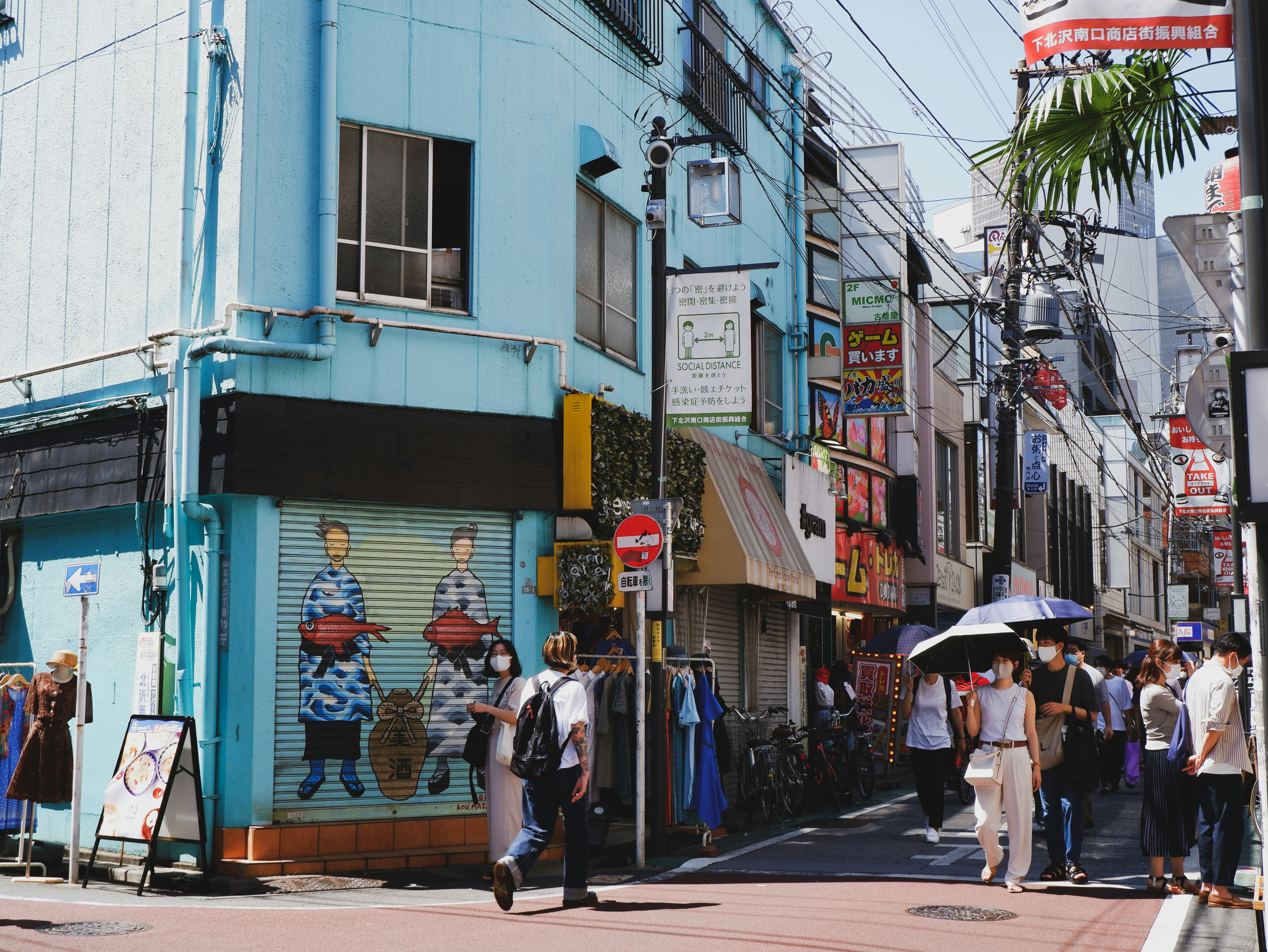
I came to Shimokitazawa for the first time alone. No flea market planned, just the neighborhood. There was a market anyway. When I came back with my wife a few months later, there was another one. Both times there were food trucks running alongside the secondhand stalls, and both times we spent too long in front of the plant sellers near the open space. We would have bought at least three things if we could have taken them home.
This is the Shimokitazawa guide I wish I had had before either of those visits: the flea markets in detail, the secondhand shops worth your time, five vegan restaurants I can actually recommend, and what makes this neighborhood feel different from the rest of Tokyo.
Shimokitazawa Guide: Old vs New Shimokita
The station splits the neighborhood into two personalities. On one side: the narrow alleys that have always been there, lined with secondhand clothing shops, record stores, live music venues, and independent theaters. On the other side: the Odakyu line was moved underground a few years ago, and the space above the old tracks became three new developments.
Reload is forty small shops, almost all independent, including the best vegan bakery I have found in this part of Tokyo. Mikan Shimokita has food stalls and cafés along the former track. Bonus Track sits at the far end, quieter, more like a residential studio block than a shopping destination.
The old alleys are the reason people come here. Any Shimokitazawa guide starts there. The track-side developments are worth an hour once you are done with them.
The Shimokitazawa Flea Market
Most guides mention it and move on quickly. This Shimokitazawa guide will not.
The flea market is the part of this Shimokitazawa guide most people search for first. It takes place at the Shimokita Senrogai Open Space, on the former train track right beside the station. Every weekend, free entry, doors open at noon and run until six in the evening. Canceled in rain. Short walk from the station exit.
What you find: secondhand clothing, handmade accessories, ceramics, sometimes small furniture, and the occasional piece that makes the whole morning feel worthwhile. The quality level sits clearly above many of the larger Tokyo flea markets. Sellers seem to have thought about what they brought. Prices reflect this, but looking costs nothing. That is the detail most Shimokitazawa guide posts underplay.
Both times I visited, there were food trucks running alongside the secondhand stalls, and a row of small plant sellers near the open space. Living with limited luggage space is its own discipline. We stood in front of those plants for a while anyway.
The market has run consistently through 2026, with confirmed dates in May and July among others. As a rule: show up on a weekend and it is almost certainly on.
Best time to arrive: Morning. The best pieces go early, and the space is noticeably less crowded before two o’clock. Note that in your Shimokitazawa guide planning.
Japan’s Secondhand Culture: Why Shimokitazawa Exists
Shimokitazawa did not invent secondhand culture in Japan. But it is where you feel it most clearly in Tokyo.
The Japanese word is mottainai (もったいない): the feeling that wasting something that still has value is a kind of loss. It shows up in how people care for objects, how clothes are passed on, how a shop owner folds a secondhand blazer as if it were new. Japan’s relationship with used goods is not about affordability. It is about respect for things that still work. That context is what makes the secondhand focus of this Shimokitazawa guide make sense.
Shimokitazawa’s secondhand scene has been developing since the 1980s. What started with a few shops in the alleys has grown into what is now probably the densest concentration of vintage clothing in any single Tokyo neighborhood. Around fifty shops within walking distance, ranging from cheap and chaotic bulk thrift to carefully curated rooms where a single piece of denim has been cleaned, tagged, and hung with some thought behind it.
One recent addition every Shimokitazawa guide should mention: Notime Shimokitazawa, Japan’s first hybrid used clothing shop. Staffed during the day, unmanned in the evening. The concept fits the neighborhood.
Best Vintage Shops in Shimokitazawa
The range in any Shimokitazawa guide to vintage is wider than most people expect. A few ways to split it:
Bulk thrift (cheap, high-volume, occasional find):
Chicago, Flamingo, and Straight From LA are the three main options. Chicago and Flamingo have multiple floors and a constantly rotating stock. You will need time and patience, and occasionally you will find something remarkable. Straight From LA specializes in American vintage.
Curated vintage (slower, more considered, higher prices):
Jarmusch, Link Ray, and New York Joe Exchange. Smaller selection, better condition, intentional curation. New York Joe Exchange also buys from customers, which means the stock genuinely turns over. The curated category is where this Shimokitazawa guide spends the most time.
Antiques and ceramics:
Antique Life Jin, Tokyo Retro AMA, Tokyo Recycle, and Bibibi are the places for ceramics, old kitchenware, and objects with a specific appeal that is hard to describe but easy to recognize. If you are looking for something that feels like a real find rather than a curated retail experience, start here.
Vinyl records:
Disk Union occupies multiple floors organized by genre, seriously stocked. Jet Set and NAT Records are smaller and more specialist. Worth knowing if music is a reason you came.
Books and beer:
B&B is a small, carefully chosen bookshop that also sells beer. The bookshelves are good and so is the beer. This Shimokitazawa guide keeps it in the list for exactly that reason.
Vegan Food in Shimokitazawa: 5 Restaurants Worth Your Time
Shimokitazawa does not come up first on most guides to vegan restaurants in Tokyo. A focused Shimokitazawa guide helps with that. Five places here are genuinely worth your time. For a broader overview of eating vegan across the city, the guide to eating vegan in Japan covers the essentials before you go.
TOKYO VEGAN BAKES
Inside the Reload complex, second floor. A 100% vegan takeout bakery that opened in August 2025 as a collaboration between two of Tokyo’s most well-regarded vegan bakers: Te cor gentil and Universal Bakes. The vegan egg sandwich is the thing people come back for. The croissant holds together better than most non-vegan versions. Go on weekday mornings. Weekend afternoons, the popular items tend to be gone. Pre-order through the app sacri if you know what you want.
Chabuzen (薬膳食堂ちゃぶ膳)
Five minutes from the station on foot, past the main shopping streets, into a quieter residential block. Remove your shoes at the door, sit on cushions around a low chabudai table. The owner runs the kitchen alone and takes time with every order. What comes out is vegan ramen and curry built on a fermented brown rice yeast dashi with genuine depth. The signature dish is the curry ramen. English menu available. Come in a small group and do not be in a rush. This is the kind of place that earns its spot in this Shimokitazawa guide.
For snacks to carry between shops, the vegan konbini guide covers everything you need at 7-Eleven, FamilyMart and Lawson across Tokyo.
Cafe Anthrop
Close to the west exit. Organic, no white sugar, vegan options throughout the menu. The soy meat tandoori sandwich works better than it sounds on paper. Four kinds of chai latte, served properly. Good for a slow morning before the market opens.
Vegan Soba Tokyo Ayler
Opened December 2024. Described as the world’s first vegan standing soba shop, which is a very specific thing to be. Inside: an antique gramophone, a sociable owner who seems to know everyone who comes in, and 100% plant-based buckwheat soba that is satisfying in the way standing soba is supposed to be: quick, filling, no fuss. A small espresso machine at the counter if you want to stay a while. Address: Kitazawa 4-24-15.
Alicia (ありしあ)
Side street, second floor, steep stairs. Small sign. Easy to miss. Inside: wood carvings, old furniture, quiet piano music, an atmosphere that makes you lower your voice without being asked. The vegan teishoku sets are home-style Japanese cooking with organic vegetables. The spring roll set is the most ordered dish. 90-minute time limit, which is enough. Good for eating alone, or for a quiet meal after a long day of walking. Current hours on HappyCow.
Those five are the food stops this Shimokitazawa guide returns to most.
Other Things to Do in Shimokitazawa
Beyond food and vintage, this Shimokitazawa guide covers a few more reasons to stay. The live music scene is genuine and ongoing. Shelter, The Basement Bar, and Zher the ZOO run consistent programs. If you are in Tokyo for more than a few days, checking what is on in Shimokitazawa on any given evening takes ten seconds and is often worth it.
The annual curry festival happens every October, when the neighborhood’s many curry restaurants set up stalls and you can smell it from a block away. The Mikan food stalls run food trucks on weekends throughout the year: Cuban sandwiches, taco rice, dango. Not the reason to come, but pleasant context when you are already there.
B&B was mentioned under vintage shops, but it belongs here too. A book, a beer, a bookshop that takes its shelves seriously. Reasonable way to end a day.
If Bocchi the Rock means something to you: there is a mural. The anime has a direct connection to this neighborhood and generates its own stream of visitors. Worth a note in any complete Shimokitazawa guide.
For an evening in Shibuya after Shimokitazawa, the vegan izakaya guide covers Masaka, which is a ten-minute ride away and worth the trip.
Getting to Shimokitazawa
The practical side of this Shimokitazawa guide is short: two train lines, seven minutes or less from central Tokyo.
From Shinjuku: Odakyu Odawara Line, direction Odawara or Enoshima. Seven minutes, around 150 yen.
From Shibuya: Keio Inokashira Line, direction Fujimino or Hashimoto. Three to five minutes, around 140 yen.
Two exits worth knowing for this Shimokitazawa guide: the south exit puts you directly into the Senrogai open space and flea market area. The north exit is closer to the old vintage alleys.
That covers this Shimokitazawa guide. The neighborhood is easy to spend a full day in and easy to come back to.