The best vegan ramen Japan has to offer, in my experience, didn’t come from a blog. We were at the counter of Vegan Bistro Jangara in Tokyo with no idea what to order when the woman across from us pointed at the menu: Karabon. She always gets it, she said. We listened. Right call.
Finding the place takes a minute. It’s in Harajuku but doesn’t announce itself. The entrance is easy to walk past, and when you do find it, you take an elevator that looks like it has no business going anywhere interesting. Go up. The room upstairs is small and clean, kitchen visible, window onto the street.
Vegan ramen Japan: how to find Vegan Bistro Jangara
The address is real but won’t fully save you. You’ll probably circle the block once. The elevator looks sketchy, the kind where you pause before pressing the button. Press it anyway. The room is compact and tidy. Staff are friendly without making a production of it.
Vegan ramen Japan: what to order at Jangara
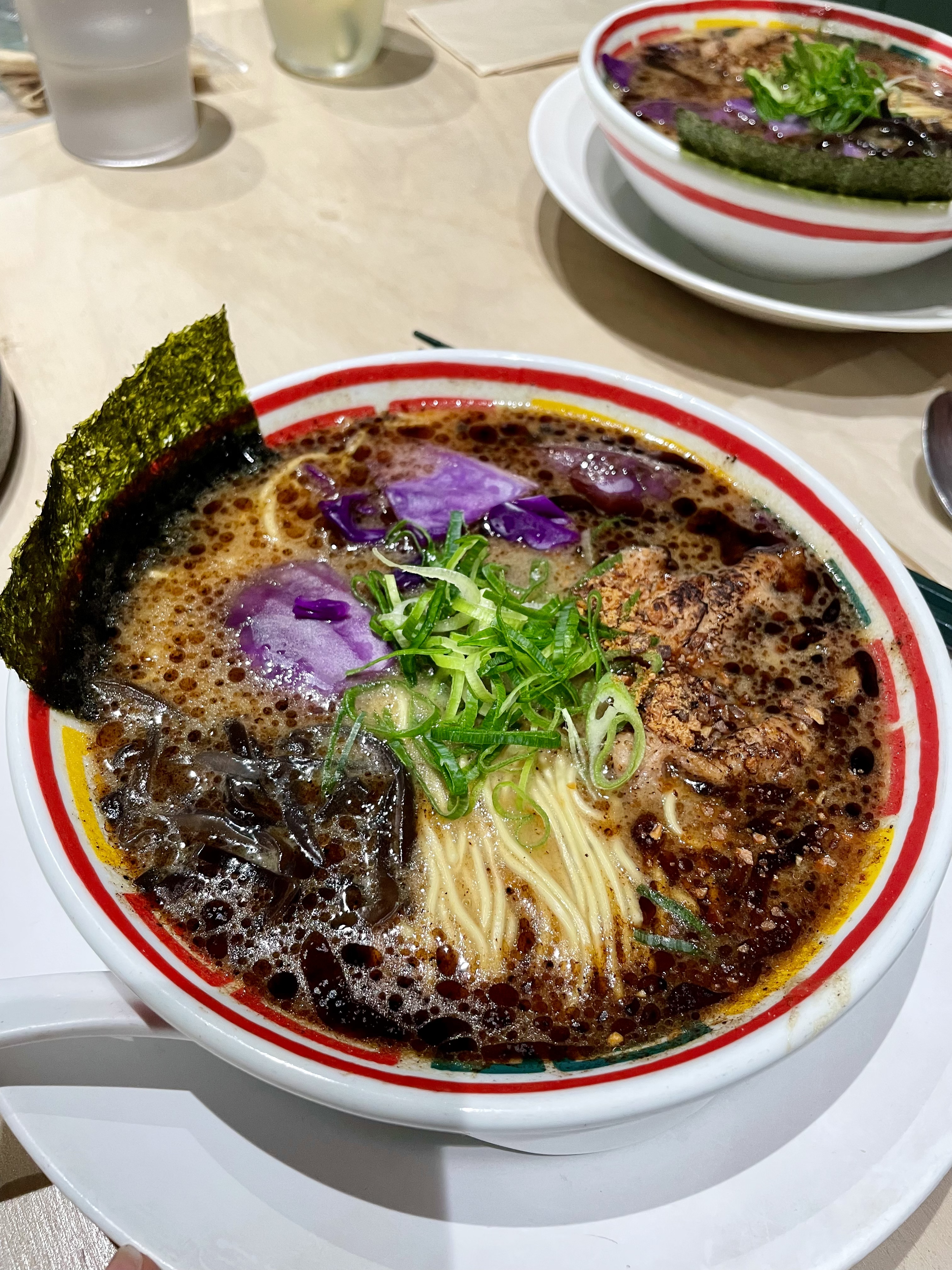
The Karabon is the spicy ramen, and the heat is real. Thick broth, stays hot, flavor from the first spoonful. For us it never got uncomfortable. It’s the kind of spicy where you want more of it rather than less.
The woman who pointed us at it had ordered before us. Her bowl arrived shortly after ours. Within a few minutes, her nose was running. She didn’t put her chopsticks down. If she orders it every time and still eats through the heat, that’s recommendation enough.
Gyoza too. Crispy, hot, gone fast.
There’s a milder ramen option if the Karabon feels like a risk. Most people order it anyway and push through the heat. The staff are efficient without being pushy: order, eat, done.
The price is fine for Tokyo. For plant-based ramen Japan options this solid, you usually pay more.
Vegan ramen Japan and Harajuku: what else is around
Jangara is one of the few spots in Harajuku that actually delivers on vegan ramen Tokyo visitors keep searching for. The neighborhood has more going on than it first appears. Takeshita Street is close and worth seeing once, though it fills up fast. Omotesando is a few minutes in the other direction: wider, quieter, better for walking slowly.
Yoyogi Park is a short walk from the restaurant. It’s large and calm, the kind of place where you sit down, let your legs hang off a bench, and lose track of time. No agenda. For a central Tokyo park, it stays surprisingly quiet.
The Meiji Shrine sits at the park’s edge, but the walk in is where it actually starts. A few steps off the main path and you’re inside a forest: tall trees on both sides, birds, the odd animal moving through the bushes. The city noise disappears almost immediately. By the time you reach the shrine, you’ve completely forgotten you’re inside one of the biggest cities on earth. The forest shuts everything out.
One practical note: Jangara doesn’t take reservations. Walk-in only. The room is small, so showing up around 11:30 before the lunch peak means getting a seat without waiting. Cash is accepted; card too, though it’s worth double-checking on the day.
For vegan ramen Japan options beyond Jangara, or for other plant-based options around Harajuku and Omotesando: there are options. It’s not the densest neighborhood in Tokyo for it, but you won’t struggle. A broader look at eating vegan in Japan is in the guide to vegan food in Japan.
Vegan ramen Japan: going back?
Yes. Worth the elevator, worth the Karabon, worth planning around. Jangara vegan ramen is the kind of meal that stays in the rotation. For more Tokyo options, the Masaka izakaya in Shibuya is good. The vegan restaurant guide for Kyoto covers what comes next on most trips.
Vegan Bistro Jangara, Harajuku. Take the elevator. Order the Karabon.