Masaka is the vegan izakaya Tokyo keeps sending everyone to. The moment I walked down the stairs into the basement of Shibuya PARCO, I expected either fusion food or disappointment. What I found instead was something I had stopped looking for in Japan: an izakaya where I could just point at the menu and order. No questions, no hoping, no explaining.
That place is Vegan Izakaya Masaka, and “masaka” in Japanese roughly translates to “no way” or “that can’t be right.” Which is exactly what you think when you bite into their karaage. If there is one vegan izakaya Tokyo consistently recommends, it is Masaka.
What Is a Vegan Izakaya in Japan? Tokyo’s Masaka Explains
If you have never been to Japan, the easiest comparison is a gastropub. But louder, smaller, and more chaotic in the best way. The idea is to order small plates, share everything, drink slowly, and stay too long. Karaage, gyoza, yakitori, whatever the kitchen has going that evening.
The problem for plant-based travelers is that almost everything in a traditional izakaya contains hidden fish stock, bonito flakes, or meat-based broths. The vibe is perfect; the menu is a minefield. Masaka removes the minefield. Everything on the menu is vegan. Full stop. It is the clearest example of what a plant-based izakaya Japan has been missing for years.
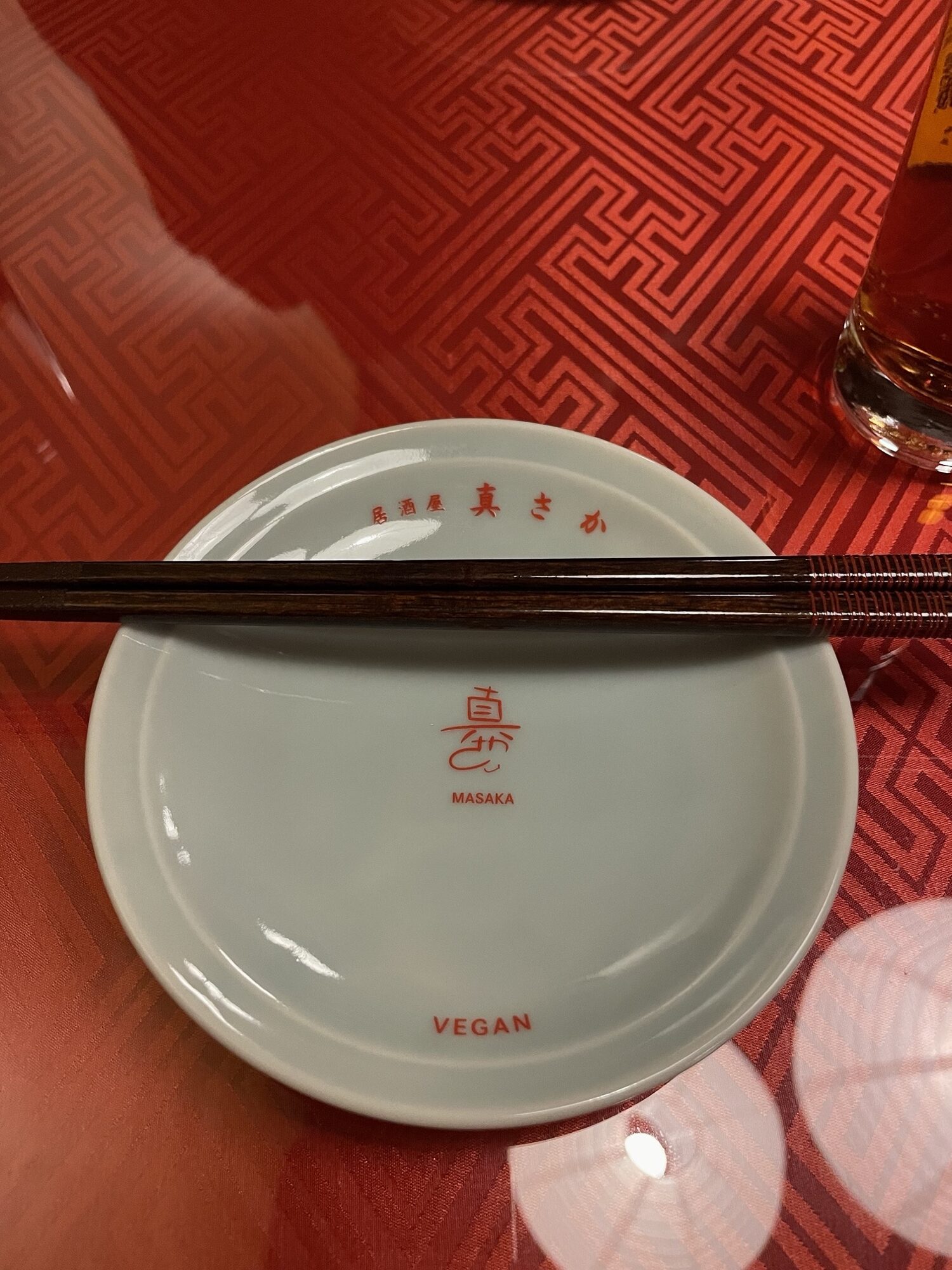
The location: Shibuya basement
Masaka sits in the basement of Shibuya PARCO, tucked inside a food hall called Chaos Kitchen. The name fits. The space is deliberately old-school: metal stools, close-packed tables, the sound of frying from the kitchen at all times. It looks like a Showa-era izakaya, which is exactly the point.
About 20 seats, open daily from noon to 10 pm. During peak hours, especially Friday evenings, there will be a line. Best strategy: come between late lunch and early dinner.
The Karaage: Why This Vegan Izakaya Tokyo Stands Out
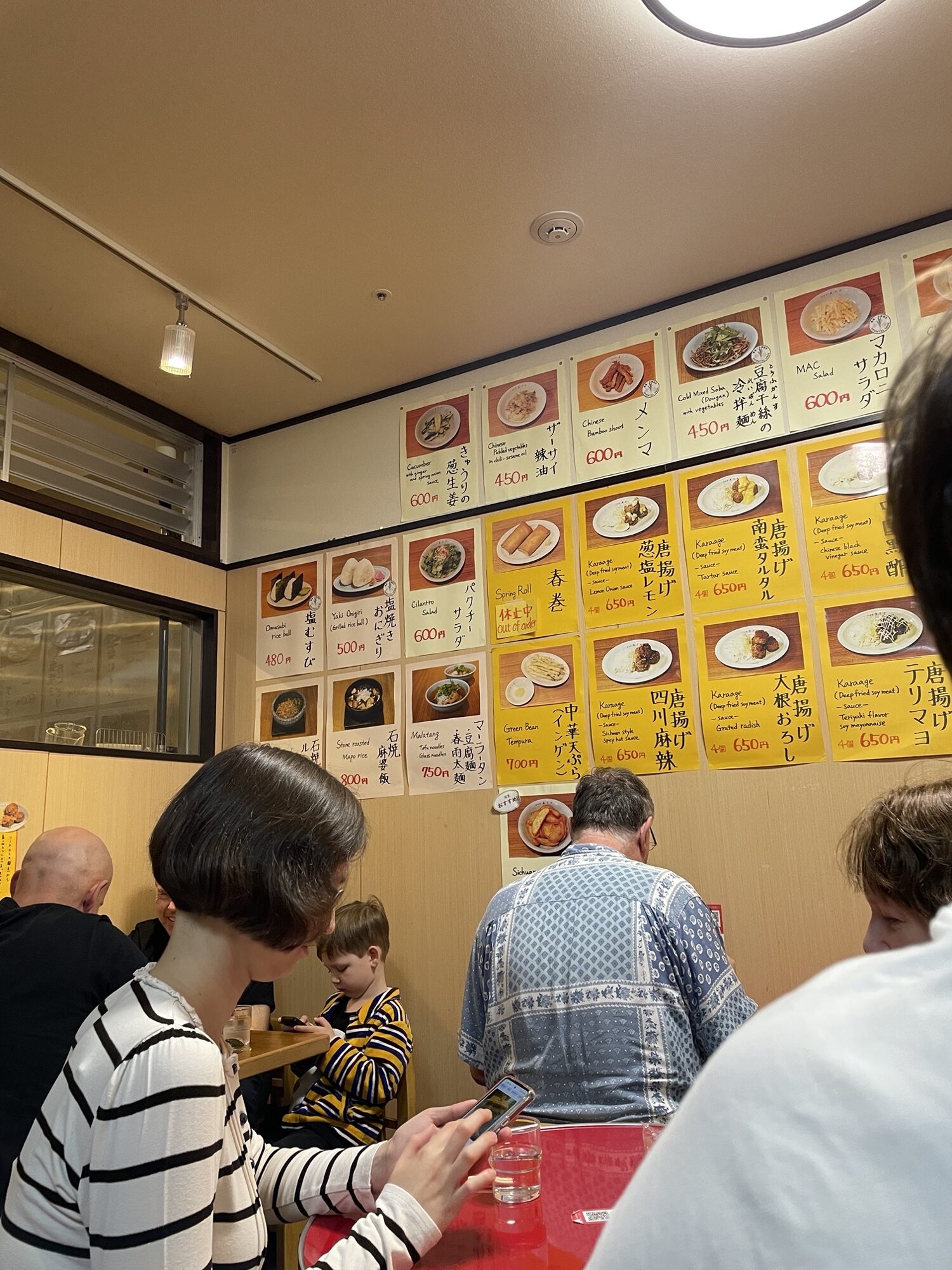
The karaage here is the main event. Soy protein in a crispy tapioca flour batter, fried until golden. The texture and flavor are close enough to the real thing that non-vegan friends I brought along were genuinely surprised. In Japan, where the standard for karaage is very high, that matters.
You also get to choose your sauce. Vegan tartar, Sichuan spice, grated daikon, teriyaki mayo, Chinese black vinegar, spring onion and lemon, or yuzu pepper mayo. It turns ordering into a conversation and makes you want to come back just to try the next combination.
The rest of the menu
The karaage gets people in, but the rest of the menu is what keeps them. The gyoza are crispy on the bottom, juicy inside, filled with vegetables, chives, and soy mince. The mapo tofu comes in a stone bowl, properly hot, with the numbing Sichuan heat you expect from this dish.
The real sleeper hit: deep fried maitake mushrooms (舞茸). Tender mushroom clusters in a seasoned batter, fried quickly so they stay juicy inside. The outside is salty and perfectly spiced, the inside soft with a good bite. Multiple guests list them as the highlight of the visit, above even the karaage. Having tried them myself, I understand why.
The menu also includes shumai, spring rolls, cucumbers in ginger oil, niku miso bean sprouts, and tempura green beans, with seasonal dishes rotating in.
Vegan Izakaya Tokyo: Lunch or Dinner at Masaka?
Both work, but they feel like different restaurants.
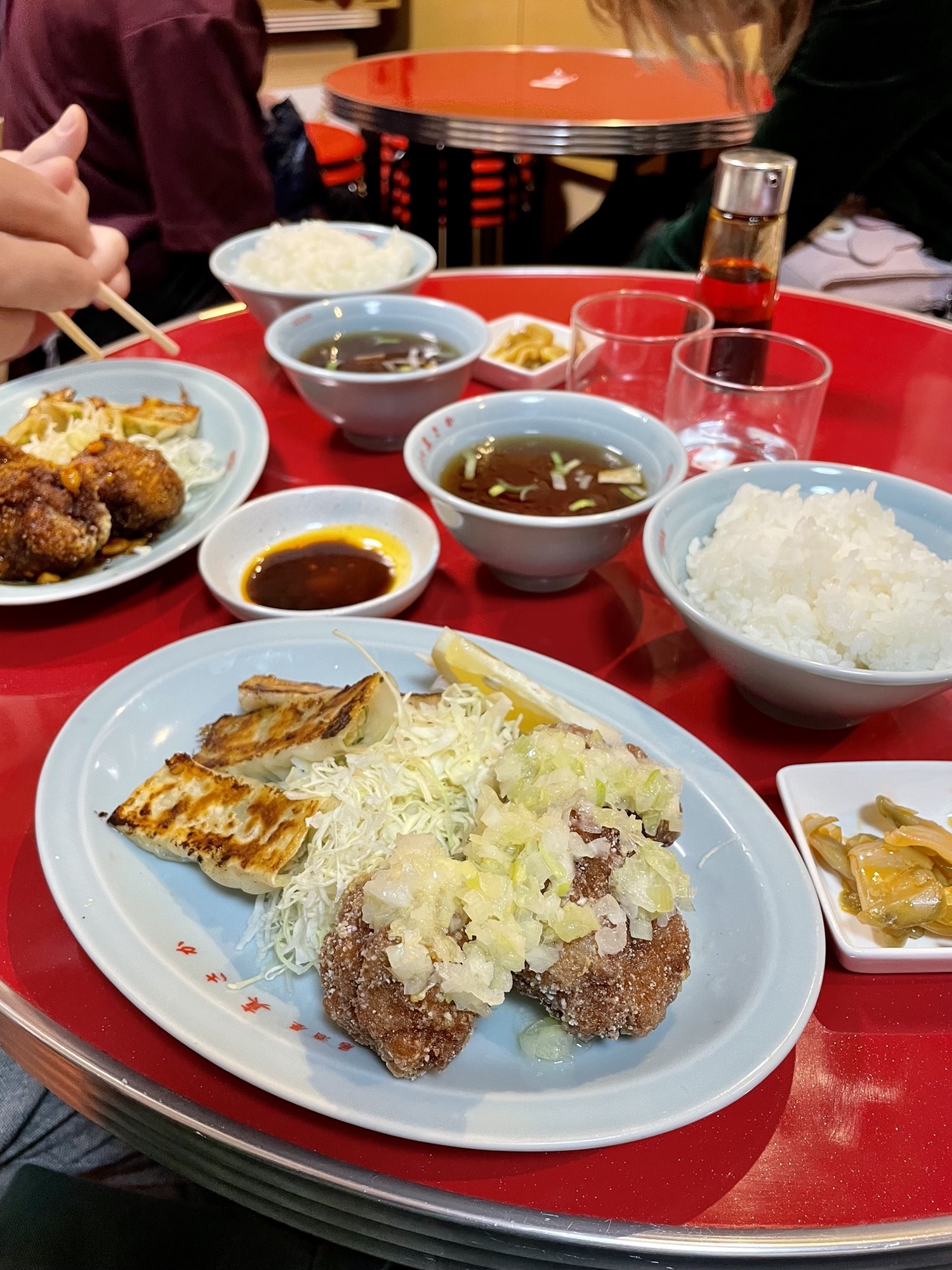
At lunch, there are set menus: karaage, gyoza, a combination of both, or mapo tofu, each served with rice, miso soup, and tsukemono (Japanese pickles). Straightforward, affordable, filling. Good if you are passing through and have limited time.
In the evening, Masaka becomes the izakaya it is supposed to be. Japanese beers, sake, highballs, and lemon sours flow while small plates arrive in no particular order. You order more than you planned, you share everything, you stay longer than intended. I had somewhere to be at ten. I made it just after eleven.
Orders are placed via QR code at the table. There is an English menu available.
The Kyoto Vegan Izakaya Tokyo: Masaka in a Machiya
Since December 2024, the Masaka Tokyo flagship has a second location in Shimogyo-ku, Kyoto. It is set inside a converted machiya, a traditional Kyoto townhouse, with guests spread across different rooms of the building.
The Kyoto branch sits in a quieter side street, a bit off the main tourist routes. Less chaos kitchen, more calm neighborhood feel. A nice contrast if you are visiting both cities. Open Monday and Wednesday through Sunday, 12 to 2 pm and 5 to 9 pm. Closed Tuesday.
Good vegan izakaya Tokyo options are rare. Masaka is the one that counts.
Who Should Visit This Vegan Izakaya Tokyo?
The menu is fully plant-based: no meat, no fish, no eggs, no dairy, no honey. The fish stock problem that haunts vegans in Japan simply does not exist here. One note for those avoiding gluten: the soy protein batters and soy sauces contain wheat, so it is not gluten-free.
But Masaka is not just for vegans. The food is simply good, and the place has the izakaya feeling that is so easy to love about Japan and so rarely available to people eating plant-based.
Masaka is not just a good vegan izakaya Tokyo — it is the reference point for what a fully plant-based izakaya can be. If you are in Tokyo and looking for a vegan izakaya Tokyo locals actually go to, this is it. No other vegan restaurant Tokyo comes close for fully plant-based izakaya food at this level.
For everything else you need to know about eating plant-based in Japan, start with the how to eat vegan in Japan guide. For convenience store options, the vegan konbini Japan guide covers every major chain.
Vegan Izakaya Tokyo: Practical Info for Masaka
Tokyo (main location)
Shibuya PARCO B1F, Chaos Kitchen | 15-1 Udagawacho, Shibuya-ku
Daily 12:00 to 22:00 | @vegan_izakaya_masaka | Listed on HappyCow
Kyoto (since December 2024)
Shimogyo-ku, Kyoto | Mon and Wed to Sun 12:00 to 14:00 and 17:00 to 21:00 | Closed Tuesday