This vegan konbini Japan guide is organized by chain: open it in the store, scroll to the right section, and stay there. A Japanese convenience store is one of the few places in the world where standing confused in an aisle at midnight is completely normal. The difference, as a vegan, is that you are also reading ingredient labels in a language you probably cannot fully parse, on products that may contain things the label is not legally required to mention.
Japan’s food labeling law allows small amounts of fish-based flavoring to appear simply as “seasoning” or be left off entirely if below legal allergen thresholds. This affects more products than you might expect, including some that look completely plant-based.
One thing applies everywhere: the label 動物性原材料不使用 (dobutsusei genzairyo fushiyo) means “no animal-derived ingredients.” Products carrying it are your safest bet in any konbini. That is what makes vegan konbini Japan shopping less about luck and more about knowing what to look for.
New to vegan travel in Japan? The how to eat vegan in Japan guide covers dashi, label reading and what to watch out for everywhere — not just in the konbini.
7-Eleven: Vegan Konbini Japan Options
Onigiri and rice
Salt onigiri (塩むすび) is the most reliably vegan item in any 7-Eleven: plain rice, salt, nothing else. Umeboshi is usually fine but fish extract can appear unlisted depending on how strict you are being. Plain microwave rice packets without sauce are usually vegan.
Hot food
Hash browns near the register are officially confirmed animal-free. Cheap, warm, reliable. Note that shared fryers are used for meat products. The Keema Curry with soy protein carries the label 動物性原材料不使用 and is one of the most reliably vegan hot options in any konbini.
Snacks
- Calbee Jagabee, lightly salted: confirmed vegan. Not the butter soy sauce flavor.
- Soyjoy Crispy banana and mixed berry: VegeProject Japan certified vegan.
- Sweet potato sticks (imo kenpi): usually vegan, quick label check worth doing.
- Plain nuts (almonds, cashews, walnuts): vegan. The butter peanuts at 7-Eleven specifically are confirmed non-vegan.
- Edamame: vegan.
- Plain salted popcorn: usually fine.
- Nori chips: often vegan, quick check recommended.
Sweets and frozen
- Gari Gari Kun blue soda, grape and mikan orange: these three flavors are vegan. Avoid creamy flavors.
- Soyjoy bars, banana and mixed berry: certified.
- Jelly products: Japanese konbini jellies use agar (寒天) rather than gelatin (ゼラチン) and are usually vegan.
- Natto: vegan, but skip the included soy sauce packet which contains fish.
- Nongshim Shin Ramen, bag version only: confirmed vegan by the manufacturer. The cup version is not.
Drinks
- Soy milk (Kikkoman, Marusan): reliably vegan. Look for 無調整豆乳 (unprocessed); some flavors of 調整豆乳 (processed) are not vegan.
- Plain tea: Oi Ocha, ryokucha, hojicha, genmaicha, mugicha, oolong, jasmine and black tea without additions are all vegan.
- Black coffee from the machine, in cans or bottles: usually vegan. Avoid anything marked オレ (au lait).
- Aquarius and Pocari Sweat: vegan sports drinks.
Watch out at 7-Eleven
The trickiest part of vegan konbini Japan navigation is 7-Eleven, where labeling is the least transparent of the three main chains. Butter peanuts are confirmed non-vegan. Cup ramen is mostly not vegan; only the Nongshim Shin Ramen bag version is confirmed. Some Japanese almond milk contains pork-based emulsifiers.
Compared to 7-Eleven, FamilyMart vegan konbini Japan options lean slightly different — fewer hot foods, but more reliable in the snack and onigiri section.
FamilyMart: Vegan Konbini Japan Picks
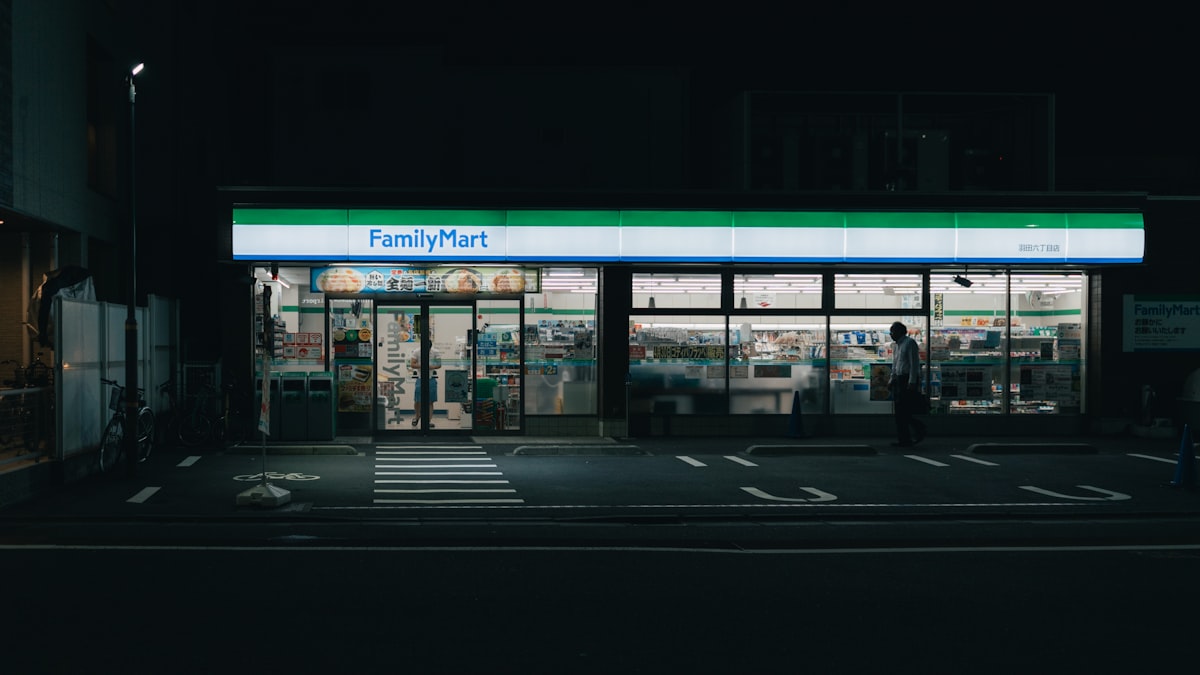
FamilyMart runs the most ambitious plant-based product range of any Japanese convenience store chain: the Blue Green line.
Onigiri and rice
- Salt onigiri: reliably vegan.
- Bibimbap-style rice ball (Blue Green): vegetables and soy protein with gochujang, officially plant-based.
- Umeboshi: usually fine, labeling caveat applies.
Hot food
- Hash browns: confirmed animal-free. Shared fryer applies.
- Blue Green Keema Curry: soy protein, officially plant-based.
- Blue Green plant-based tiramisu: seasonal, worth picking up when available.
Snacks
- Calbee Jagabee, lightly salted: vegan.
- Soyjoy Crispy banana and mixed berry: certified vegan.
- Plain salted popcorn: usually fine.
- Plain nuts: vegan, check butter varieties.
- Edamame: vegan.
- Prewashed salad mix (vegetables only, no dressing): vegan.
- Mom’s Dining Room tofu noodles in sesame sauce: listed as vegan. Note: other products in the Mom’s Dining Room range contain fish. Only this specific variety.
Sweets and frozen
- Gari Gari Kun blue soda, grape, mikan: vegan.
- Blue Green seasonal desserts: plant-based, varies by location and season.
- Agar-based jelly products: usually vegan.
- Natto: vegan, skip the sauce packet.
Drinks
- Soy milk (Kikkoman, Marusan): vegan.
- Mt. Rainier soy or oat latte: explicitly plant-based, clearly labeled.
- Tully’s Oat Milk Latte (canned): plant-based, available at FamilyMart.
- Black coffee from the machine: vegan.
- Plain teas: all vegan.
- Japanese-style dressing and reduced sodium Japanese dressing: both confirmed vegan. Most other dressings contain egg or fish.
- Aquarius, Pocari Sweat: vegan.
Watch out at FamilyMart
Blue Green availability varies by location and season. In the Mom’s Dining Room section, only the sesame tofu noodle version is vegan. Most other dressings contain egg or fish.
The Lawson vegan konbini Japan selection is the broadest of the big three, especially at Natural Lawson locations.
Lawson: Vegan Konbini Japan Options

Lawson comes in two versions. The regular chain is solid. Natural Lawson, available in Tokyo, Kanagawa, Saitama and Chiba, is the best konbini option in Japan for vegan travelers by a significant margin.
Onigiri and rice
- Salt onigiri: reliably vegan.
- Umeboshi: usually fine, labeling caveat applies.
Hot food
Hash browns are less clearly confirmed at Lawson than at 7-Eleven and FamilyMart, so checking the label is recommended. Important note: the anman (steamed red bean bun) at Lawson contains pork lard and dried egg and is not vegan. Some other chains have vegan versions of the same product. Not Lawson.
Snacks
- Calbee Jagabee, lightly salted: vegan.
- Imo kenpi (sweet potato sticks): well stocked at Lawson, usually vegan.
- Natural raw sugar taste mixed nuts: confirmed vegan.
- Walnuts in soybean flour: confirmed vegan.
- Soyjoy Crispy banana, mixed berry: certified.
- Edamame: vegan.
- Corn salad (no dressing included): vegan.
- PEAKZ vegan cacao bars (mint chocolate, raspberry, hazelnut, salted caramel): explicitly vegan.
Sweets and frozen
- Gari Gari Kun blue soda, grape, mikan: vegan.
- Ippon Manzoku dark chocolate bar: vegan.
- Agar-based jelly products: usually vegan.
- Natto: vegan, skip the sauce packet.
Drinks
- Soy milk (Kikkoman, Marusan): vegan.
- Plain tea in all varieties: vegan.
- Black coffee: vegan.
- Aquarius, Pocari Sweat: vegan.
Natural Lawson: the other level
If you are within reach of a Natural Lawson, go. These stores operate mainly in Tokyo, Kanagawa, Saitama and Chiba and carry a range that no other konbini comes close to:
- T’s Vegan pot noodles
- Chaya Macrobiotics plant-based ready meals
- Vegan cheese
- Dairy-free yogurt
- Plant-based ice cream and frozen treats
- Tofu chips and yuzu salt soybean chips
- Mock meats, vegan curries and soups
- Wine without animal-based fining agents
- Wide range of bars, chocolate and snacks
The selection rotates, but Natural Lawson consistently carries more plant-based options than all other konbinis combined.
Watch out at Lawson
The anman contains lard and egg and is not vegan. Check hash brown labels specifically at Lawson.
Ministop: Vegan Konbini Japan Guide
Smaller than the big three, but with some clearly confirmed vegan options.
- Salt onigiri: reliably vegan.
- Plain salt tortilla chips: officially confirmed vegan. Only the plain salt variety.
- Bon Curry Veggie range: confirmed animal-free by Ministop directly.
- Edamame, plain nuts, Soyjoy (banana, mixed berry), Gari Gari Kun (soda, grape, mikan): all vegan.
- Soy milk, plain tea, black coffee, Aquarius, Pocari Sweat: vegan.
Ministop has fewer public manufacturer confirmations than the big three. When uncertain, check more carefully than usual.
Daily Yamazaki: Vegan Konbini Japan
Daily Yamazaki is owned by Yamazaki Baking and leans heavily on bread and pastry. For vegan travelers, that makes it the hardest of the six chains: baked goods almost always contain dairy and eggs. The basics still get you through.
- Salt onigiri: reliably vegan.
- Edamame, plain nuts, fresh fruit: vegan.
- Soyjoy (banana, mixed berry), Gari Gari Kun (soda, grape, mikan): vegan.
- Plain tea, black coffee, Aquarius, Pocari Sweat: vegan.
Bread and bakery products almost universally contain dairy and eggs. Not a first choice, but the basics cover you.
NewDays: Vegan Konbini Japan
NewDays is exclusive to JR train stations, making it the chain you are most likely to encounter tired and just off a long train journey.
- Salt onigiri: vegan.
- Pasco Focaccia: olive oil-based bread confirmed dairy-free by the manufacturer. One of the rare vegan bread options in any konbini.
- Edamame, plain nuts, fresh fruit: vegan.
- Soyjoy (banana, mixed berry), Gari Gari Kun (soda, grape, mikan): vegan.
- Plain tea, black coffee, Aquarius, Pocari Sweat: vegan.
NewDays is often the only option at stations. Salt onigiri, fruit and a bottle of plain tea will get you through any journey.
This vegan konbini Japan guide will be updated as new confirmed products appear. Bookmark it before your trip — the vegan konbini Japan landscape changes faster than most printed guides can keep up with. Every vegan konbini Japan chain listed above has been personally verified. Use this vegan konbini Japan guide aisle by aisle — it is organized to be open on your phone while you shop.
If you want a sit-down meal with no label-reading required, Masaka in Shibuya is a fully vegan izakaya in Tokyo where every dish is plant-based.
Vegan Konbini Japan: Apps and Terms for Every Store
Google Lens: photograph the ingredient list and translate. Imperfect in bad lighting, good enough for a first read.
If memorizing all the terms above feels like too much, skip it: open Google Translate, switch to camera mode and point it at the ingredient list. It catches milk, egg and fish reliably enough to make a call in the aisle. Google Lens does the same thing. Either way, you need a working data connection in the store — konbini WiFi is unreliable at best. We use Saily or Airalo for Japan: an eSIM with full-speed data, activated before you land, no SIM card swap needed. A full comparison of eSIM options for Japan is in this guide.
Is it Vegan Japan (isitveganjapan.com): users here have contacted manufacturers directly. More reliable than label-reading alone for edge cases.
HappyCow: less useful inside the konbini, but good for finding Natural Lawson locations or nearby restaurants.
Key terms to spot on packaging
- 動物性原材料不使用: no animal ingredients
- 乳: milk
- 卵: egg
- 魚: fish
- オレ on drinks: contains milk (au lait)
- 寒天 (kanten): agar, vegan gelling agent
- ゼラチン: gelatin, not vegan
Asking directly: 動物性のものは入っていますか? (dobutsusei no mono wa haitte imasu ka?) means “Does this contain animal products?” This vegan konbini Japan guide is the reference — open it in the store.