Temple etiquette in Japan sounds like a thick rulebook. In practice it comes down to a handful of gestures you will know by heart after your third visit. Before our first trip I read everything I could find about how to behave at temples and shrines, and I still got plenty wrong at the start.
I have lost count of the temples and shrines I have visited since. Some were Tokyo’s busiest landmarks, others tiny shrines on a mountaintop where I wondered how anyone carried the wood up there. This guide covers the 10 rules that matter, how a Buddhist temple differs from a Shinto shrine, and the habits that make tourists stand out for the wrong reasons.
I checked every rule against Japanese sources, mainly the Association of Shinto Shrines (Jinja Honcho) and the Japan Tourism Agency. Where they disagree, I say so.
Temple or Shrine? How to Tell the Difference
Japan has two kinds of sacred sites, and they belong to two different religions. Shrines are Shinto, Japan’s native religion, and they are home to kami, the gods or spirits of a place. Temples are Buddhist and house statues of the Buddha.
Temple etiquette and shrine etiquette are not the same, so it pays to know where you are standing. These are the clues I look for:
| Shrine (Shinto) | Temple (Buddhist) | |
|---|---|---|
| Gate | Torii, often bright vermilion | Sanmon, a large wooden gate building |
| Guardians | Komainu (lion dogs), foxes at Inari shrines | Nio, two fierce muscular figures inside the gate |
| Incense | None | Incense sticks and a large incense burner |
| Prayer | Bow and clap | Palms together in silence, no clapping |
| What you see | The kami is never shown, the inner hall stays closed | Buddha statues, often visible |
| Name ends in | -jinja, -jingu, -taisha, -gu | -ji, -dera, -in |
| Life events | Births, weddings, children’s festivals | Funerals, graves, ancestors |
| Both have | Water basins, omikuji fortunes, omamori charms, goshuin stamps | |
If that still feels muddled, you are not alone. For more than a thousand years Shinto and Buddhism were blended, and temples and shrines often shared the same grounds. The Meiji government only separated them formally in 1868. That is why you still find small shrines inside temple complexes, and why plenty of Japanese visitors do not draw a sharp line either.
Shrine Etiquette in Japan: Step by Step
Shrine etiquette has the most steps. It looks like a lot written down, but after two or three shrines you stop thinking about it.
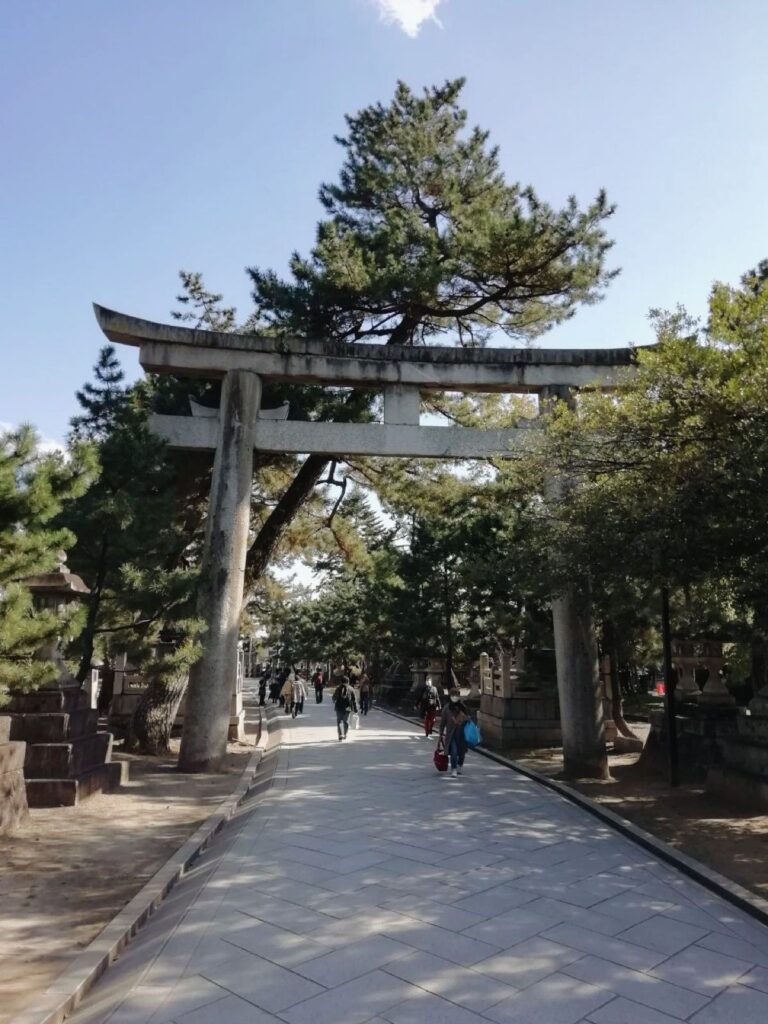
1. Bow once before the torii
The torii marks the line between the everyday world and the grounds of the kami. The Jinja Honcho suggests bowing once before you pass through, the way you would when entering the home of someone you respect. On the way out, turn back toward the shrine and bow again.
2. Walk beside the center, not through it
Some people see the middle of the approach path as the way of the kami. They keep a little to the left or right and bow slightly if they have to cross it. The Jinja Honcho describes this as something many visitors do, not a strict rule.
I noticed it early on: hardly anyone walks straight through the middle of a torii. Nobody will scold you if you do. Walking slightly to the side just feels more considerate.
3. Purify at the water basin (temizuya)
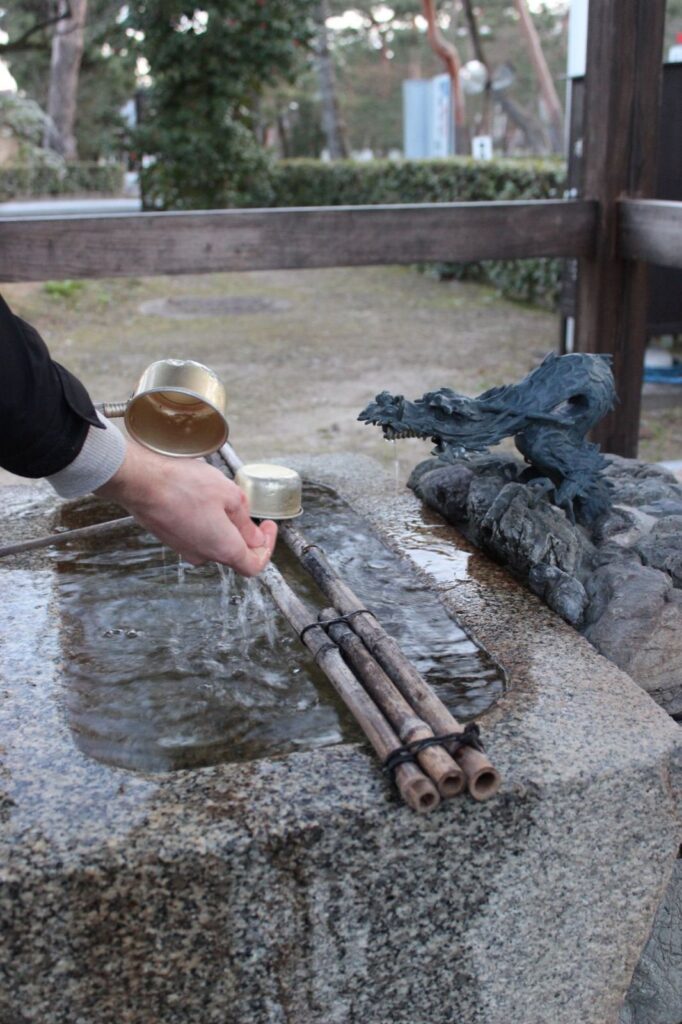
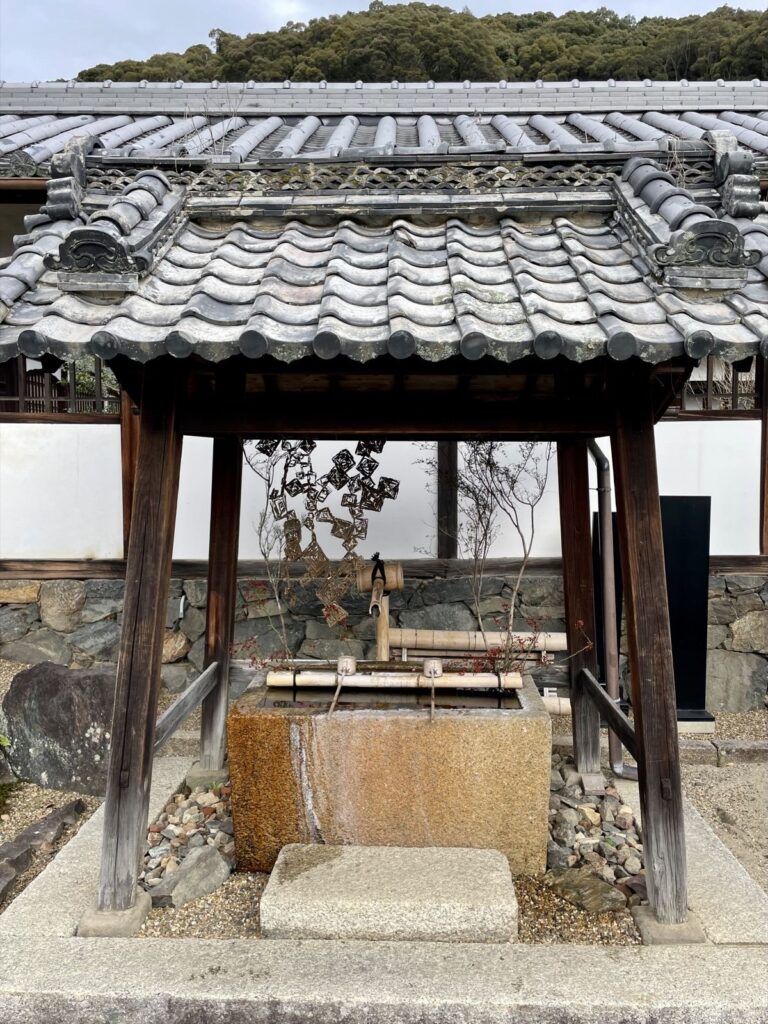
Before praying, you rinse your hands and mouth at the temizuya, the covered water basin near the entrance. It is a shortened form of a full ritual purification. The Jinja Honcho and the Japan Tourism Agency describe the same order:
- Take the ladle in your right hand, scoop water and pour it over your left hand.
- Switch hands and rinse your right hand.
- Switch back, pour a little water into your cupped left hand and rinse your mouth. The ladle never touches your lips.
- Rinse your left hand once more.
- Tilt the ladle upright so the rest of the water runs down the handle, then put it back.
Spit the water out beside the basin, never back into it. Many temples have a basin too, and the routine there is the same.
4. Pray with two bows, two claps, one bow
At the main hall, drop a coin into the offering box and ring the bell if there is one. Most sources put the coin first and a few put the bell first, so I would not worry about the order. Then comes the standard Shinto prayer:
- Bow deeply twice, back straight, about 90 degrees.
- Bring your hands together at chest height, slide your right fingertips down slightly, and clap twice.
- Keep your hands together and say your prayer or thanks silently.
- Bow deeply once more.
A few shrines have their own form. At Izumo Taisha you clap four times instead of two. The Jinja Honcho’s advice is to follow the shrine’s own way when it has one, and there is usually a sign telling you.
This prayer was one of the first things that fascinated me in Japan. Two sharp claps in a quiet shrine sound different from anything I had heard before.
Temple Etiquette: What Changes at a Buddhist Temple
Temple etiquette is quieter and simpler. You will not find a torii at a Buddhist temple, nobody claps, and incense takes the place of the shrine’s bow-and-clap ritual. You purify at the water basin the same way, if there is one.
5. Bow at the temple gate
The sanmon is the big wooden gate, often with the two fierce Nio guardians on either side. Stop briefly in front of it, put your palms together and bow once. When you leave, turn around toward the main hall and bow again. The Japan Tourism Agency describes this for the temples of the Shikoku pilgrimage, and you will see Japanese visitors do it at temples across the country.
6. Wave out the incense, never blow
Incense is one of the clearest signs you are at a temple, since Shinto shrines do not use it. You can usually buy a bundle for a small donation, light it and stand it in the large burner in front of the main hall.
Put out the flame with a wave of your hand, not your breath. At temples like Senso-ji in Tokyo, you will see people fanning the smoke over themselves. It is said to bring good health, and some wave it toward their head for wisdom.
7. Put your palms together, do not clap
At a temple, you put a coin in the offering box, bow lightly and pray with your palms pressed together in front of your chest. The gesture is called gassho, and there is no clapping.
Clapping at a temple is one of the most common mistakes first-time visitors make. The religious scholar Shimada Hiromi is relaxed about it: neither form was handed down by the gods or the Buddha, Shimada writes, and what counts is praying sincerely. The quiet gassho is still the expected form at a temple.
8. Shoes off inside, check before taking photos
When you go into a temple hall, you will often have to take your shoes off. Shoes that slip on and off easily save a lot of fumbling, and so do socks you do not mind showing.
Photos are usually fine on the grounds and often banned inside the halls, especially in front of statues. Look for signs. If you are not sure, ask, or leave the camera in your bag.
Japan Etiquette for Tourists at All Temples and Shrines
The last two rules apply at all temples and shrines. They are basic Japan etiquette rather than religion, and they come down to respecting a place where people pray.
9. Keep your voice down and wait your turn
This is where I see the most problems, almost always in the big cities. People talk loudly, push past the line at the offering box, or spend the whole visit looking at their phone instead of the place in front of them.
Japanese visitors queue patiently at the main hall and step aside after praying. Do the same. Put the phone away for a minute, too. These places are far more impressive when you actually look at them.
10. Do not eat, touch or ignore the signs
The city of Kyoto asks visitors not to eat or drink at temples and shrines and to respect photo bans. Do not touch buildings or statues, do not pick plants, and leave the drone at home. There is no strict dress code, but dress as you would for any place of worship.
Quick checklist: bow at the gate, purify at the water basin, clap only at shrines, wave out incense at temples, shoes off in halls, voice down, phone away.
Goshuin: The Stamp Book Worth Starting
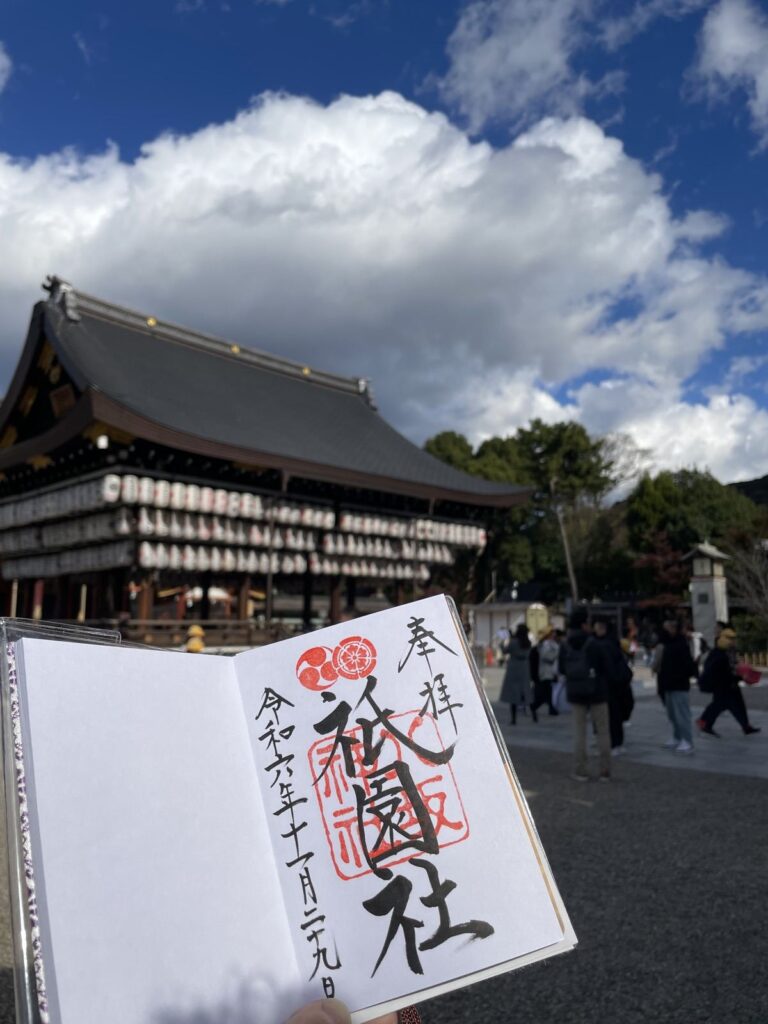
A goshuin is a red seal stamped into a book and written over by hand in black ink. Temples and shrines give them out for a small fee. I have my own goshuin book with more than 30 so far, and every page looks different. Flipping through it is my favorite souvenir of every trip.
Goshuin come with their own etiquette. A goshuin is proof that you prayed, not a tourist stamp. Pray first, then go to the counter, and be patient, because the calligraphy takes time. Reselling them has become enough of a problem that some shrines have stopped offering special editions.
The Places That Stayed With Me
Meiji Jingu in Tokyo is a shrine I keep going back to. It sits in a dense forest right next to Harajuku, and walking in feels like stepping into a jungle. The city noise fades and the place feels almost mystical.
In the countryside, every visit is different. Some temples are completely silent compared to the cities, some feel mysterious, and some are simply huge.
What fascinates me most is where you find them: halfway up a mountain, at the end of a forest trail, in the middle of nowhere. More than once I have stood in front of one and wondered how they got the building materials up there.
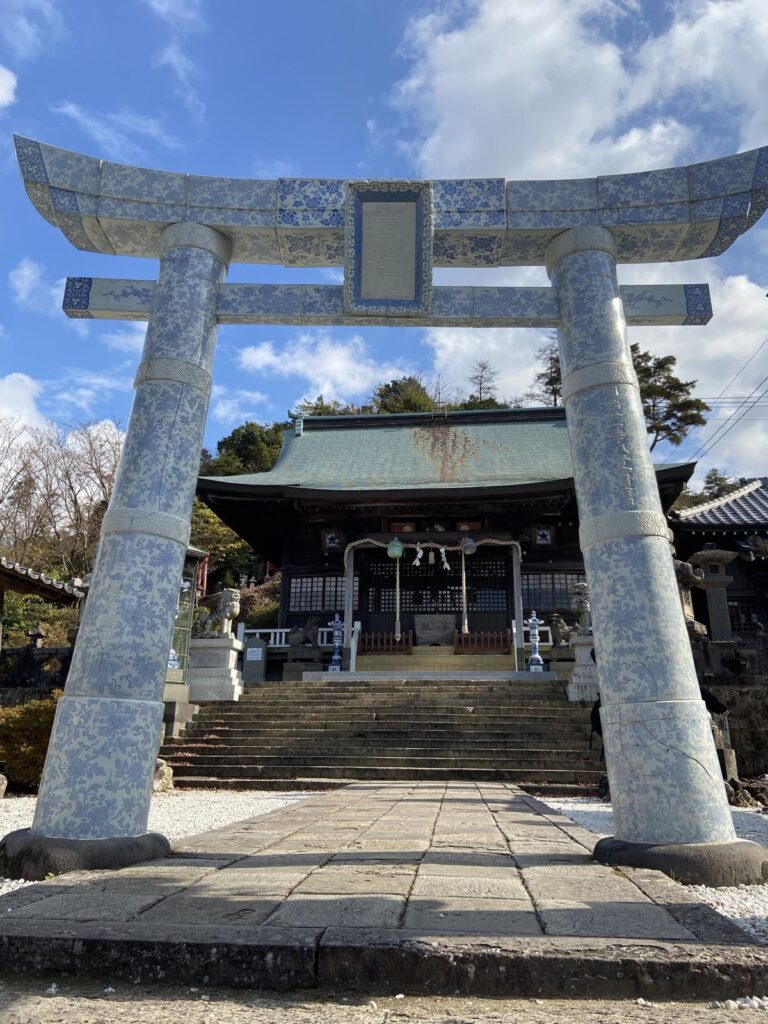
One of my favorite shrines I found by accident. We were walking through Arita, the porcelain town in Saga, when we came across Tozan Shrine. Its torii is made of blue and white porcelain. It was put up in 1888 and is now a registered cultural property.
The guardian lion dogs, the lanterns and a large water jar on the grounds are porcelain too, and a railway line crosses the approach. Arita and its porcelain will get their own post at some point, because the town deserves one.
Temples also led me to my favorite part of Japanese food. Shojin ryori, the Buddhist temple cuisine, is entirely plant-based, and the cooking class I took in Kyoto is still one of my best memories of Japan. I wrote about it in what I learned in a Kyoto kitchen. Staying overnight at a temple is still on my list, and when I do it, I will write about it here.
If you are planning your days around temples and shrines, my list of vegan restaurants in Kyoto covers where to eat in between. And if plant-based eating in Japan is new to you, start with how to eat vegan in Japan.
FAQ
Do I have to clap at a temple in Japan?
No. Clapping belongs to shrine etiquette. At a Buddhist temple you pray silently with your palms together. If you clap by mistake, nobody will make a fuss, but gassho is the expected form.
Can tourists pray at temples and shrines?
Yes. Everyone is welcome, and you do not have to believe anything to follow the rituals. Japanese visitors see it as polite when you do them with care.
Is it rude to walk through the middle of a torii?
It is not forbidden, but the center is traditionally the path of the kami. Most visitors keep slightly to the side, and it is an easy habit to pick up.
Can I take photos at temples and shrines?
Usually outside, often not inside the halls. Look for signs, do not photograph people while they pray, and follow any photo bans. Kyoto asks tourists for this specifically.
Is there a dress code for temples in Japan?
Temple etiquette in Japan has no strict dress code. Dress as you would for any place of worship, and wear shoes you can take off easily, since many temple halls require it.
You do not need to get every step right. Bow at the gate, keep your voice low, and watch what the Japanese visitors around you do. Most of the time, copying them is the best guide to temple etiquette there is.