I had never heard of shojin ryori vegan cooking when I booked the class. The listing on AirKitchen described it as “Traditional Buddhist Cooking with plant-based ingredients,” and that was enough. We arrived at a small apartment in Kyoto, stepped into a warm kitchen that opened directly onto the dining area, and our host greeted us with a hand-prepared recipe binder and a quiet confidence that immediately made us feel at home.
What followed over the next few hours was not just a vegan cooking class. It was, without me fully realizing it until later, an introduction to one of the oldest and most considered food traditions in Japan. Shojin ryori is the cuisine that Buddhist monks have been practicing for over 700 years, built on a single principle: do not harm living beings. No meat, no fish, no eggs, no dairy. And in its classical form, not even strong flavors like garlic and onion, which were said to agitate the mind.
What Shojin Ryori Vegan Cuisine Actually Is
The name breaks down simply: “shojin” means devotion or endeavor, “ryori” means cooking. Together, they describe a practice that was never just about food. For Buddhist monks, cooking was part of the spiritual discipline itself. The kitchen was not separate from the temple. It was part of it.
What makes shojin ryori vegan in the truest sense is not just the absence of animal products, but the deliberate relationship with ingredients. Nothing is wasted. Every part of a vegetable is used. Seasonal produce determines the menu. And the foundation of almost every dish is dashi, a Japanese soup stock that in the standard version is made from kombu seaweed and dried bonito flakes. In shojin ryori, the bonito is simply gone. What remains is a kombu and dried shiitake dashi that is, if anything, deeper and more complex in its umami flavor.
Our host explained all of this with a small presentation she had prepared for us. She was patient, clear, and genuinely enthusiastic about the subject. I remember standing in her kitchen thinking: I came here expecting to learn a few recipes. I did not expect a 700-year history lesson that actually made sense of everything on the plate.
What struck me as much as the content was the atmosphere. It did not feel like a class for long. It felt more like spending an evening cooking with someone who has a genuine passion for what she does and enjoys sharing it. Relaxed, warm, the kind of conversation that makes time disappear.
Shojin ryori vegan cuisine is the purest form of plant-based eating Japan has to offer. This post covers one shojin ryori vegan evening in Kyoto — what it looks like, how it works, and whether it is worth the planning.
This shojin ryori vegan evening in Kyoto is one I return to often when people ask about Japan. Shojin ryori vegan cooking forces slowness in the best way.
The Shojin Ryori Vegan Plate and What It Tells You
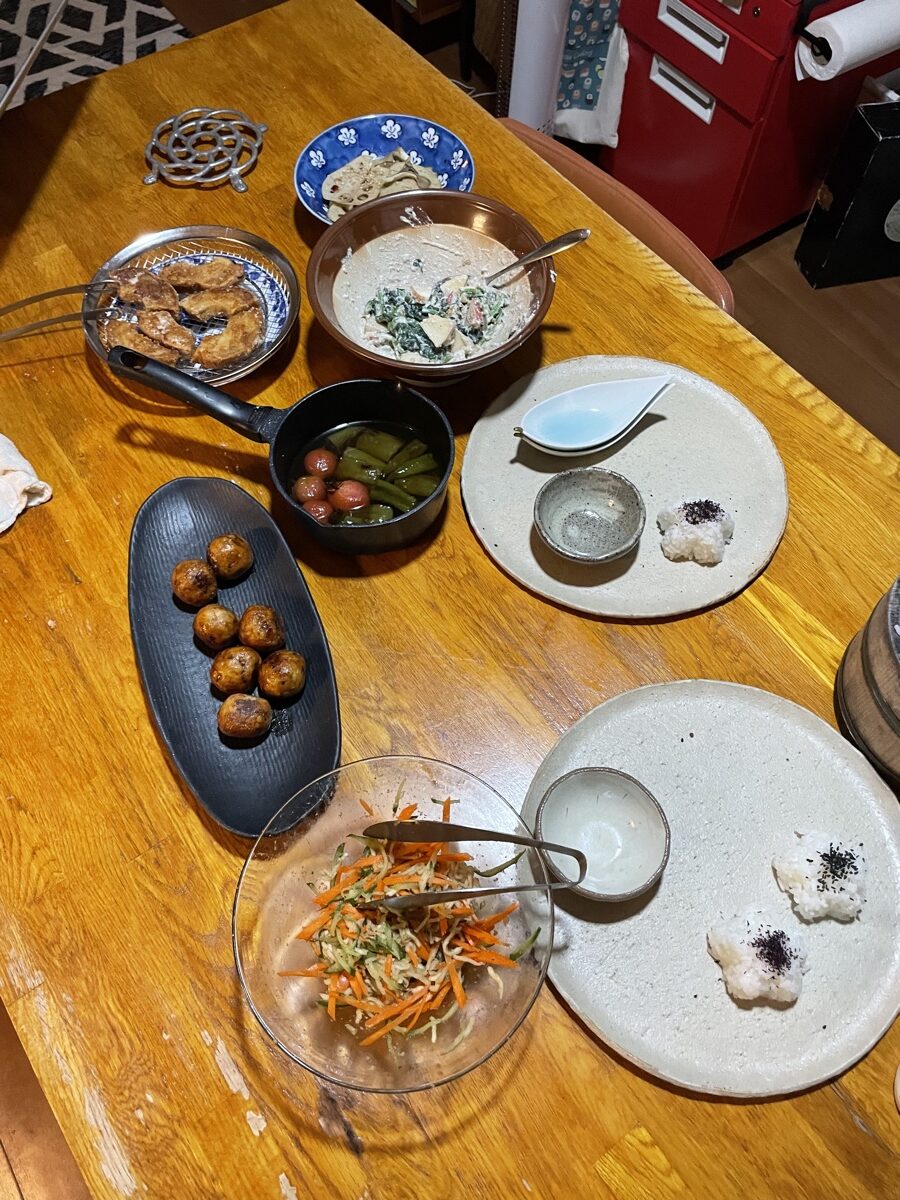
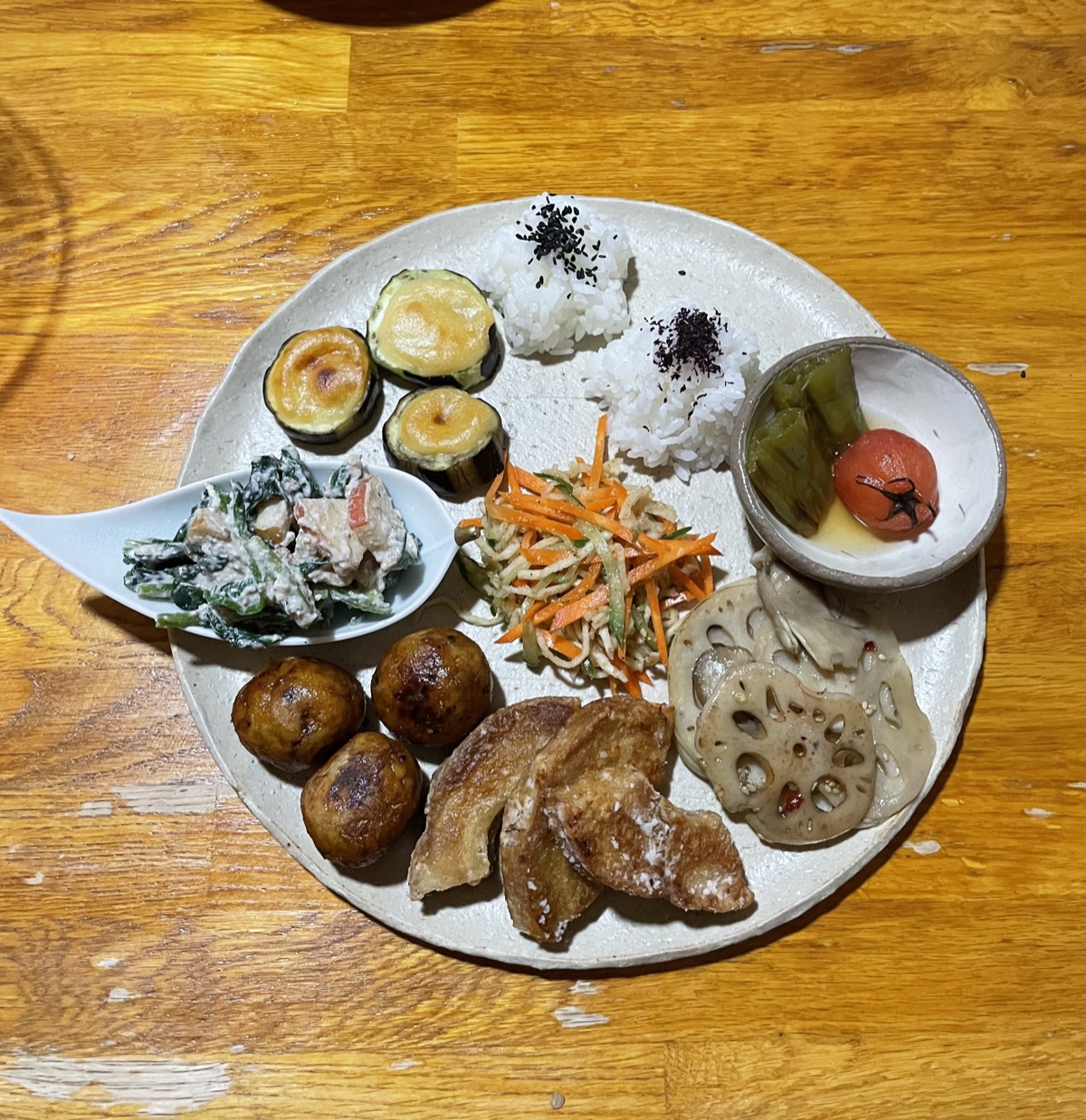
The shojin ryori plate is not a single dish. It is a composition. Several small elements placed together, each with a different role, texture, and technique behind it. That evening we prepared a summer and autumn menu, and the plate we built together looked almost like a still life: something that seemed too carefully arranged to have been made by us, and yet we had made it.
At the center of almost every element was the dashi. Not visible as a broth, but present as the base of the simmered vegetables, absorbed into lotus root slices, there in the background of flavor throughout the plate. Our host described it as the invisible thread connecting everything. Once I understood that, the plate started to make sense in a completely different way.
Alongside the dashi-simmered vegetables, there was kiriboshi daikon: shredded dried daikon radish, dressed lightly with sesame. It is one of the most traditional preserved foods in Japan, and in shojin ryori it appears regularly because preservation was part of how monks managed without refrigeration or access to fresh produce in every season. Simple, almost plain on its own, but it earns its place on the plate by contrast.
Then the lotus root, braised in a sweet-salty sauce until it carries the flavor all the way through its characteristic holes. Kimpira, this preparation method is called, and it is one of the building blocks of Japanese home cooking. In shojin ryori it gives presence to a root vegetable that might otherwise go unnoticed.
The shira-ae was the most surprising element to me: mashed silken tofu dressed with spinach, apple, and walnuts. White, soft, subtly sweet. The apple is a modern addition our host mentioned she had developed herself. It is the kind of small creative touch that speaks to how shojin ryori has evolved over time while staying true to its roots.
And then there was the nasu dengaku: eggplant halves glazed with white miso, grilled until the surface caramelizes and the inside becomes soft and almost yielding. One of the classic dishes of shojin ryori, the one that appears most often in restaurants and recipes. It needs almost nothing else. The miso does everything.
Finally, rice balls with sesame and shiso. The anchor of the plate, the simplest thing on it, and somehow the one that tied everything together.
A Shojin Ryori Vegan Ingredient I Had Never Heard Of
One thing I was not prepared for that evening was fu. Fu is a food made from wheat gluten, and it has been part of Japanese cooking, particularly shojin ryori and plant based Japanese food traditions, for centuries. In the West, seitan gets all the attention as a meat alternative. But fu is different: lighter, spongier, with a texture that absorbs flavors in a way that surprised me completely.
Our host used it to make what she called “fake fried chicken”: ring-fu soaked in a marinade of soy sauce, sake, and mirin, coated in starch and fried until golden. It was the dish I kept thinking about on the way home. We ordered fu the following week. It has been in our kitchen regularly ever since.
If there is one ingredient from that evening I would recommend looking into before or after a trip to Japan, it is this one. Not because it replaces anything, but because it is genuinely itself, and that is more interesting. That is what sets shojin ryori vegan cooking apart from every other plant-based meal I have had in Japan.
How to Try Shojin Ryori Vegan Cuisine in Kyoto
If you want one shojin ryori vegan experience that will stay with you, a cooking class in Kyoto is the place to start. You can eat shojin ryori at a number of temple restaurants and traditional dining rooms in Kyoto. The experience in a formal temple setting is beautiful and worth seeking out. But a private vegan cooking class via AirKitchen offers something different: you cook it yourself, at someone’s home, and the conversation that happens around that is part of the experience in a way a restaurant cannot replicate.
AirKitchen is a platform where you book private cooking classes with local hosts in their own homes. Groups are small, usually two or three people, and you cook alongside the host rather than being talked through a demonstration. Each host designs their own program, which means the range is genuinely wide: ramen one evening, wagashi sweets or sushi the next, and for the right host, temple food like shojin ryori. Classes run in Tokyo, Kyoto, Osaka, and a number of other cities and regions across Japan.
The class was small: just my wife, me, and our host. She had thought carefully about how to make the evening work for people who might not know much about Japanese cuisine. She was pleasantly surprised to find we already knew our way around it fairly well. Temple cuisine was simply the one corner we had not yet explored, and that was exactly what we were there to change. Everything was explained in English, step by step, with a recipe booklet to take home.
Werbung · Book this class
The class we took is listed here on AirKitchen: traditional Buddhist plant-based cooking in Kyoto, taught in English with a recipe booklet. Private, small group, fully hands-on.
Affiliate link: if you book through this link, we earn a small commission at no extra cost to you.
If you are planning a trip to Japan and wondering how to navigate vegan food beyond the obvious options, I would start with my guide on how to eat vegan in Japan. And if you are curious about what everyday vegan eating looks like on the ground, the vegan konbini guide covers the convenience store options that will get you through every hungry moment between meals.
Shojin ryori vegan cooking sits at the other end of that spectrum. It is not fast, not convenient, not something you stumble into. But that is exactly what made that shojin ryori vegan evening in Kyoto stay with me. If you visit Kyoto, a shojin ryori vegan experience belongs on the list. Shojin ryori vegan cooking is available at several Kyoto temples — ask at the tourist office or book through the temple directly.