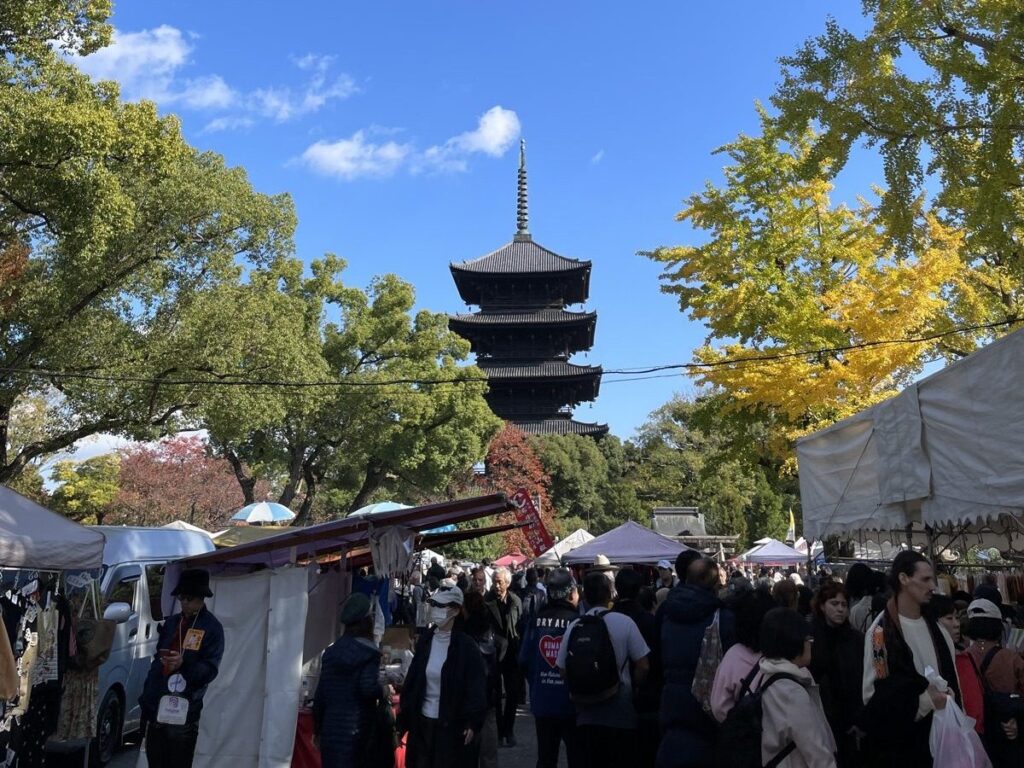
We plan our Japan trips around flea markets, and Kyoto makes that easy: there is a Kyoto flea market almost every week, usually on the grounds of a temple or shrine. Two of them we have visited on every trip, three times each: Kobo-san at Toji and Tenjin-san at Kitano Tenmangu. In late 2024 we added the handicraft market at Kamigamo Shrine.
This post has the dates of all eight regular markets, our notes on those three, and a few practical tips, including how to pack pottery for the flight home.
Kyoto Flea Market Calendar: 8 Regular Markets
Each of these markets runs on a fixed day every month. Dates and times are from the official list of the Kyoto Tourist Information Center (July 2026). Stall numbers are the organisers’ estimates.
| Market | Where | When | Stalls |
|---|---|---|---|
| Kobo-san (antiques, everything) | Toji Temple | 21st of every month, 7:00 to 15:30 | approx. 1,000 |
| Toji Garakuta-ichi (antiques, handicrafts) | Toji Temple | 1st Sunday, 5:00 to 16:00 | approx. 350 |
| Tenjin-san (antiques, everything) | Kitano Tenmangu Shrine | 25th of every month, 7:00 to sunset | approx. 1,000 |
| Hyakumanben Handicraft Market | Chionji Temple | 15th of every month (not in August), 8:00 to 16:00 | approx. 450 |
| Umekoji Handicraft Market | Umekoji Park | 1st Saturday (not in Jan, May, Aug), 9:00 to 16:00 | approx. 300 |
| Kamigamo Handicraft Market | Kamigamo Shrine | 4th Sunday and Setsubun (Feb 3), 9:00 to 15:00 | approx. 200 |
| Kiyomizudera 1000 Market | In front of Kiyomizu-dera | 28th of every month, 9:00 to 16:00 | n/a |
| Meguri Meguru Marche (organic food) | LAQUE building, Shijo | 1st Wednesday, 10:30 to 17:00 | n/a |
We plan our Kyoto days with this table. First we check how many days Kyoto gets on our route, then we move them around until they cover as many markets as possible. The 21st and the 25th are only four days apart, which makes that easier.
When it rains, fewer sellers set up, and heavy rain can cancel a market. The handicraft markets at Kamigamo, Hyakumanben and Umekoji go ahead in the rain, according to their organisers. Dates also change at short notice, so check the current list from Kyoto Travel (PDF) before you go.
At Kobo-san, Tenjin-san and Garakuta-ichi most things are second-hand: old ceramics, vintage kimono, tools, odds and ends. At the handicraft markets, called tezukuri-ichi, people only sell what they made themselves.
Kobo-san: The Toji Flea Market on the 21st
Kobo-san is the biggest and best-known Kyoto flea market. It runs on the 21st of every month at Toji, about 15 minutes on foot from Kyoto Station, so you can fit it in even on the day you arrive or leave.
Toji’s five-storey pagoda stands right above the market, and you keep seeing it between the rows of stalls. It is a beautiful place for a flea market.
You can find almost anything here: bonsai, old tools, kimono and fabrics, pottery, snacks and street food, and artists selling their own work. We bought a small painting directly from the woman who painted it.
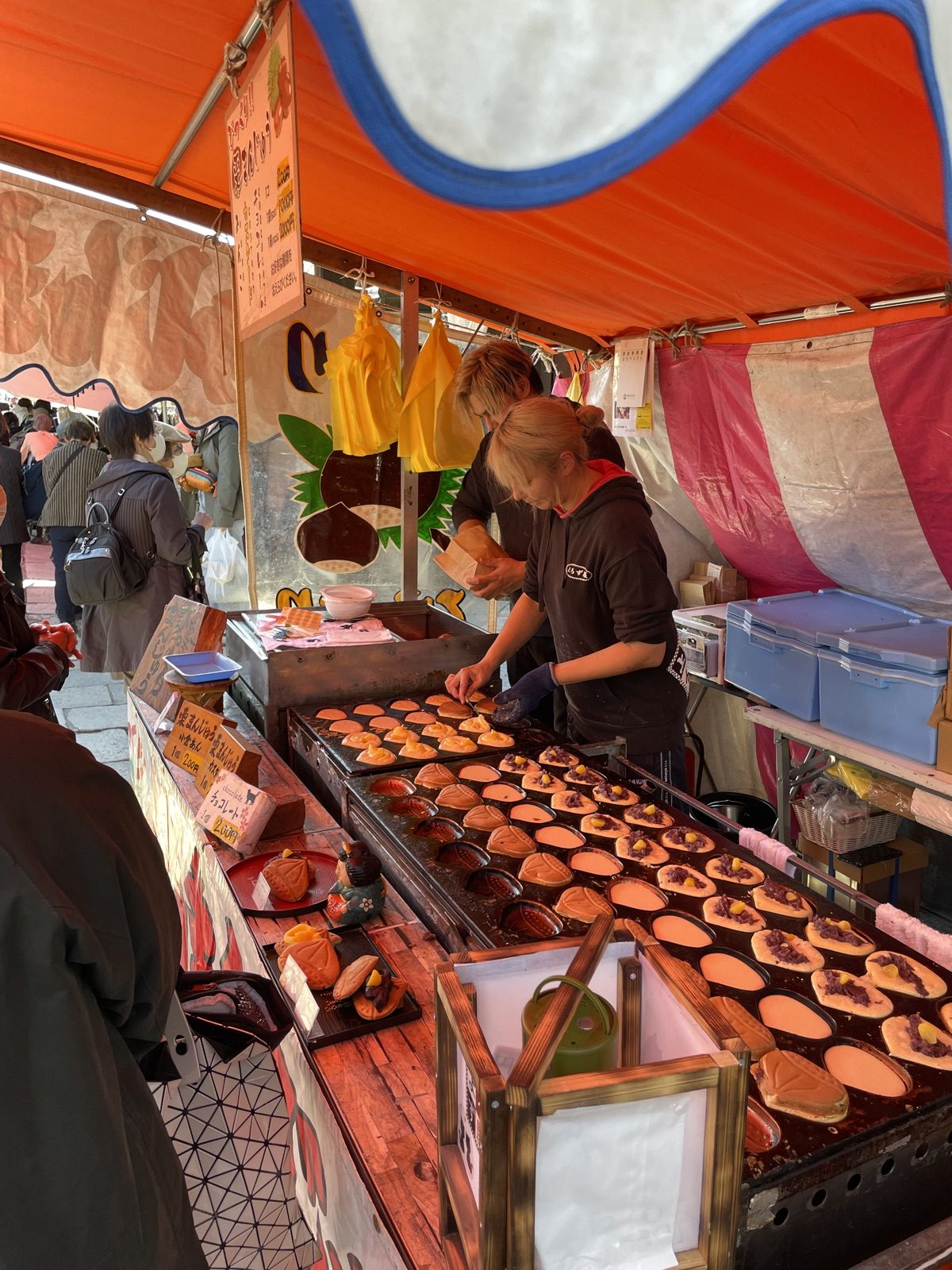
It is also almost always packed, because everyone knows about it. Come early in the morning if you want room to look. On the first Sunday of the month, the smaller Garakuta-ichi (antiques and handicrafts) takes place on the same grounds. We have not been to that one yet.
Kobo-san in short: 21st of every month, 7:00 to 15:30 according to the official list (some guides give an earlier start), about 15 minutes’ walk from Kyoto Station. More about the temple on the official Toji website.
Tenjin-san: The Kitano Tenmangu Flea Market on the 25th
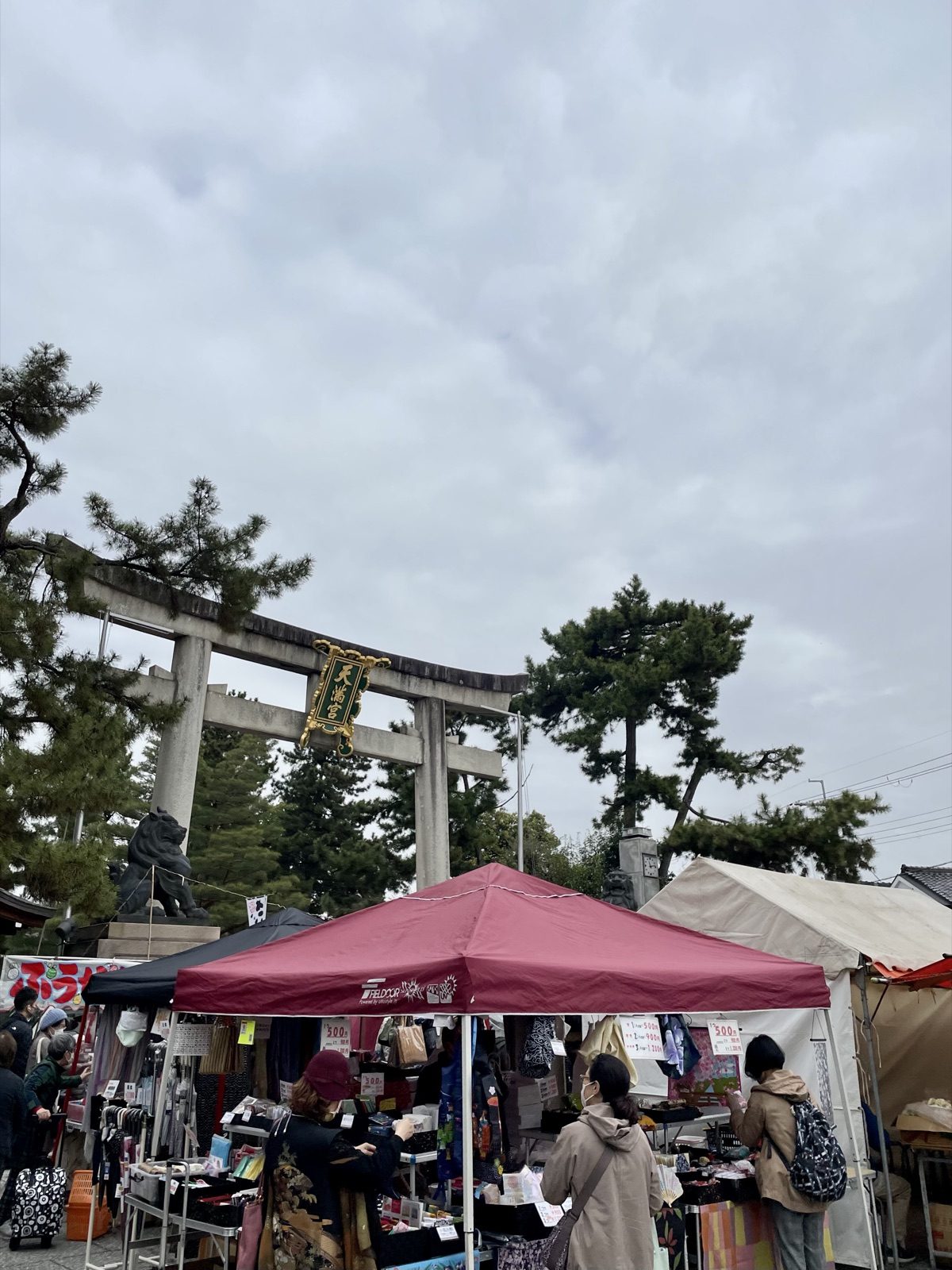
On the 25th, four days after Toji, Tenjin-san fills Kitano Tenmangu in the northwest of Kyoto. It is about as big and as well known as Kobo-san, so expect crowds here too.
You enter through the big torii on Imadegawa Street and walk past a long row of food stalls before the actual market starts. From there, the stalls spread out across the shrine grounds.
There is a lot of pottery, especially matcha bowls, plus fabrics, kimono and plenty of small things. If you collect Japanese ceramics like we do, take your time here.
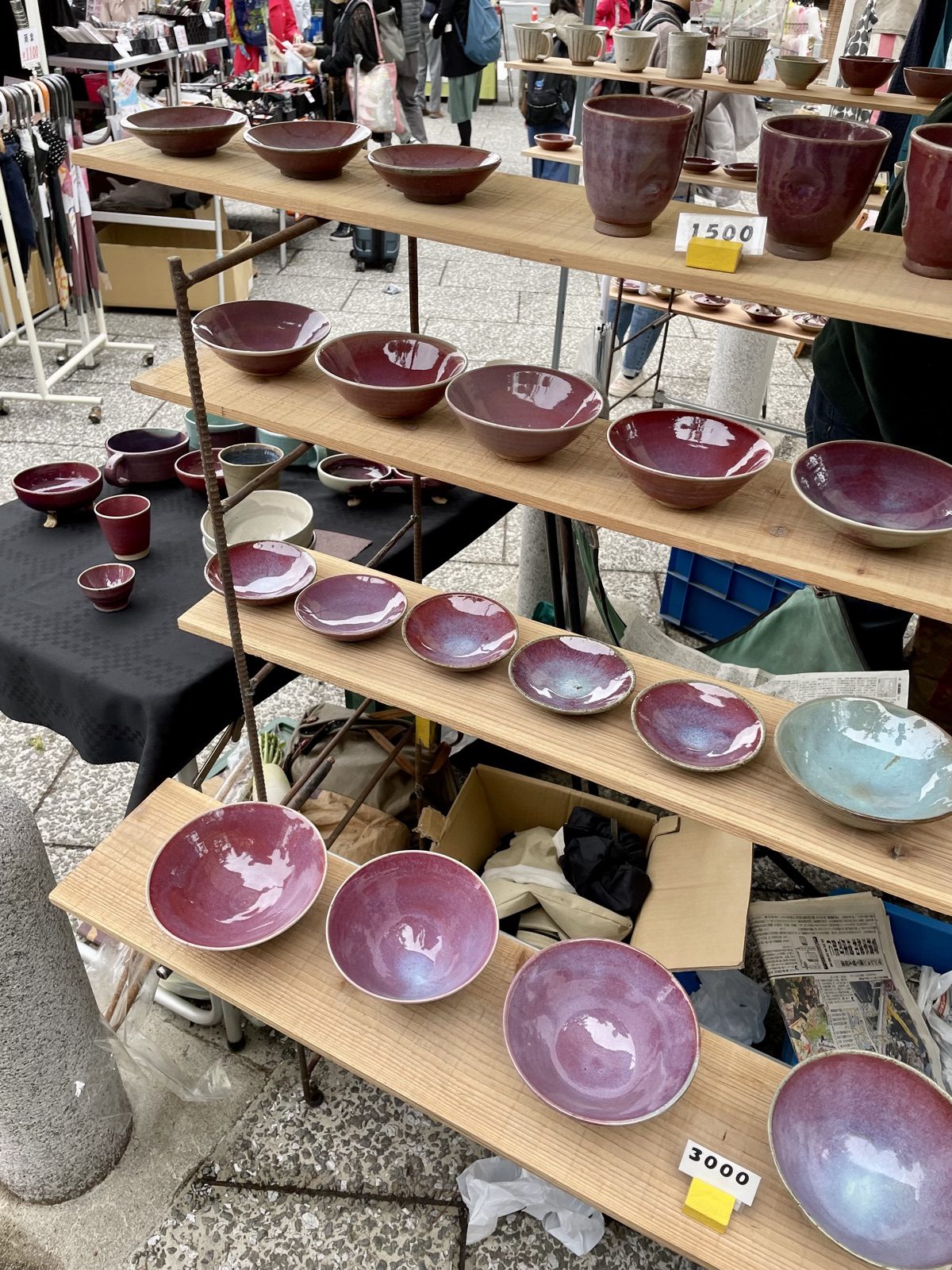
Tenjin-san always has bonsai stalls too, in spring and in autumn. On one visit, the seller next to them had crates full of tiny bonsai pots.
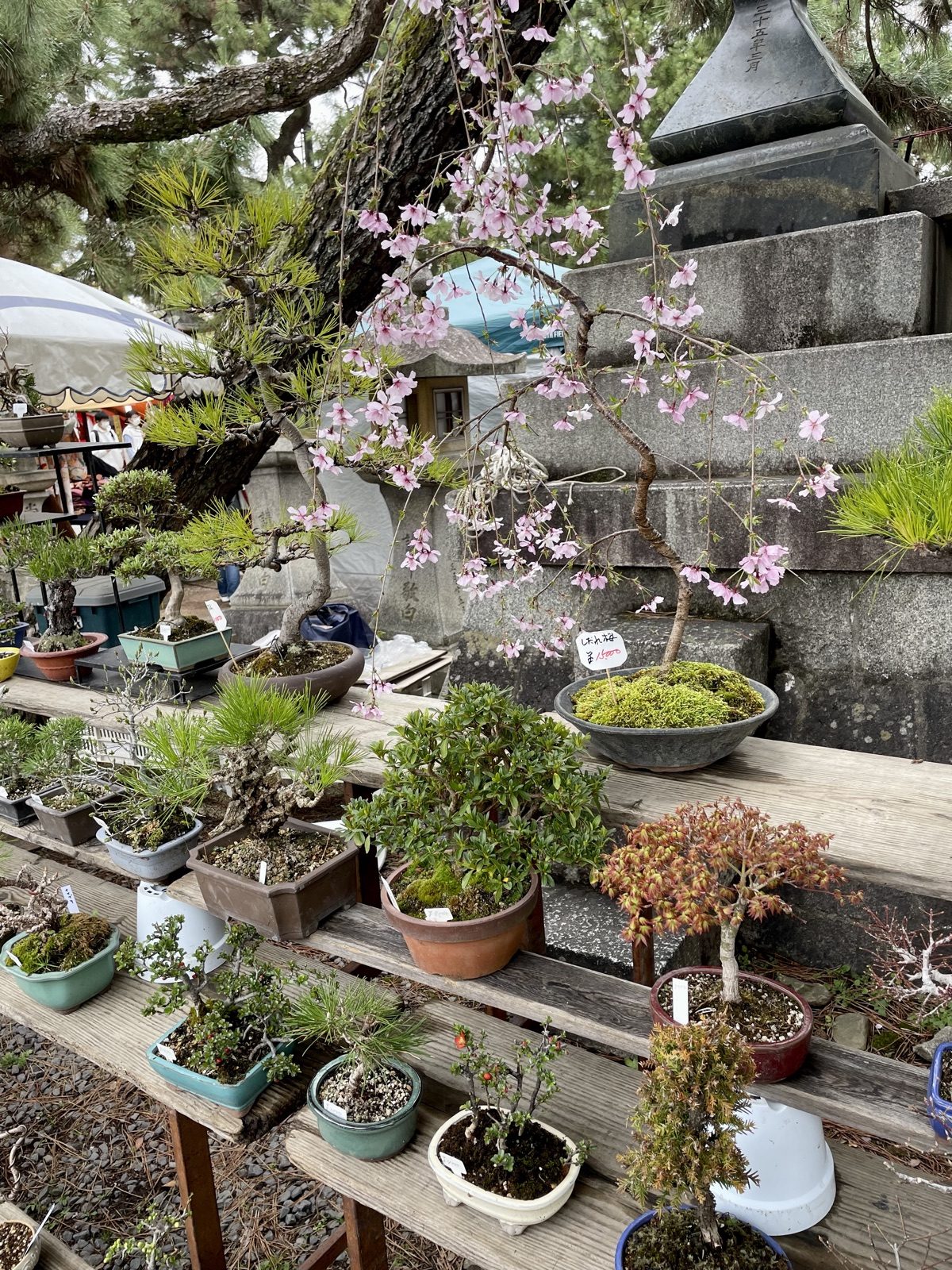
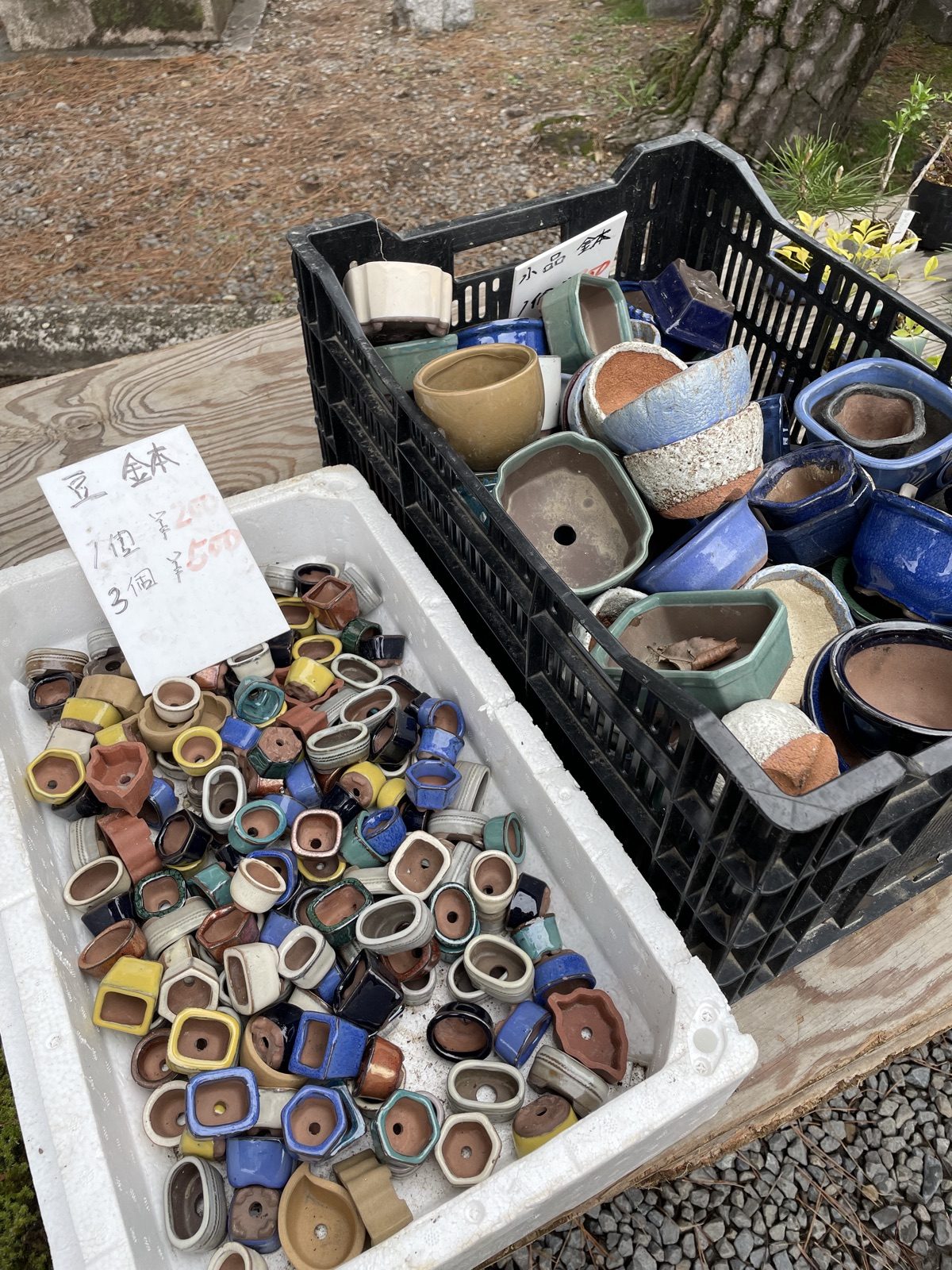
Getting there: bus 50 from Kyoto Station (stop B2) to Kitano Tenmangu-mae. The ride takes a while, so start early. The shrine has its own website.
Kamigamo Handicraft Market: The Quiet One in the North
Kamigamo Shrine is in the far north of Kyoto, away from the usual sights. When we went in late 2024, the market was quiet, with hardly any other tourists. That may have changed since, but of our three markets it was the most relaxed.
The handicraft market runs on the 4th Sunday of the month, and nearly everything is sold by the person who made it. We bought a lot here: jewellery (a ring, and Japanese wooden earrings for me) and quite a few pieces from the pottery stalls.
Small bakeries had their own stalls, and there were stands with handmade postcards, which we always buy too many of. An older man was selling cloths he had embroidered himself. I bought one with a ginkgo leaf.
There was also a craft cola stall. Craft cola is my latest discovery in Japan, and it has little in common with regular cola. It tastes completely different, and it is very good. If you see it anywhere, try it.
Yoroi Kizome-shiki: samurai at Kamigamo Shrine
On the day we were there, 23 November 2024, a group in full samurai armour marched across the shrine grounds, right through the market. I looked it up later: it was the Yoroi Kizome-shiki, a ceremony in late November where participants, children among them, wear armour they made themselves and walk to the main hall to be purified. If you are in Kyoto that weekend, go and see it.
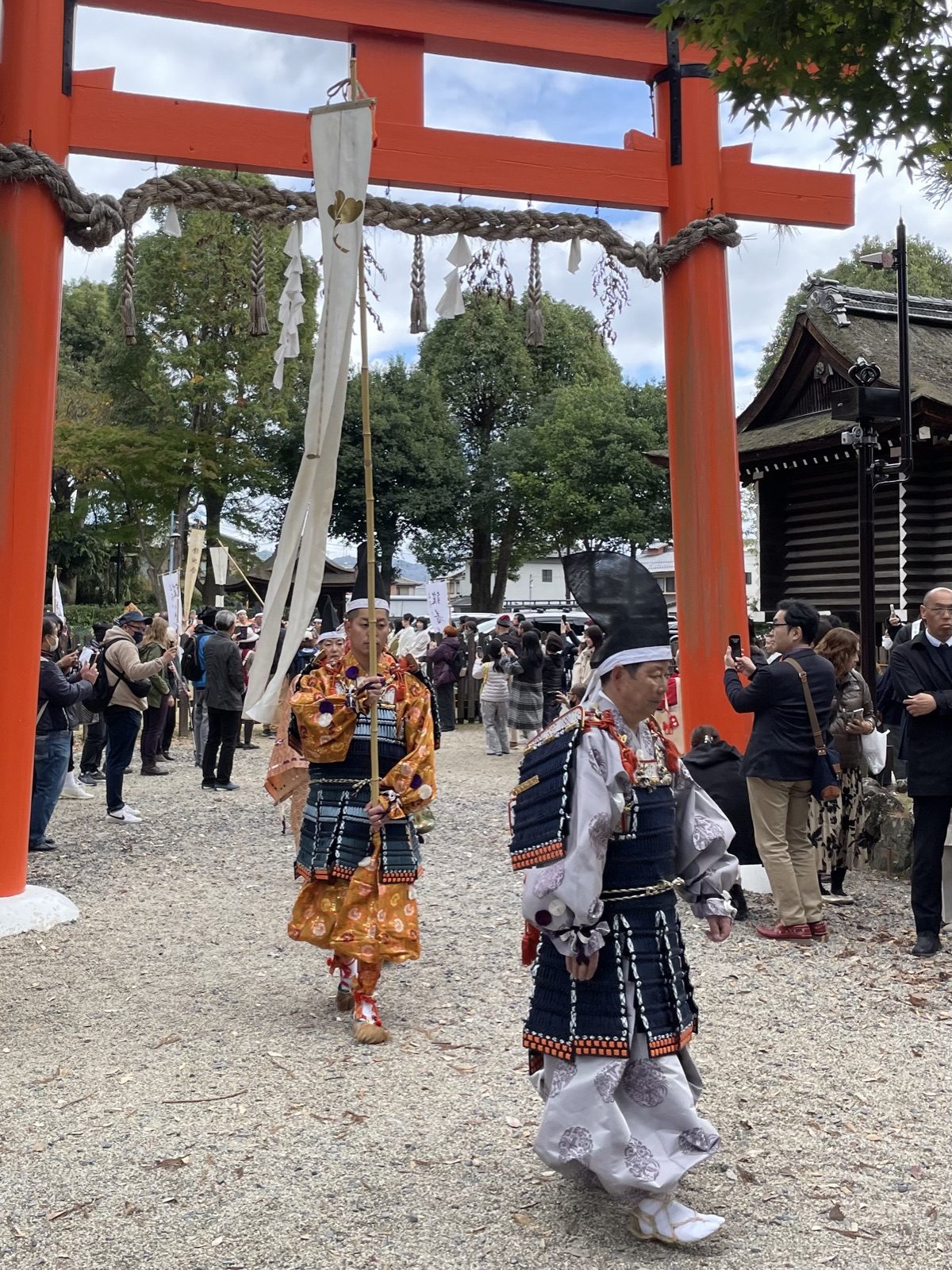
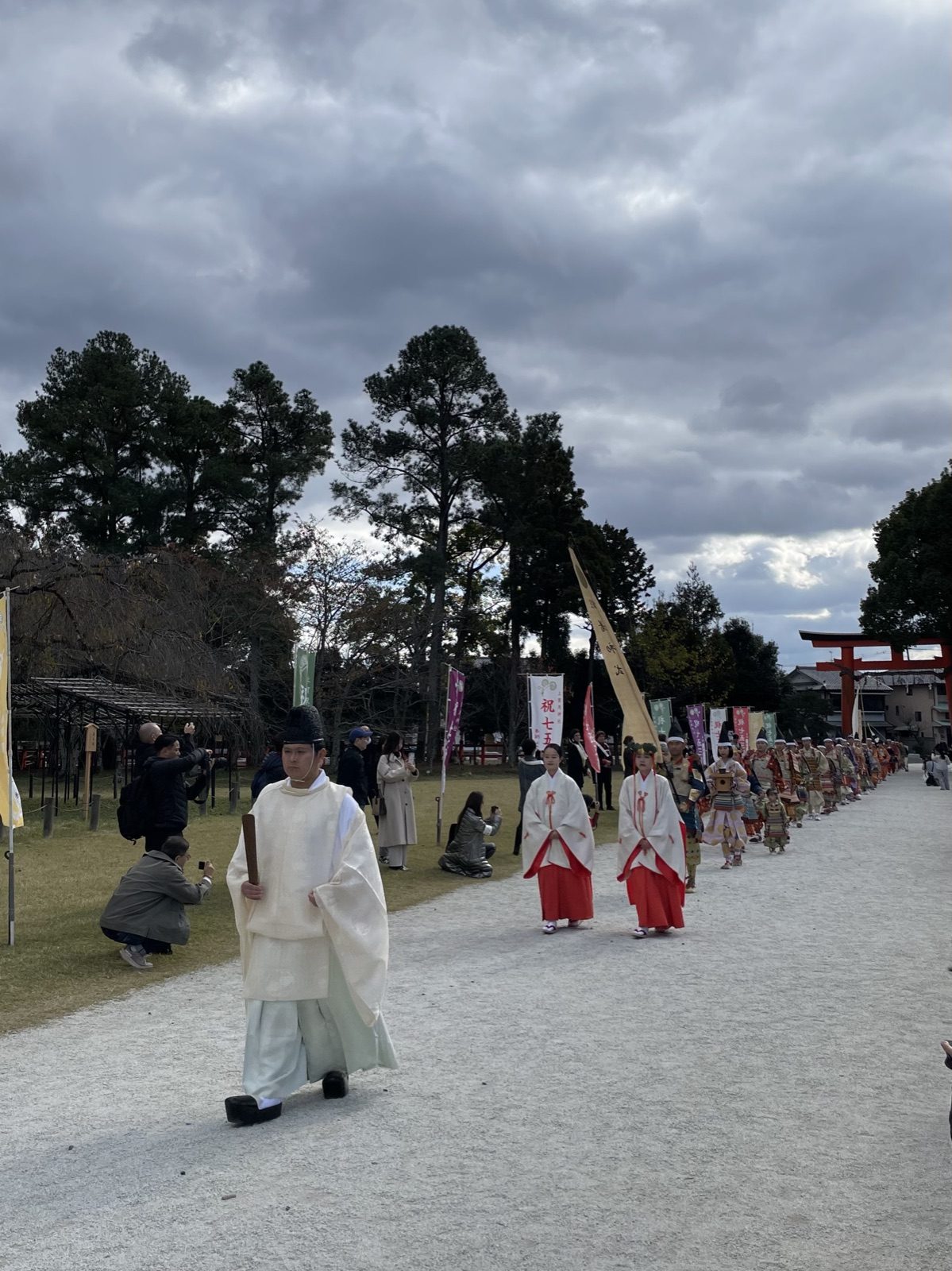
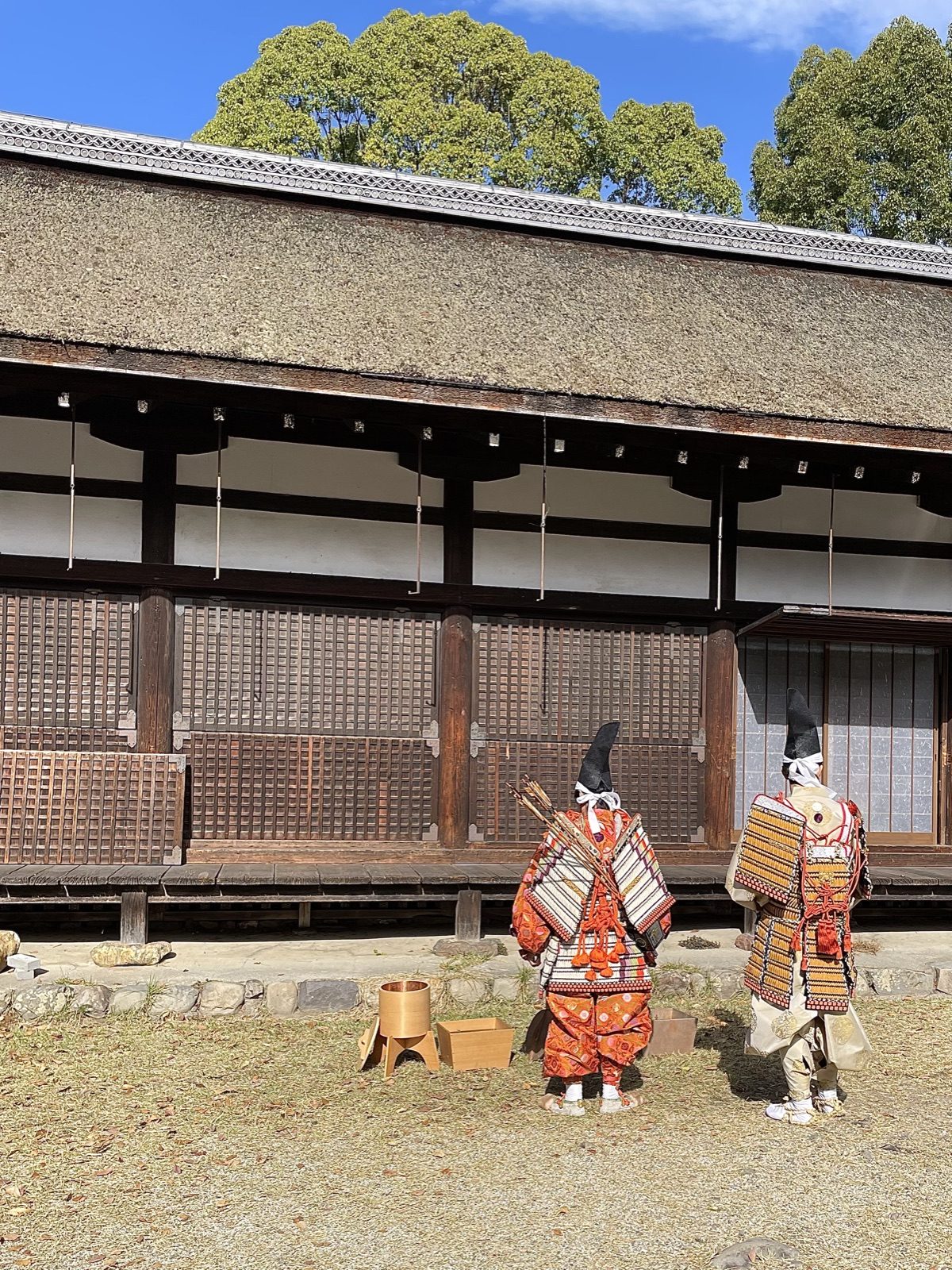
That was a Saturday, not the usual 4th Sunday, so the market date in November can differ. Check before you go.
Getting there: bus 9 from Kyoto Station (stop B1) to Kamigamo Misonobashi, then a short walk. Upcoming dates are on the organiser’s website.
More Markets in Kyoto
We have not been to these yet. They are on our list for the next trips, and once we have been, I will add our notes here:
- Hyakumanben Handicraft Market at Chionji Temple, near Kyoto University. Every 15th, about 450 stalls. Dates are on the organiser’s website.
- Umekoji Handicraft Market in Umekoji Park, one stop from Kyoto Station on the JR Sagano Line. First Saturday of the month, same organisers as Hyakumanben.
- Kiyomizudera 1000 Market in front of Kiyomizu-dera, every 28th. Easy to combine with a walk through Higashiyama.
- Seasonal markets like the Heian antique market in Okazaki Park or the Kyoto Art Craft Market only take place on a few dates a year. They are listed in the PDF linked above.
Travelling on to Tokyo? The markets there are smaller and spread across the city. My Tokyo flea market guide has the dates of 11 regular markets, including the Oedo Antique Market and the Tokyo Romantic Market in Shibuya, the one we have been to.
Tips for Your First Kyoto Flea Market
Bring cash. Most stalls are one-person businesses. Some take IC cards or QR payments, many do not. Bring small notes and coins.
Come early. The big markets get crowded from late morning. Early on you have more room to look.
Bring a bag, and something to wrap pottery in. Sellers usually wrap ceramics in newspaper. For the flight home, pack them between your clothes in the suitcase.
Temple rules still apply. The markets take place on temple and shrine grounds, so behave as you would on any other day, especially near the main halls. My guide to temple etiquette in Japan covers the basics.
Food stalls and vegan options. The food stalls change from market to market, so I cannot give you a reliable vegan list. Many snacks contain dashi or egg, so ask before you buy.
How to ask is explained in how to eat vegan in Japan. For a proper meal afterwards, see my favourite vegan restaurants in Kyoto.
Mobile data for the buses. Toji is walkable from the station. For Kitano Tenmangu and Kamigamo you take city buses, and Google Maps helps a lot there, so we use an eSIM.
Saily (affiliate link) gives you 10% off with my code MOCHIMILES, applied automatically through the link. Airalo (affiliate link) works just as well. I compare the two in my eSIM guide for Japan.
If you have a free day between markets, my guide to things to do in Arashiyama covers the quieter spots on the western edge of the city.
FAQ
What is the biggest flea market in Kyoto?
Kobo-san at Toji on the 21st and Tenjin-san at Kitano Tenmangu on the 25th are the two largest, each with around 1,000 stalls.
When is the Toji flea market?
Kobo-san takes place on the 21st of every month from 7:00 to 15:30. A smaller antique market, Garakuta-ichi, is held at Toji on the first Sunday of the month.
Which Kyoto flea market is best for pottery?
All three we visited had good pottery. Tenjin-san has a lot of matcha bowls and older ceramics. For new pottery straight from the makers, go to the Kamigamo or Hyakumanben handicraft markets.
Do Kyoto flea markets take place when it rains?
Usually yes, but with fewer stalls. The handicraft markets at Kamigamo, Hyakumanben and Umekoji go ahead in the rain. Other markets can be cancelled in heavy rain.
Do I need cash?
Yes. Most stalls do not take cards.