The Philosopher’s Path in Kyoto is a quiet walk along a canal on the east side of the city, in the area often called Northern Higashiyama. It is at the centre of one of our favourite days in Kyoto. We have walked it in spring and in autumn, we always pick up onigiri at the north end, and we keep coming back for the same thing: a bench by the water and someone playing music nearby.
This guide turns the walk into a whole day, built from what we have done there over our visits: a hike up Daimonji in the morning, onigiri by the canal at lunch, then south to Eikando and Nanzen-ji in the afternoon. Below is the day stop by stop, including the one place I would skip.
The Philosopher’s Path Kyoto Day at a Glance
The route goes from north to south. You start at the north end near Ginkaku-ji, go up into the hills and finish in Okazaki, where the subway takes you back to the centre.
| Stop | When | My verdict |
|---|---|---|
| Ao Onigiri | From 9:00 | Lunch to go, every time |
| Daimonji hike | Morning | View over the whole city |
| Philosopher’s Path | Midday | Find a bench and stay, best in spring |
| Eikando | Early afternoon | Absolutely, especially in autumn |
| Nanzen-ji and the aqueduct | Afternoon | Yes, the grounds are free |
| Chocho Kobaru Coffee | Afternoon break | On my list, not tried yet |
| Keage Incline | Late afternoon | Skip it, far too crowded |
| Museums in Okazaki | If time is left | On our to-do list |
Getting to the Philosopher’s Path
The north end of the Philosopher’s Path is a bit out of the way. From Kyoto Station, city buses 5 and 17 go to the Ginkakuji-michi stop in about 35 minutes, longer in traffic. The letters of the bus stops at Kyoto Station change now and then, so check the signs at the terminal.
From the bus stop you walk east towards the canal, where the first stop of the day is waiting.
8 Stops From Ao Onigiri to Okazaki
1. Ao Onigiri: Buy Lunch First
The first stop is lunch, even if it is only nine in the morning. Ao Onigiri is near the north end of the Philosopher’s Path, and we buy our onigiri there every single time. The shop opens at 9:00 and closes when everything is sold.
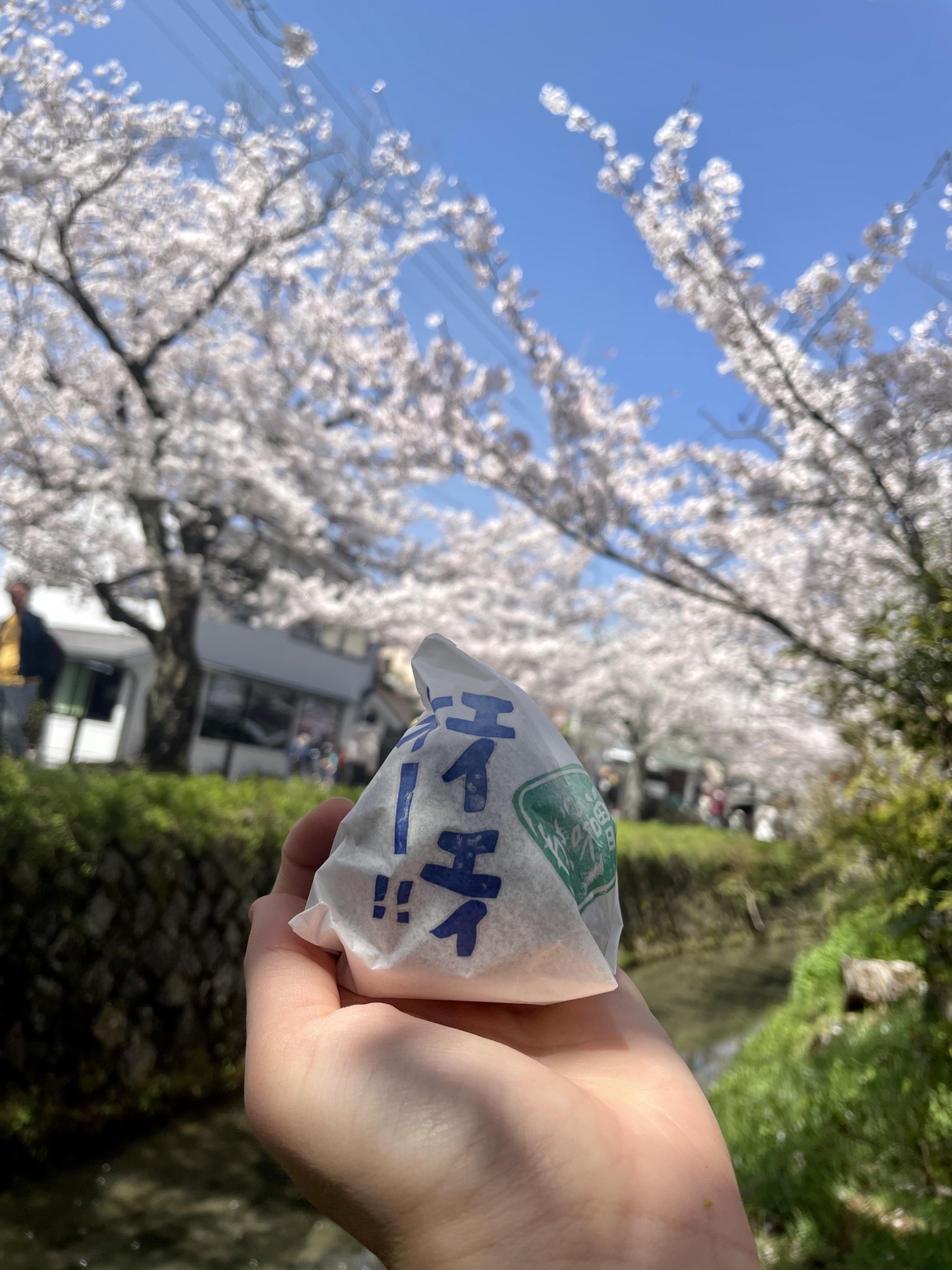
Since you first have to get here from the city centre, I would go to Ao straight away, even if it is a small detour before the hike, and carry the onigiri with you until lunch by the canal. There are always a few vegan fillings.
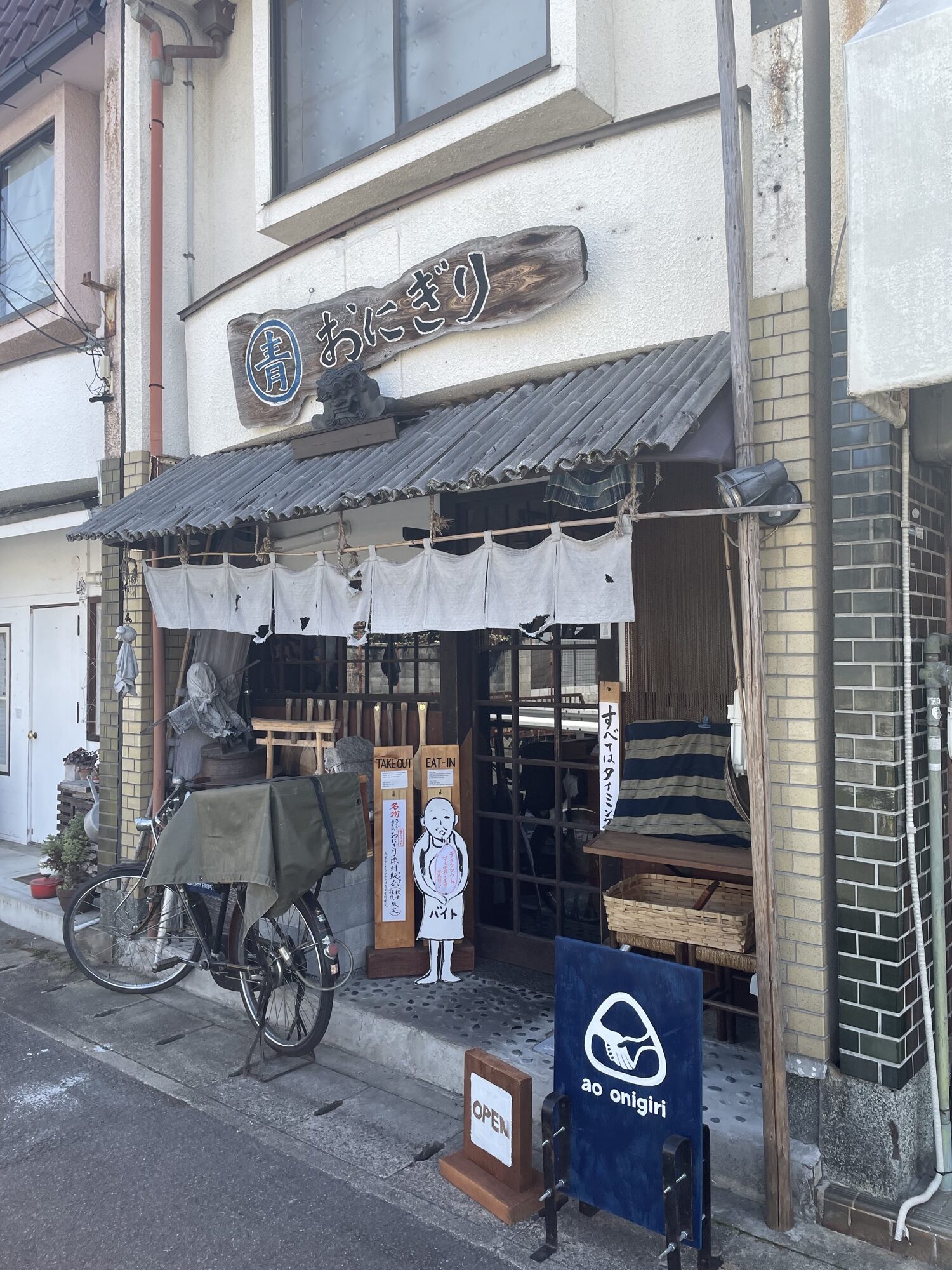
Good to know: check Ao’s Instagram before you go. They post a schedule there showing exactly when they are open, and Google Maps does not have it. I wrote more about Ao, and the owner’s rather wonderful onigiri book, in my guide to vegan restaurants in Kyoto.
If Ao is closed or sold out, the nearest konbini will do. My vegan konbini guide lists what you can buy there. There are also two places nearby I have not tried myself: KOKU Vegan Ramen, which is listed as fully plant-based, and the udon shop Omen, which has a small vegan menu.
2. The Daimonji Hike: Kyoto From Above
Daimonji is the mountain with the giant character 大 (dai, “big”) on its slope. On 16 August each year it is set alight for the Gozan Okuribi. The rest of the year you can hike up to the fire beds. We did it in spring, on the same day as our cherry blossom picnic, and if you only add one thing to the Philosopher’s Path, make it this.
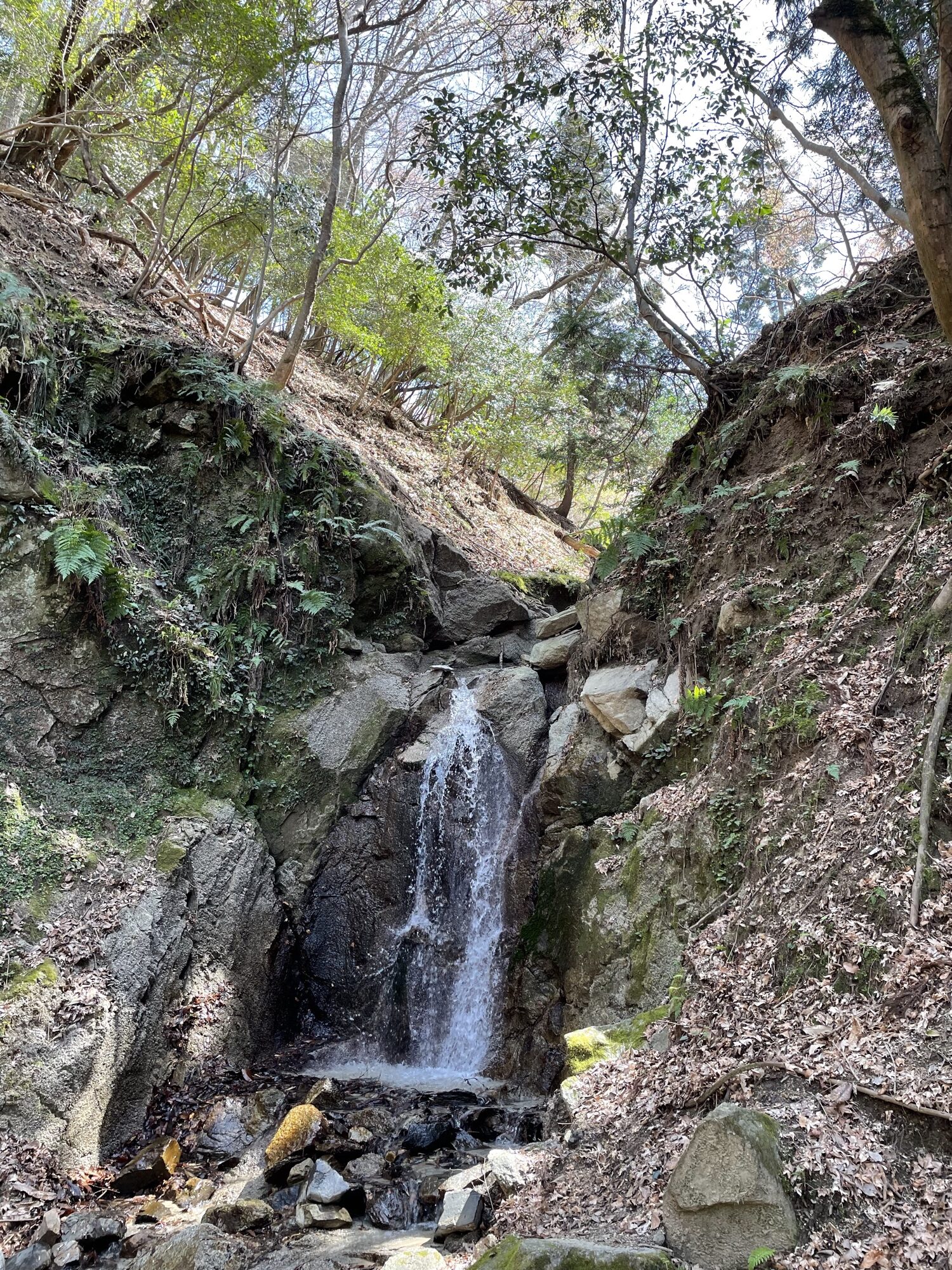
From Ao you walk on to the trailhead, right next to the approach to Ginkaku-ji. Plan more time than you might think: the hike took us about an hour and a half. It is a real mountain trail with roots and steps. From the top you look out over the whole city.
On the way you pass the entrance to Ginkaku-ji, the Silver Pavilion. We leave it out: every time we were there, it was too full for us.
3. The Philosopher’s Path: Sit Down and Listen
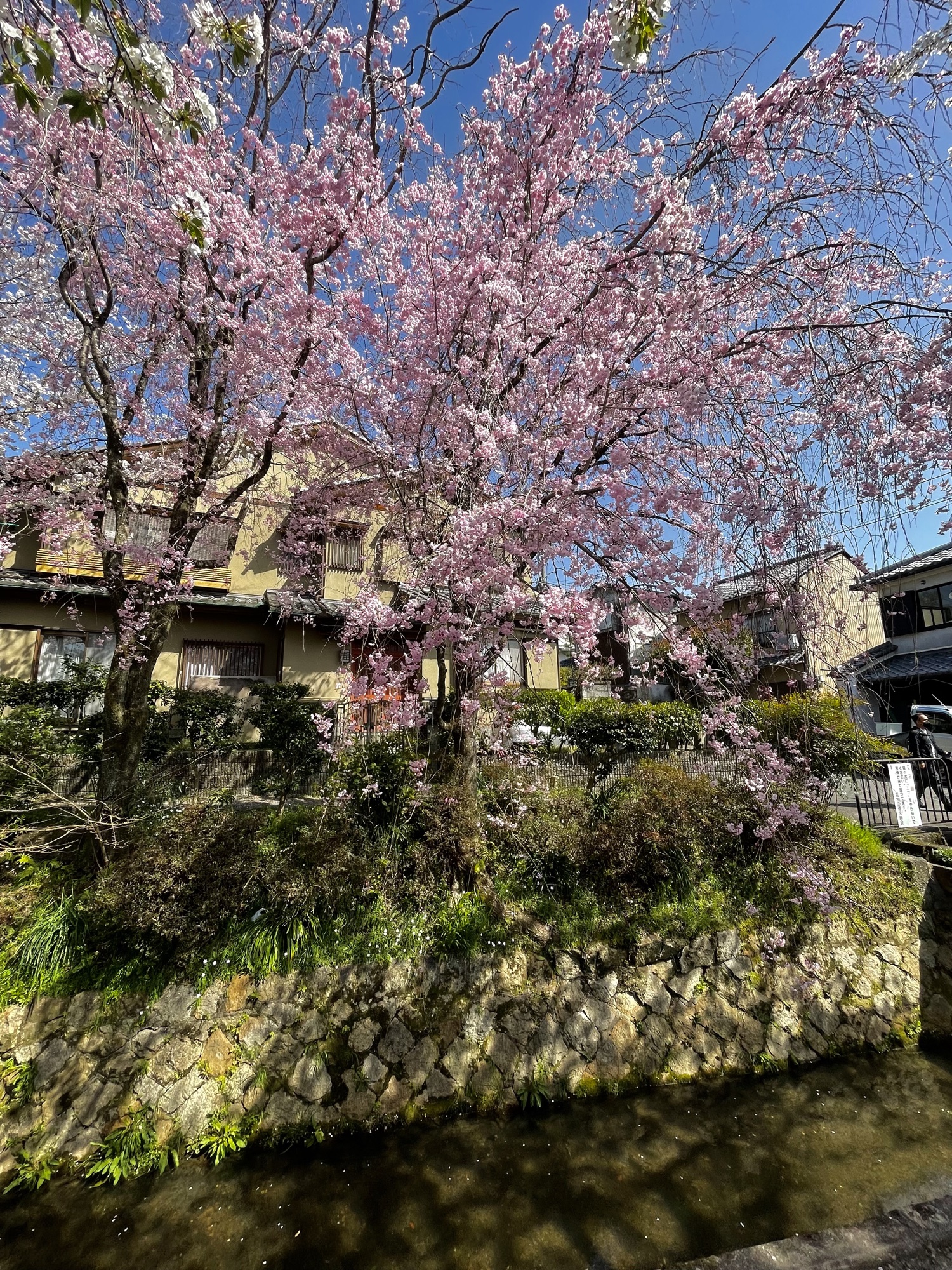
The Philosopher’s Path follows a narrow canal for about two kilometres, from near Ginkaku-ji south to Eikando. It is named after the philosopher Nishida Kitaro, who is said to have walked here every day. Most of the trees along the water are cherry trees, and in spring the blossoms hang over the canal.
For the path itself, that is the best time. There are only a few maples here, so in autumn the colour is a few minutes further on at Eikando.
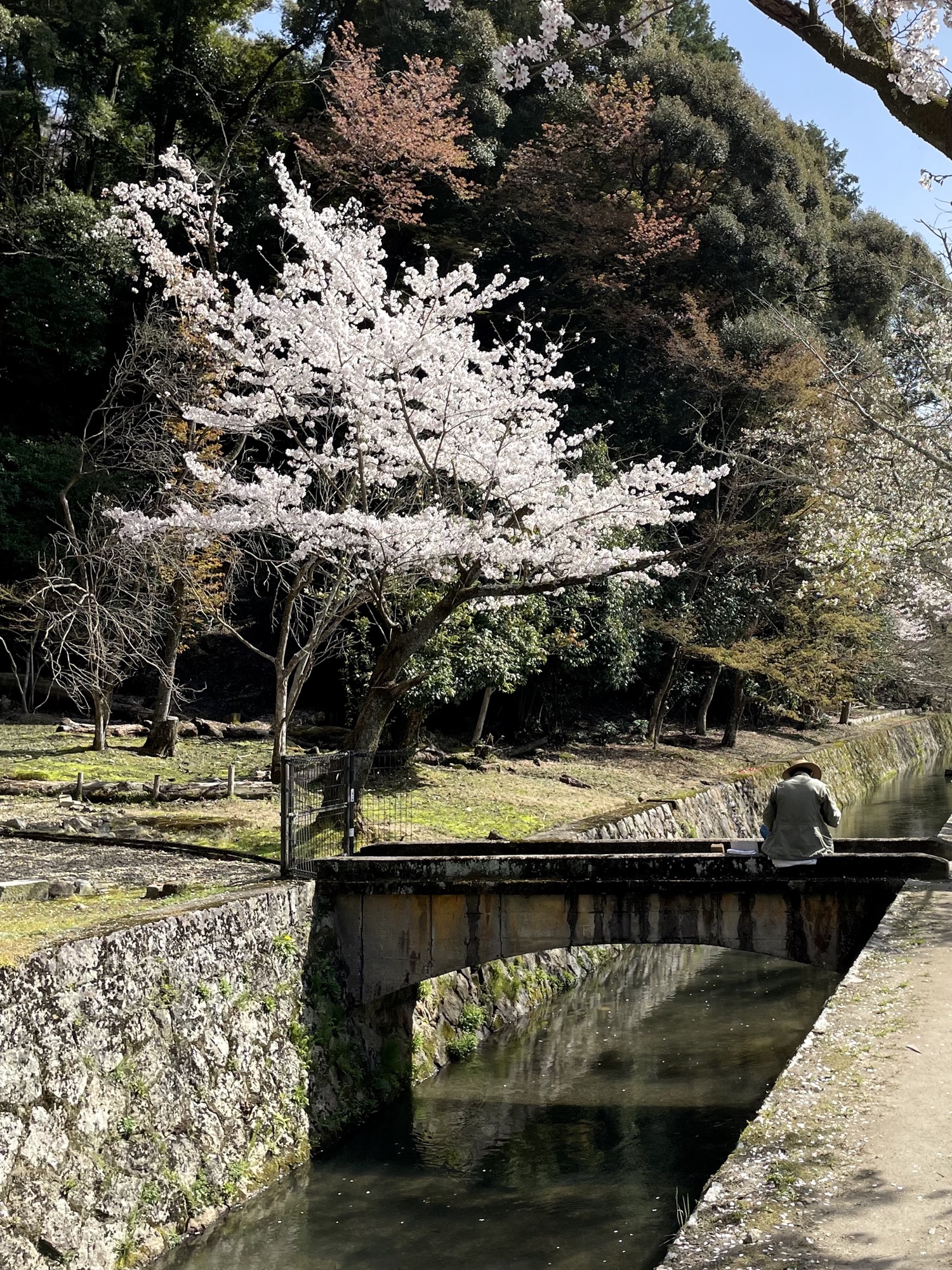
We do not really go there to see something. We go to slow down. There are benches along the canal, and quite often someone is playing an instrument somewhere on the path. Sitting there with our onigiri and listening for a while is one of our favourite parts of the day.
4. Eikando: The Maple Temple
At the south end of the path is Eikando, officially called Zenrin-ji. We went in autumn, and it was wonderful. The grounds are full of maple trees, and when the leaves turn, the hillside is red and orange from top to bottom. Eikando is one of the best-known places in Kyoto for autumn leaves.
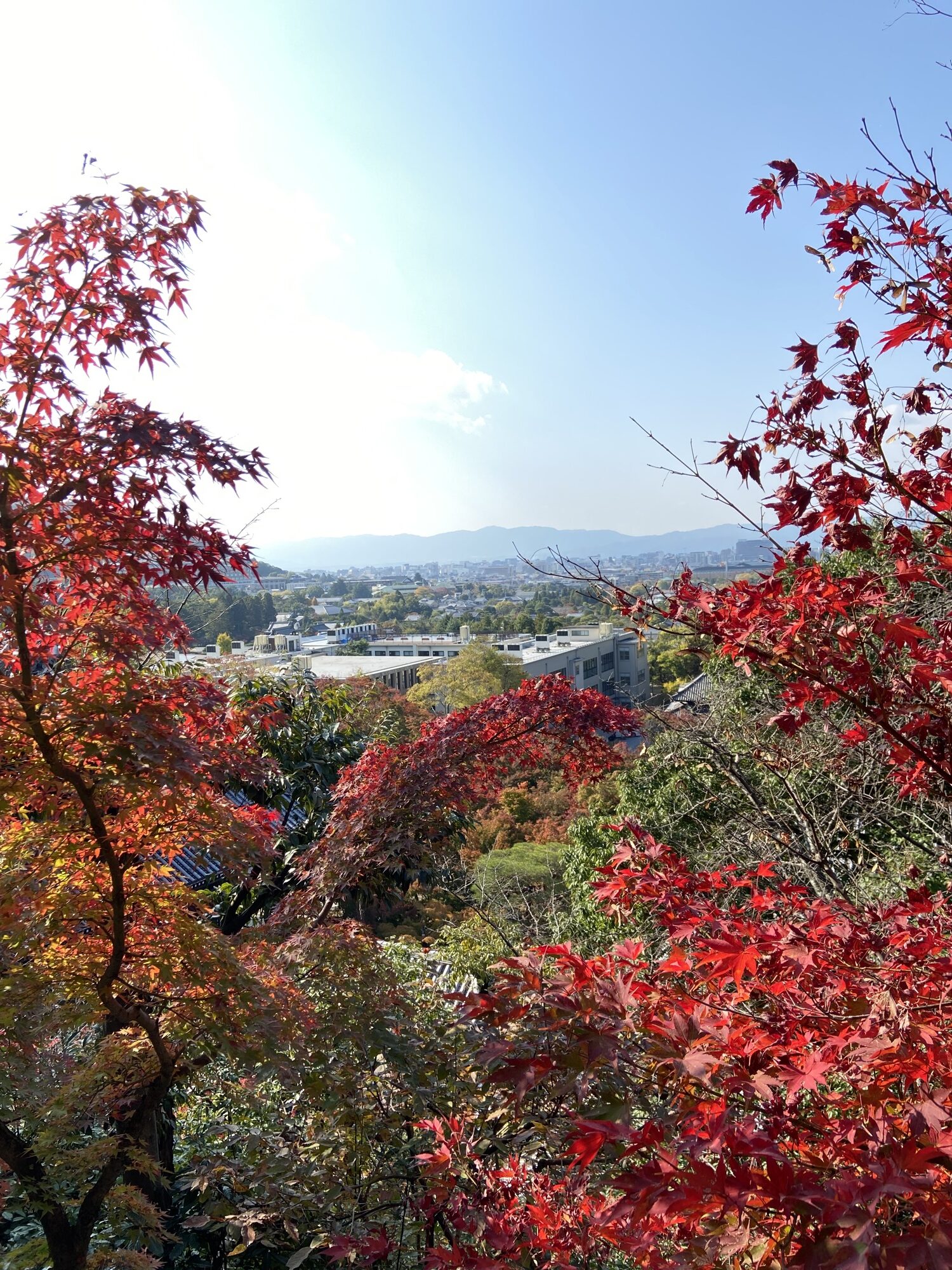
Inside, a covered wooden staircase called the Garyuro winds up the hillside between the halls. Keep climbing to the small pagoda above the temple. The view over the treetops and across Kyoto from there is fantastic, one of my favourite views in the city.
Good to know for autumn 2026: during the autumn season (11 November to 6 December 2026), daytime entry is listed at 1,500 yen. The evening illumination runs from 20 November to 6 December, 17:30 to 20:30, for 1,000 yen. The second half of November is the busiest time.
Outside the season, entry is cheaper. Current details are on the official Eikando website. If you have not visited many temples yet, my guide to temple etiquette in Japan covers the basics.
5. Nanzen-ji and the Brick Aqueduct
A few minutes south of Eikando is Nanzen-ji, a large Zen temple. The first thing you see is the Sanmon, a huge wooden gate. You can pay to climb up to its balcony, but walking around the temple grounds is free.
Behind the main buildings is a red brick aqueduct with tall arches, the Suirokaku. It looks a little out of place in a Zen temple. It was built in the Meiji period to bring water from Lake Biwa to Kyoto, and water still runs along the top. You can walk up beside it and follow the channel a short way into the hills.
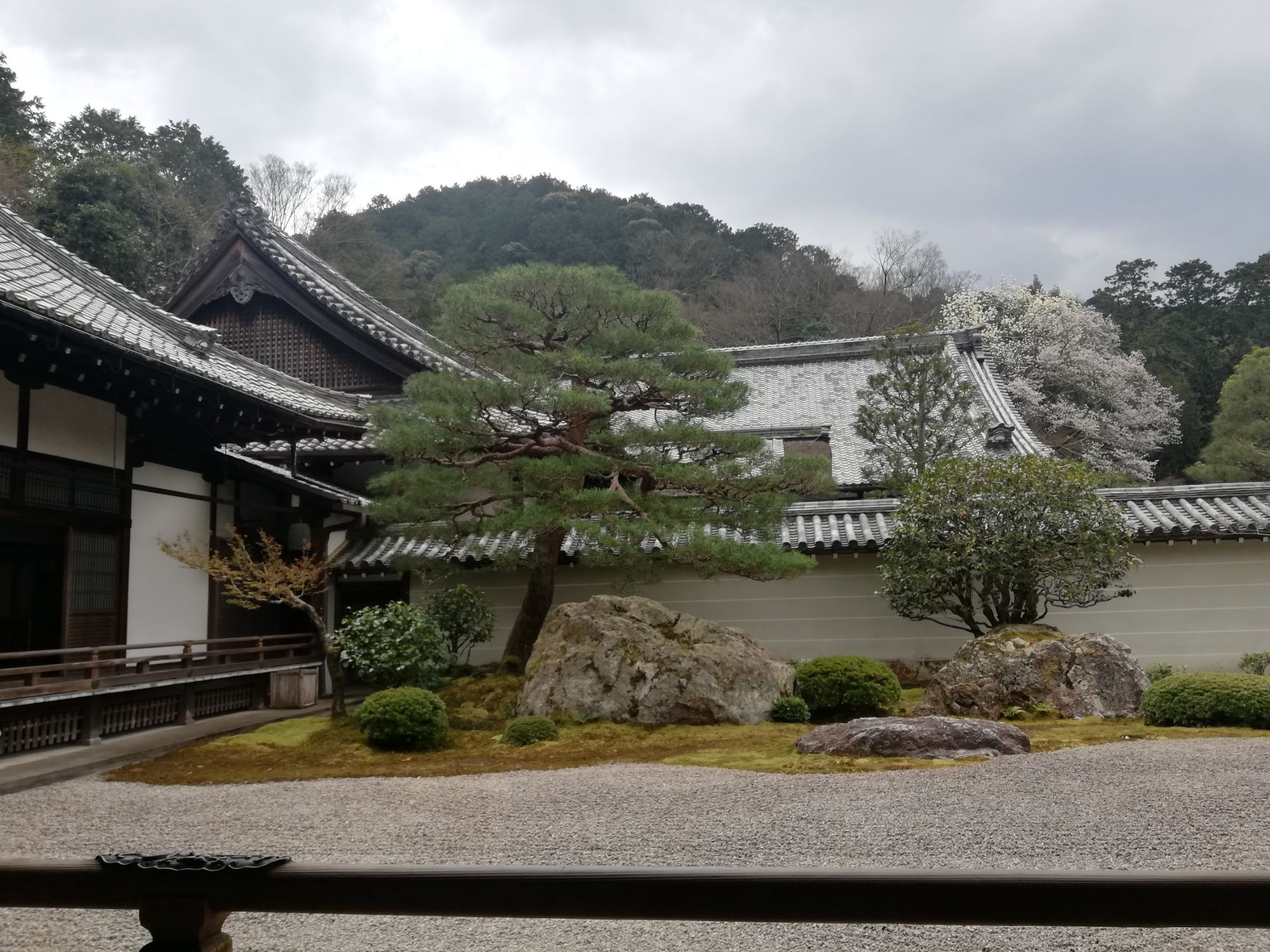
Right next to it is the Hojo, the former abbot’s quarters, which has its own ticket. We went in for the dry garden: raked gravel, large rocks on moss, pines and clipped shrubs in front of a white wall. It is known as the Leaping Tiger Garden, because the rocks are said to show a tiger crossing the water with her cubs. Spotting the tigers takes a little imagination.
6. Chocho Kobaru Coffee: An Afternoon Break
Near Nanzen-ji is Chocho Kobaru Coffee, a small vegetarian cafe with vegan pancakes, cakes and soft serve, plus organic coffee. We have not been yet. After a morning on the mountain and an afternoon of temples, though, it is the stop I would plan in next time.
According to its listing on spinach.guide, it is open Tuesday to Thursday and on Saturday, 10:00 to 17:45. Small cafes change their hours often, so check before you go.
7. Keage Incline: Honestly, Skip It
The Keage Incline is an old railway slope where boats used to be pulled on carts between two sections of the Lake Biwa canal. Cherry trees line the tracks now, and on social media it looks dreamy.
When we were there, it was far too crowded. So many people were posing on the tracks that we could not enjoy the view at all. It is on the way to Okazaki, so you will walk past it anyway. Just do not plan your day around it.
8. Museums in Okazaki
From the bottom of the incline it is only a few minutes along the canal to Okazaki, a spacious area with parks and museums. Two of those museums are at the top of our to-do list, because we find both of them really interesting. We have not been inside yet, but if you still have energy at the end of the day, they are right on your way.
- Kyoto City KYOCERA Museum of Art: one of the oldest public art museums in Japan, reopened in 2020 after a big renovation. It is listed as open 10:00 to 18:00 and closed on Mondays. Prices depend on the exhibition. More on the museum website.
- Kyoto Museum of Crafts and Design: in the basement of the Miyako Messe, all about Kyoto’s traditional crafts, including Kiyomizu ceramics, textiles and lacquer. It is listed as open 10:00 to 18:00, with admission around 500 yen. I stop at every ceramics stall I see, so I am especially looking forward to this one.
Dinner Back in the City
From Okazaki it is a short ride back to the centre. Higashiyama subway station is about a 10-minute walk away, and if you are still at the top of the incline, Keage station is right there. Both are on the Tozai Line. Take it to Sanjo Keihan or Kyoto Shiyakusho-mae, and from there it is a short walk to Kiyamachi and Kawaramachi.
We have eaten at all three of these places:
- Nijiya: a tiny vegan izakaya in Kiyamachi that serves vegan yakitori. It has very few seats and the hours change, so check HappyCow or their Instagram first.
- Uno Yukiko: soy milk ramen in Gion, our backup if Nijiya is full.
- mumokuteki: calm and reliable, near Sanjo, with a big menu.
You will find all three in more detail in my list of vegan restaurants in Kyoto. If you have more days in the city, my honest Arashiyama guide covers the west side of Kyoto, and the 15-day vegan Japan itinerary shows how a day like this fits into a longer trip.
FAQ
How long is the Philosopher’s Path in Kyoto?
About two kilometres, from near Ginkaku-ji to Eikando. Without stops it takes around 30 minutes, but with benches, temples and a picnic it easily fills a few hours.
When is the best time to visit the Philosopher’s Path Kyoto?
Spring, when the cherry trees along the canal are in bloom. There are only a few maples on the path itself, so in autumn the place to go is Eikando at the south end. We have been in both seasons, and the path is always a good place to sit and listen.
How long does the Daimonji hike take?
For us it took about an hour and a half, starting from the trailhead near Ginkaku-ji. Wear good shoes, the trail has roots and steps.
Is Eikando worth the entry fee in autumn?
For us, yes, for the maples and for the view from the pagoda above the temple. In the second half of November, go early in the day.
Is Nanzen-ji free?
The temple grounds and the brick aqueduct are free. Climbing the Sanmon gate and visiting the Hojo with its rock garden cost a small fee each.
Can you eat vegan on this route?
Yes. Ao Onigiri always has vegan fillings, KOKU Vegan Ramen is listed as fully plant-based, and Chocho Kobaru has vegan cakes and pancakes. For general tips, read how to eat vegan in Japan.