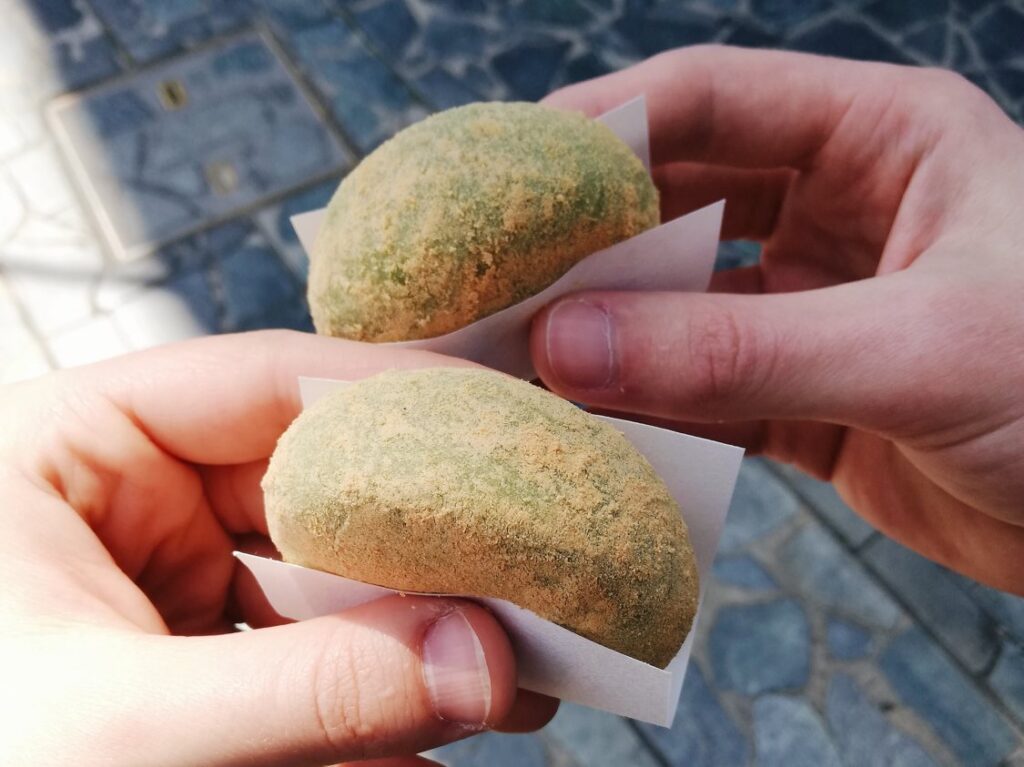
Is mochi vegan? Yes, traditional mochi is vegan. It’s made from glutinous rice and water, sometimes with a little sugar. Daifuku filled with red bean paste, warabi mochi and kinako mochi are vegan too. The three to avoid are ice cream mochi, milk mochi and daifuku filled with cream or custard, because all of them contain dairy.
Almost all mochi is also vegetarian and egg-free. Ice cream mochi sits in between: fine for vegetarians, not for vegans.
I tried my first mochi long before my first trip to Japan, and I never really liked it. The reason turned out to be simple: the packaged mochi you find in European supermarkets has almost nothing in common with fresh mochi. Fresh mochi is much softer and practically melts on your tongue.
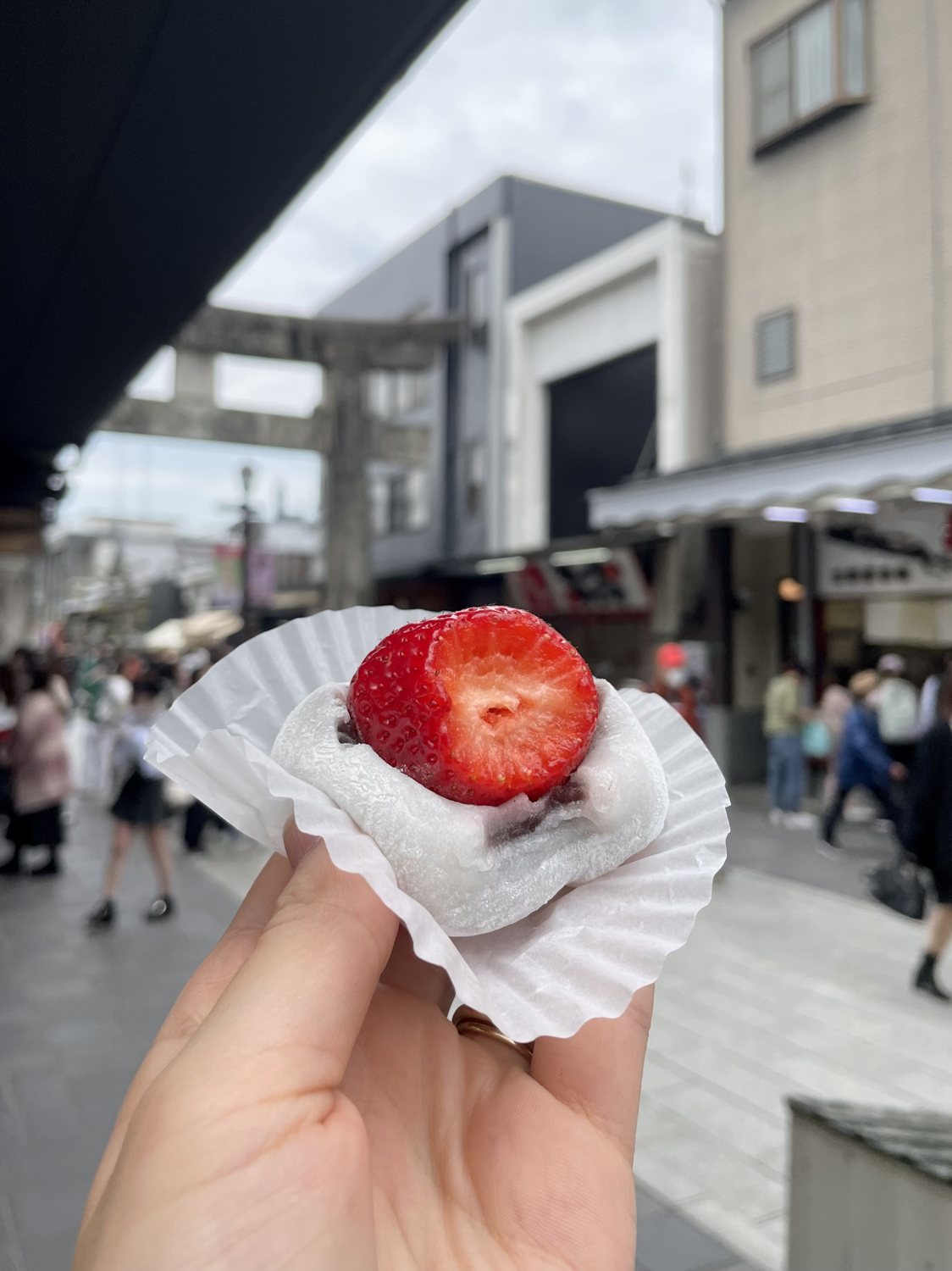
My first real one was in Nara, at Nakatanidou (中谷堂), the well-known stall where they still pound the mochi by hand. It came coated in kinako, roasted soybean flour. The texture took a moment to get used to, but it was really good. The next one I had was filled with a whole strawberry, fruity and ridiculously good. I’ve been eating mochi whenever I get the chance ever since.
Is mochi vegan? Type by type
| Mochi type | Vegan? | What to watch for |
|---|---|---|
| Plain mochi (kiri mochi, shiro mochi) | Yes | Just rice. Softer factory versions sometimes add egg white, so check the label |
| Daifuku with anko (red bean paste) | Yes | Anko is azuki beans and sugar |
| Ichigo daifuku (strawberry) | Usually | Vegan with anko; not if it says 生クリーム (fresh cream) |
| Warabi mochi | Yes | Bracken or potato starch, kinako and black sugar syrup |
| Kinako mochi | Yes | Roasted soybean flour and sugar |
| Kusa mochi / yomogi mochi | Yes | Mugwort gives the green colour |
| Ohagi / botamochi | Yes | Half-pounded rice covered in anko |
| Kashiwa mochi | Usually | Anko or white miso bean paste inside an oak leaf |
| Sakura mochi | Usually | The pink colour occasionally comes from cochineal (コチニール), which is made from insects |
| Mitarashi dango | Usually | Rice dumplings with a soy sauce and sugar glaze |
| Isobe-yaki | Yes | Grilled mochi with soy sauce, wrapped in nori |
| Ozoni (New Year soup) | Rarely | The mochi is fine, the broth is almost always dashi (fish stock) |
| Mochi donuts | Rarely | Usually made with wheat flour, milk and egg |
| Ice cream mochi | No | Dairy ice cream, unless the box says non-dairy or vegan |
| Milk mochi, custard or cream daifuku | No | Dairy in the dough or filling |
As a rule of thumb, mochi made from rice, beans, soy and plants is vegan, and anything creamy probably isn’t.
Is mochi vegetarian? Does it contain egg or dairy?
If you eat vegetarian, including dairy, you can eat almost all mochi, including ice cream mochi and cream daifuku. The things to watch are gelatin in some jelly-style sweets and dashi in mochi soups like ozoni or chikara udon.
Mochi is eggless by tradition. Egg only turns up in some mass-produced soft mochi (as egg white, 卵白) and in mochi donuts.
Dairy is where most mochi stops being vegan. Plain mochi and anko fillings contain none. Ice cream, milk mochi and anything with cream or custard do.
How to check a mochi label in Japan
Packaged food in Japan has to list milk (乳) and egg (卵) as allergens, usually in a small box marked アレルギー物質 or at the end of the ingredient list. That makes mochi one of the easier things to check, even if you can’t read Japanese.
| Look for | Reading | Meaning |
|---|---|---|
| 乳成分 / 乳製品 | nyūseibun / nyūseihin | milk / dairy |
| 生クリーム | nama kuriimu | fresh cream |
| 卵 / 卵白 | tamago / ranpaku | egg / egg white |
| ゼラチン | zerachin | gelatin |
| コチニール | kochinīru | cochineal (red colour from insects) |
| 動物性原材料不使用 | dōbutsusei genzairyō fushiyō | no animal ingredients (the one you want to see) |
Gelatin doesn’t have to be listed as an allergen, so read the full ingredient list if the mochi has a jelly layer. For a full walkthrough, see the Japanese food label guide.
For packaged products it is also worth checking Is it Vegan Japan, where users ask manufacturers directly.
Vegan mochi at the konbini
Every 7-Eleven, Lawson and FamilyMart has a small wagashi (Japanese sweets) section, usually next to the chilled desserts. Daifuku with anko and warabi mochi are the safest bets. The cream-filled daifuku sit right next to them and look almost the same, so turn the pack over before you pay.
The full product-by-product list for all three chains is in the vegan konbini guide.
At wagashi shops and festival stalls there is no label. Ask: Nyūseihin wa haitte imasu ka? (乳製品は入っていますか?, “Does this contain dairy?”). More phrases like this are in the vegan restaurant phrases guide.
Vegan mochi outside Japan
Outside Japan, “mochi” usually means ice cream mochi from the freezer section, and most of those contain dairy. Some brands now sell non-dairy versions made with coconut or oat milk. Look for “non-dairy” or “vegan” on the front of the box, not just “plant-based ingredients”.
Plain mochi and daifuku from Japanese or Asian grocery stores are usually vegan. The allergen rules above apply to anything imported from Japan.
FAQ
Does mochi contain dairy?
Traditional mochi doesn’t. Ice cream mochi, milk mochi and cream or custard daifuku do.
Is mochi gluten-free?
Plain mochi is. Glutinous rice contains no gluten despite the name. Mochi donuts contain wheat, and the soy sauce in mitarashi dango and isobe-yaki usually does too.
Is warabi mochi vegan?
Yes. It’s made from starch, water and sugar and served with kinako and black sugar syrup.
Is ice cream mochi vegan?
Not usually. The filling is dairy ice cream unless the pack clearly says non-dairy or vegan.
Is sakura mochi vegan?
Usually. The leaf is a salted cherry leaf and the filling is anko. Check for cochineal (コチニール) if it’s bright pink.
Can vegans eat mochi in Japan?
Yes, and it’s easy. Plain mochi, daifuku, warabi mochi and kinako mochi are sold everywhere, from konbinis to temple stalls.
Beyond mochi: Dashi, hidden fish stock and eating vegan outside the big cities are covered in How to Eat Vegan in Japan.