A flea market in Japan usually takes place on the grounds of a temple or shrine, on the same day every month. That makes them easy to plan around, and we do: our routes through Kyoto, Tokyo and Osaka are built on market dates. These are the seven I would pick, with the next confirmed dates.
This flea market Japan guide is the short version of four longer ones, one each for Kyoto, Tokyo, Osaka and Shimokitazawa. Those have every regular market and our notes. This one tells you where to start.
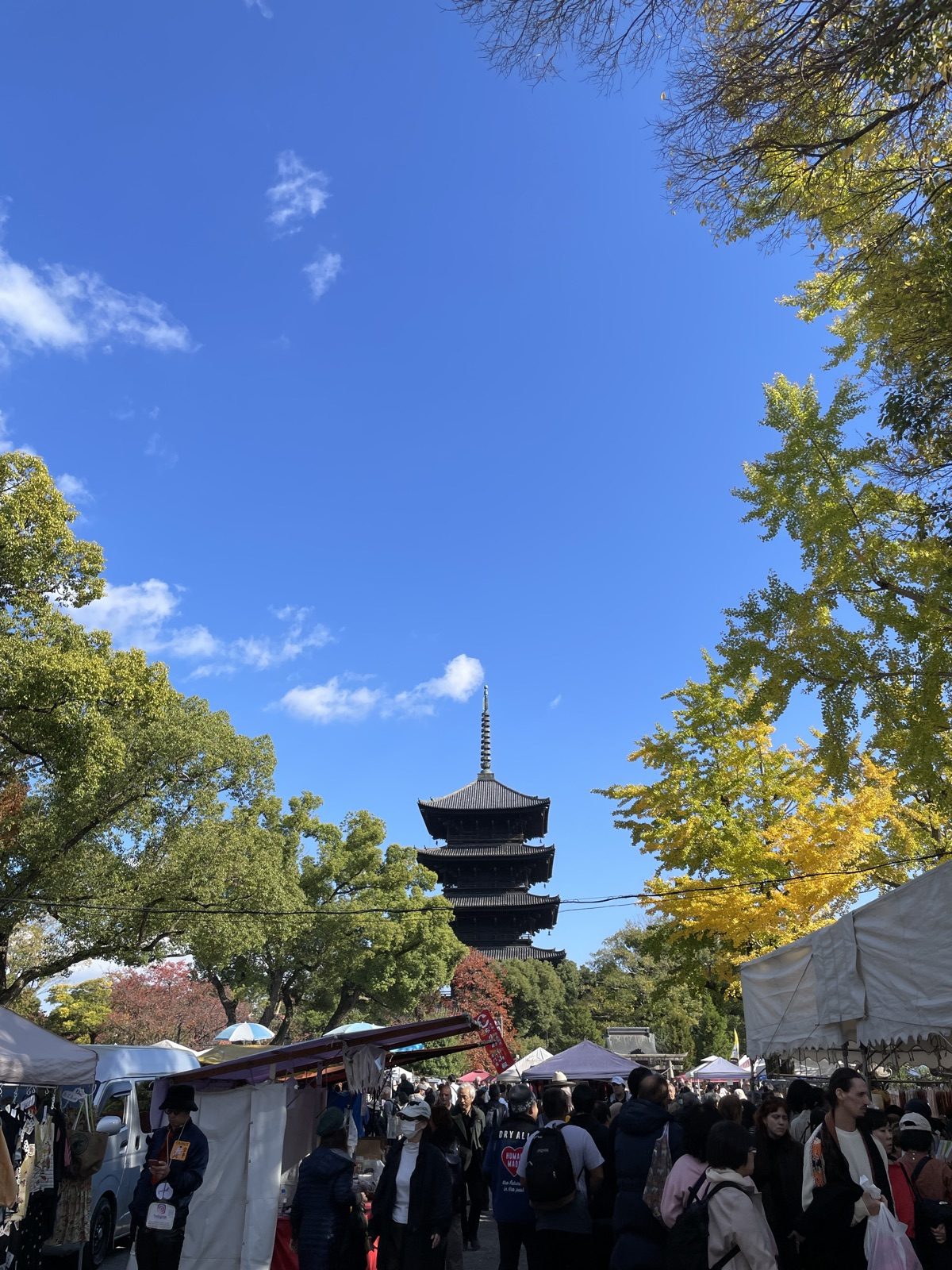
Flea Markets in Japan: The 7 Best at a Glance
Most of these markets follow a fixed rule, like “the 21st of every month” or “the 2nd and 4th Sunday”, so you can plan months ahead. The dates below are the next ones confirmed by the organisers or temples as of November 2026.
| Market | City | When | Next dates |
|---|---|---|---|
| Kobo-san at Toji | Kyoto | 21st of every month | 21 Nov, 21 Dec |
| Tenjin-san at Kitano Tenmangu | Kyoto | 25th of every month | 25 Nov, 25 Dec |
| Kamigamo Handicraft Market | Kyoto | 4th Sunday | check the organiser |
| Tokyo Romantic Market | Tokyo (Shibuya) | 2nd and 4th Sunday | 22 Nov, 13 and 27 Dec |
| Oedo Antique Market | Tokyo (Yurakucho) | about twice a month | 23 Nov, 12 and 20 Dec |
| Shimokitazawa Flea Market | Tokyo (Shimokitazawa) | usually Friday to Sunday | 14, 15, 20, 21, 23, 26, 27 Nov |
| Shitennoji | Osaka | 21st and 22nd of every month | 21 and 22 Nov, 21 and 22 Dec |
Outdoor markets are cancelled in heavy rain, and dates move when a shrine holds a festival. Check the organiser’s page on the morning you go. The city guides below link to every official source.
Kyoto: The Big Temple Markets
Kyoto has two monthly markets with around 1,000 stalls each, four days apart. We have been to both three times, and they are still the reason our Kyoto days fall where they do.
Kobo-san fills the grounds of Toji on the 21st, about 15 minutes on foot from Kyoto Station, from 7:00 to 15:30. You find almost anything here, from bonsai and old tools to kimono and pottery. We bought a small painting directly from the woman who painted it. The December date is the last market of the year and especially busy.
Tenjin-san takes over Kitano Tenmangu in the northwest of the city on the 25th, from 7:00 until sunset. There is a lot of pottery here, matcha bowls in particular, so plan more time than you think.
The Kamigamo Handicraft Market on the 4th Sunday is the quiet one. Nearly everything is sold by the person who made it, and it is where we bought the most: jewellery, pottery and an embroidered cloth with a ginkgo leaf. The date can shift, so check before you go.
All eight regular markets, the bus connections and how we pack pottery for the flight are in my Kyoto flea market guide.
Tokyo: A Small Market Almost Every Weekend
Tokyo has nothing on the scale of Kobo-san. What it has is volume: on almost any weekend, a few dozen stalls set up somewhere, on a shrine courtyard or a plaza between office towers.
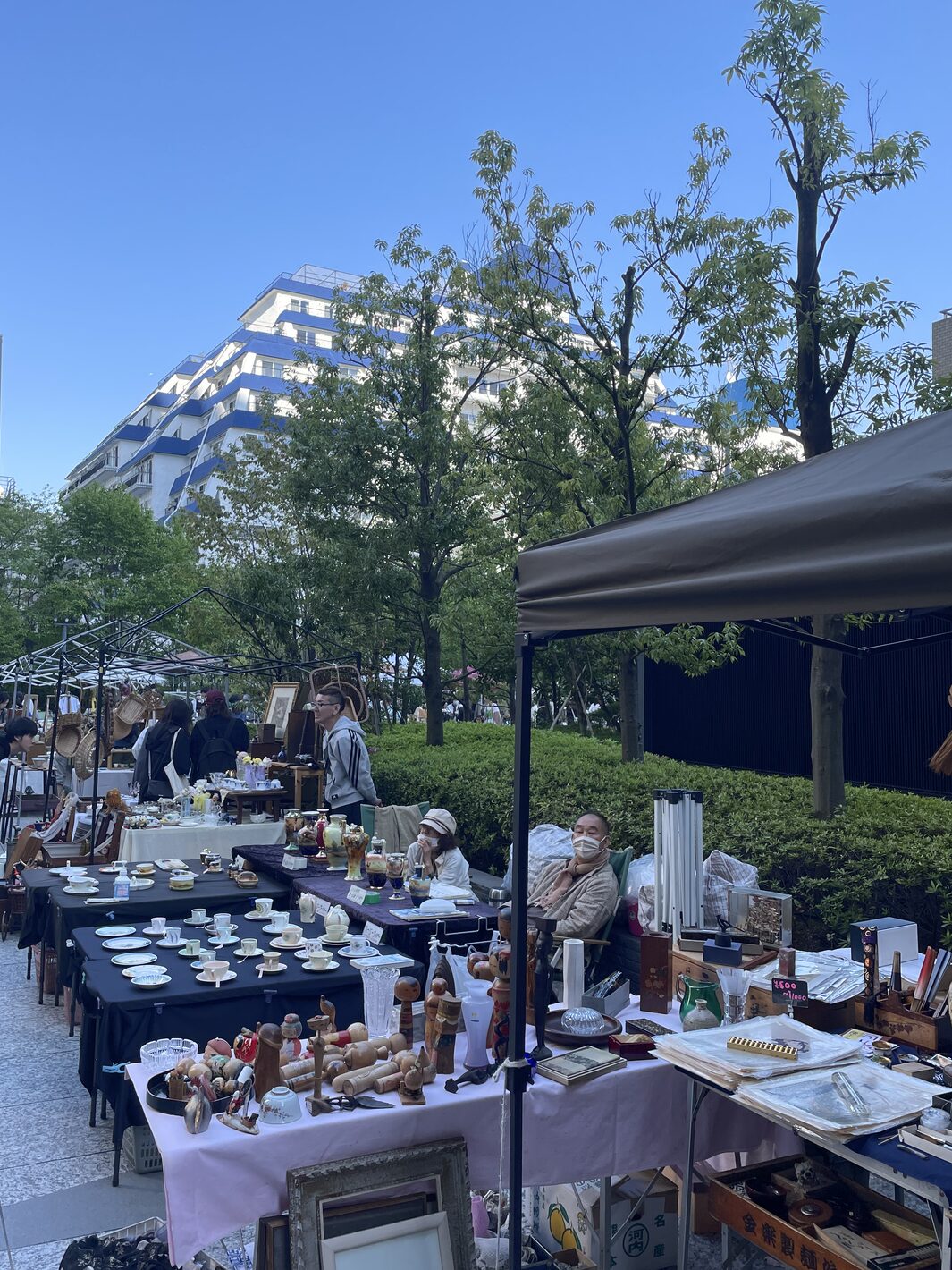
The Tokyo Romantic Market in Shibuya is the one we have been to. It runs on the 2nd and 4th Sunday from 10:00 to 16:00 in the garden plaza of Shibuya Garden Tower. An hour is enough to see all of it. Expect Japanese and Western antiques side by side, and a lot of jewellery.
For serious antiques, the Oedo Antique Market at the Tokyo International Forum is the biggest in the city, with around 250 dealers, close to Tokyo Station. It no longer has a fixed weekday, so look up the dates. We have not been yet.
Eleven regular markets with a calendar, including the shrine markets and the second-hand market at Oi Racecourse, are in my Tokyo flea market guide.
Shimokitazawa: Vintage on Weekends
Shimokitazawa is Tokyo’s vintage neighbourhood, seven minutes from Shinjuku, and it has its own small market on the open space where the train tracks used to run. It usually runs from Friday to Sunday, 12:00 to 17:00, about four minutes on foot from the East Exit of the station.
It is small, but the sellers choose what they bring, and it shows. There is usually a row of plant sellers too, which is hard on anyone with hand luggage only. Not every weekend has a market. The organisers post each month’s dates on their official website and on Instagram.
The dates, opening hours and the vintage shops around it are in my Shimokitazawa flea market guide.
Osaka: One Giant Market Twice a Month
I have not been to an Osaka flea market yet. If I can only do one, it will be Shitennoji. One of the oldest Buddhist temples in Japan, it holds the biggest market in the city on the 21st and 22nd of every month, with between 300 and 500 stalls depending on the source.
The 21st is the same day as Kobo-san in Kyoto, so you have to choose. In November 2026 both days fall on a weekend, which makes Shitennoji easy to fit in.
Six Osaka markets with their dates, including the small one at Ohatsu Tenjin right in Umeda, are in my Osaka flea market guide.
What Surprised Us About Japanese Flea Markets
The prices, especially for ceramics. Pottery that would be expensive at home costs much less here, and the quality is still very high.
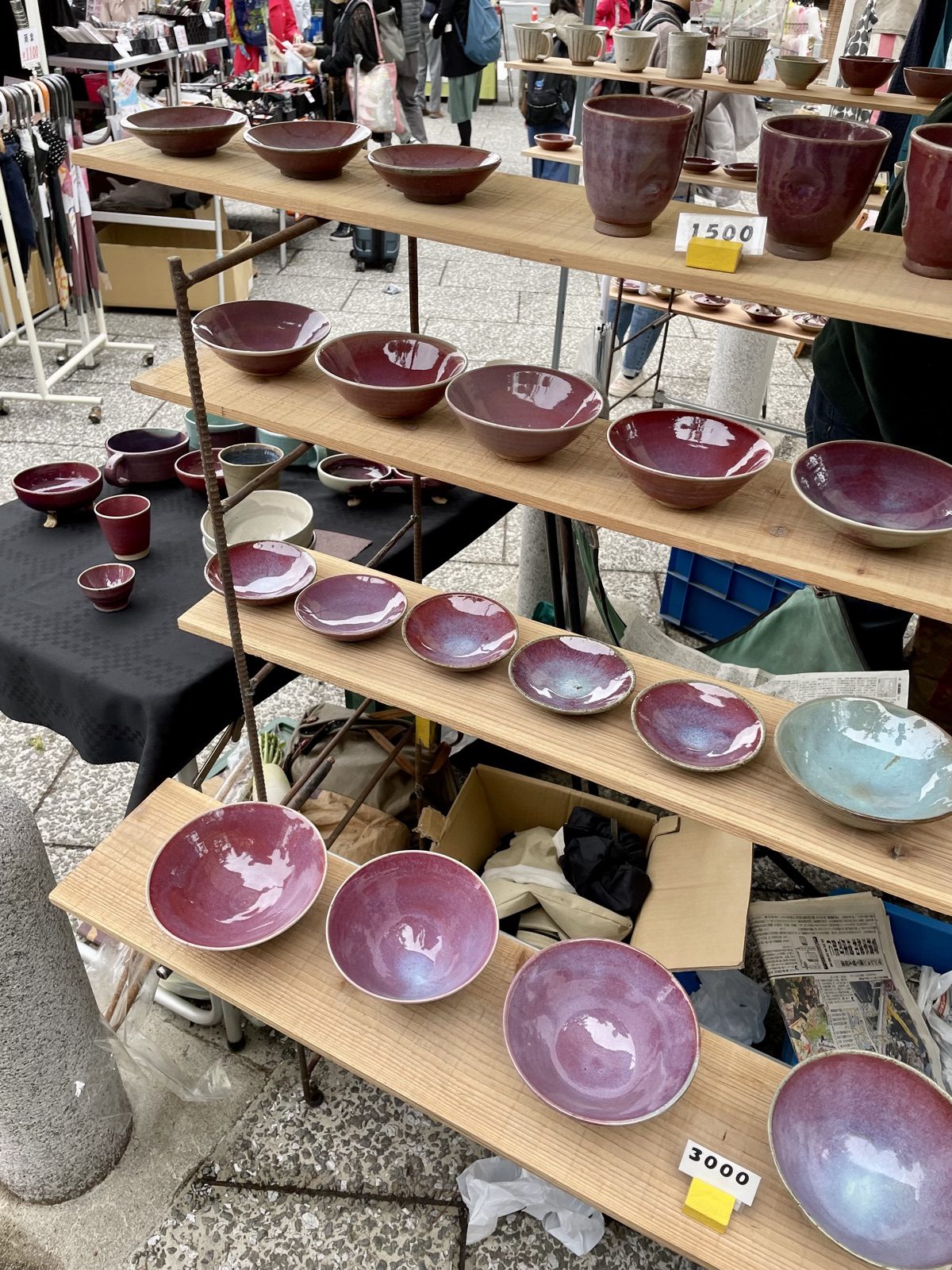
The same goes for second-hand shops. Buying used is completely normal in Japan, and the shops are as good as the markets. I wrote more about that in the part of my Shimokitazawa guide on Japan’s secondhand culture.
The mood has always been relaxed, even at the big markets. Relaxed does not mean empty, though: at Kobo-san and Tenjin-san you are shuffling by late morning.
Nomi no ichi means flea market, kotto-ichi antique market and tezukuri-ichi handmade market. Japanese event listings use these words, so they help when you search for current dates.
Tips for Flea Markets in Japan
Bring cash. Most stalls are run by one person. Some take IC cards or QR payments, many do not. Bring small notes and coins.
Come early. Kobo-san and Tenjin-san open at 7:00, and the best pieces go first. Shimokitazawa is the exception and opens at noon.
Bring a bag. Sellers wrap ceramics in newspaper but rarely have bags. For the flight, pack pottery between your clothes in the suitcase.
Temple rules still apply. Most markets take place on temple and shrine grounds, so behave as you would on any other day. My guide to temple etiquette in Japan covers the basics.
Ask about food. Market food stalls change every time, and many snacks contain dashi or egg. How to ask is in my guide on how to eat vegan in Japan.
FAQ
What is the best flea market in Japan?
For size and atmosphere, Kobo-san at Toji in Kyoto on the 21st of every month. Tenjin-san on the 25th is just as big. In Tokyo, the Oedo Antique Market is the largest.
Is there a flea market in Japan every weekend?
In Tokyo, almost always: several shrine markets, the Tokyo Romantic Market and the Shimokitazawa market run on weekends. In Kyoto and Osaka the big markets follow fixed dates, so they only fall on a weekend some months.
Are flea markets in Japan cheap?
Ceramics in particular cost much less than at home, and the quality is high. Antique dealers at the big markets know what their pieces are worth, so not everything is a bargain.
Can you pay by card at Japanese flea markets?
Rarely. Bring cash, ideally small notes and coins. A few stalls take IC cards or QR payments.
What does nomi no ichi mean?
Nomi no ichi is the Japanese word for flea market. Kotto-ichi means antique market and tezukuri-ichi handmade market.