This is my vegan Japan itinerary. Not the one I planned first, which was too packed, and not the second version either, which overcorrected. The one below is what I’d actually do again. Fifteen days of vegan Japan travel that doesn’t grind you down, restaurants I’ve been to personally, and a market schedule that works without making you take unnecessary detours. Tokyo for six nights, Kyoto for five, Osaka for two, then one last night in Tokyo before flying home.
I’ve done versions of this route a few times now, first with my partner, then a couple of times solo. What changed between trips was mostly the detail: which restaurants were still worth it, which markets actually fit into the route without forcing a backtrack, and which days genuinely needed to be slower. The version below is the one that held up: the vegan Japan itinerary I’d hand someone who asked me where to start.
[mochi_japan_map]
The Route at a Glance
Days 1-6
Days 7-11
Days 12-13
The structure of this vegan Japan itinerary keeps three city blocks fixed: six nights in Tokyo, five in Kyoto, two in Osaka, while everything inside each block is moveable. The day numbers in this vegan Japan itinerary are a suggested order, not a fixed sequence. Days within Tokyo and within Kyoto can be shuffled freely to fit any travel calendar. That is the flexibility built into this vegan Japan itinerary.
The one thing worth planning around: the flea markets. Oedo in Tokyo runs on the 1st and 3rd Sunday of the month. Find which Sunday falls inside your Tokyo stay and put the market day there. Kamigamo in Kyoto runs on the 4th Sunday of the month, same logic. A Friday start makes both land automatically on Day 3 and Day 10, but any other start day works just as well with a quick calendar check. Toji (21st of the month) and Kitano Tenmangu (25th) are weekday-independent, so just check whether either date falls inside your Kyoto days. For cherry blossoms, aim for late March to early April. For autumn colour, mid-October in Nikko and early November in Kyoto.
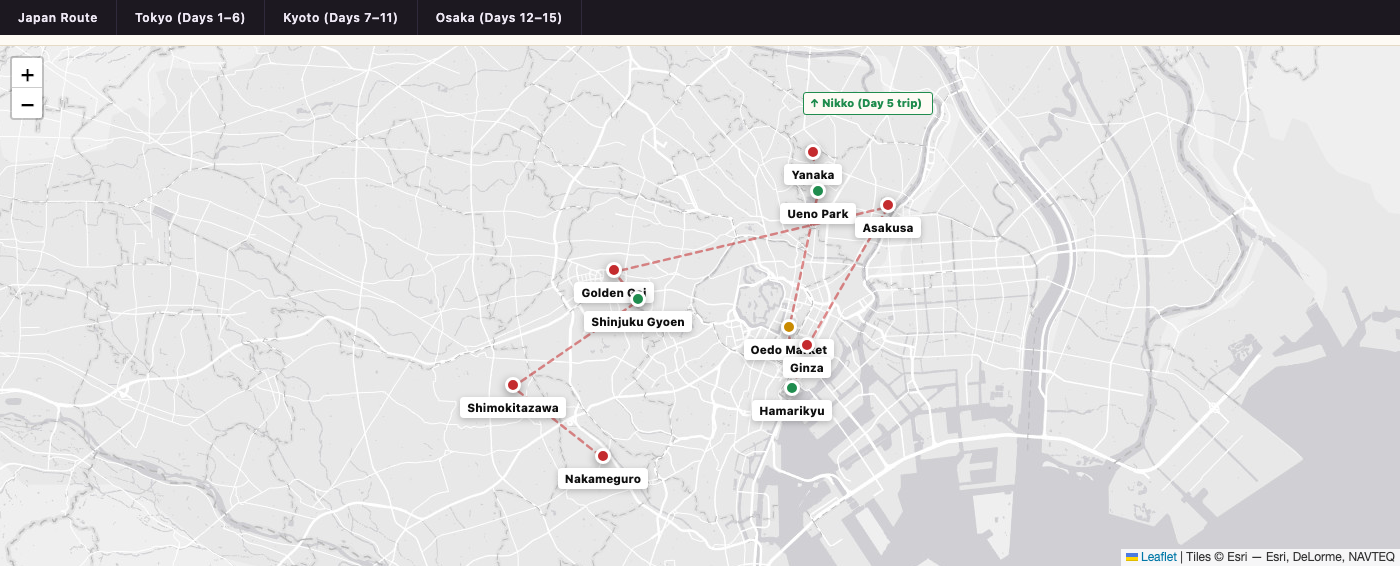
Tokyo: Days 1-6
Day 1 Arrive and Do Almost Nothing
Long-haul flights into Tokyo usually land in the morning, and the instinct to make the most of the first day is almost always wrong. Check in, drop your bags, take a slow walk around the neighbourhood. For Day 1, that is genuinely enough. On arrival day, fighting jetlag rarely works out. It is a quiet start, and the right one for a vegan Japan itinerary.
Dinner at T’s TanTan, Tokyo Station, Keiyo Street. Fully vegan, open late, directly on the platform concourse. Ramen and donburi, both reliable. It is there for moments exactly like this one: tired, landed, not wanting to think about where to eat.
Day 2 Yanaka: Old Tokyo, Still Breathing
Yanaka is the shitamachi neighbourhood that survived the earthquakes and the postwar rebuild. Narrow alleys, tiled rooftops, craft shops, cats on walls. Yanaka Ginza is the short shopping street running through it, unhurried in a way that few streets in Tokyo manage to be.
Nezu Shrine is a ten-minute walk north: a small torii tunnel, almost no crowd, the kind of place that feels like a secret even though it is on every map. The Yanaka cemetery is worth walking through too. Strange suggestion, maybe, but the old graves under tall trees are one of the more peaceful walks in the city. Spend the morning, then head back and rest your legs. There’s a lot of walking ahead.
If there is still energy left after Yanaka: Ueno Park is a ten-minute walk south and the Tokyo National Museum on the north end of the park is one of the best museums in Asia for Japanese art and antiquities. Two hours there is plenty. You don’t need the full day. Easy, unhurried days like this are built into a vegan Japan itinerary deliberately. The park itself is worth a slow pass at any time of year, and in late March the cherry trees along the main path are among the most photographed in Tokyo.
Dinner at Ain Soph Journey in Shinjuku, one of the better vegan fine-dining options in the city. Reservation recommended, book a day or two ahead.
Day 3 Oedo Antique Market + Ginza
1st & 3rd Sunday · 9:00-17:00 · free entry
Largest antique market in Tokyo: ceramics, furniture, textiles, lacquerware, vintage jewellery. Real dealers, no tourist trinkets.
Get there at opening if you want first pick of anything. Around 10:30 the market fills up. I have found some of my best pieces here, mostly small ceramics and old lacquerware dishes. Take your time. Oedo is one of the two flea market anchors on this vegan Japan itinerary.
Afternoon: Hamarikyu Gardens is a short walk south of the Forum, an old feudal garden opening onto Tokyo Bay with a thatched teahouse where matcha with a view over the water costs 200 yen. Then a loop through Ginza: Itoya (nine floors of stationery and design, open since 1904, often crowded but worth half an hour), Uniqlo flagship if you need anything. Dinner at Komeda Higashiginza, the vegan-oriented Komeda branch near Ginza. Relaxed, no reservations needed.
Day 4 Shimokitazawa + Nakameguro
Shimokitazawa in the morning. Tokyo’s alternative quarter: vintage shops next to live music venues, vegan cafés in alleys, bookshops with handwritten staff recommendations taped to shelves. There’s an unhurried logic to it. You arrive planning an hour and leave several hours later. It is one of the looser days on this vegan Japan itinerary.
Nakameguro in the afternoon. Walk the Meguro River canal. In March, cherry trees arch over the water from both sides and the whole canal becomes something else. On the canal: the Sakura Museum. Small, atmospheric, not in most travel guides. A personal recommendation that I would put above many of the things that are.
Dinner: Vegan Bistro Jangara in Harajuku. About 15 minutes from Nakameguro on the Hibiya Line. A vegan take on the izakaya format. If you want to know what the izakaya experience is like on this trip, there’s more context in the Vegan Izakaya Tokyo post on this blog.
Day 5 Day Trip to Nikko
UNESCO shrines, deep cedar forests, a 97-metre waterfall. Less visited than Kyoto.
Many people skip Nikko because it is not Kamakura and it is not Kyoto. That works in its favour. The Kegon Waterfall free viewing platform, the red Shinkyo Bridge over the Daiya River, Tosho-gu Shrine, and the forest paths connecting them. In October, Nikko has the best autumn colour of anywhere near Tokyo, and it arrives earlier than in Kyoto. In March it is quieter and still beautiful under the cedars. Nikko is the first day trip on this vegan Japan itinerary, and consistently one of the stronger days.
The Tobu Nikko Line ends at Asakusa, so on the way back it makes sense to get off there and walk to Vegan Ramen UZU, a few minutes from the station. Ramen after a full day of walking and shrine stairs hits differently than it does anywhere else.
Day 6 Shinjuku Gyoen + Last Tokyo Evening
Shinjuku Gyoen: 58 hectares of managed park with a French formal garden, English landscape section, traditional Japanese garden, and a greenhouse. In March the cherry blossoms start here. In central Tokyo, it is one of the few places where the city goes quiet. Take a few hours.
Afternoon: Bookoff in Shinjuku for second-hand books, CDs, games, or Harajuku and Cat Street for vintage clothing. Dinner at Soup Stock Tokyo in LUMINE Shinjuku, directly in the station building. Vegan soup options, simple, no fuss. Then: Golden Gai for one last drink if you want it. A maze of tiny bars in Shinjuku, each with room for about ten people. Find one with the door open. Sit down. No further plans needed. That closes the Tokyo section of this vegan Japan itinerary.
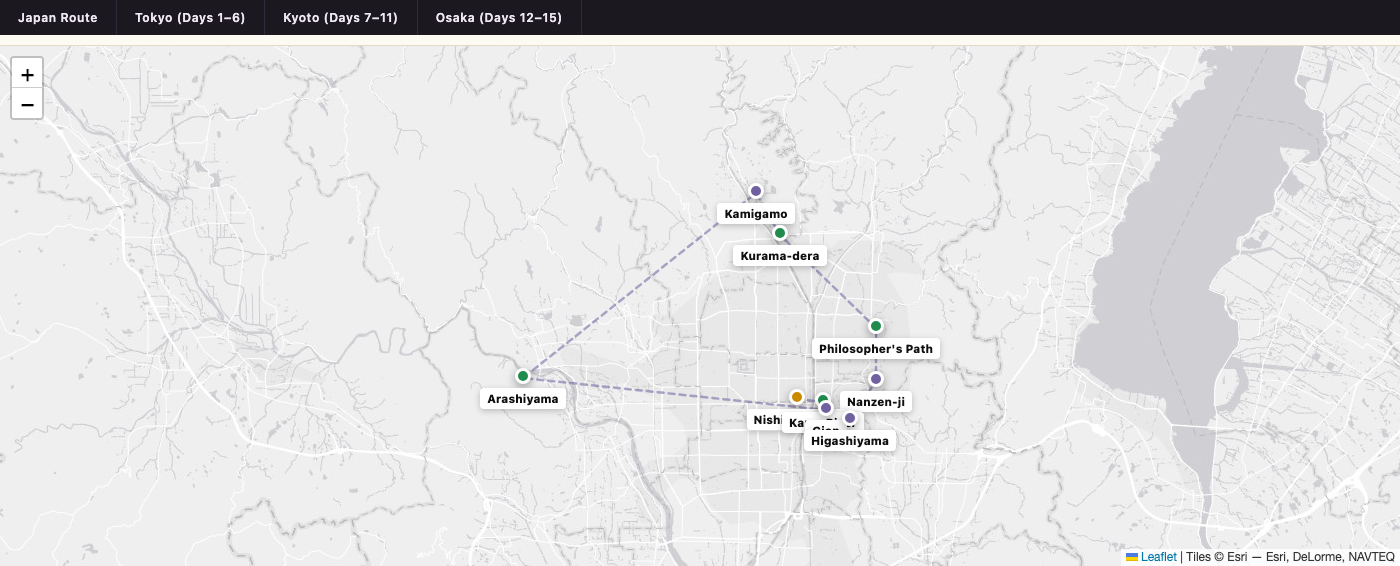
Kyoto: Days 7-11
Five nights is the right amount for what this vegan Japan itinerary has in Kyoto.
Day 7 Nishiki Market · Kamo River · Gion
Arrive midday, check in, then take it easy. Nishiki Market is a covered shopping street five blocks from Kawaramachi: fresh tofu, yuba, tsukemono, miso, lacquerware shops. Narrow and crowded in the afternoon, it is worth walking through once. Near the centre, the fresh tofu stall has blocks you can eat standing up. One of the better introductions to how Kyoto actually shops. A good first afternoon for a vegan Japan itinerary spending five nights in the city.
Kamo River in the late afternoon: walk south from Shijo Bridge or north toward Demachiyanagi. On the stone embankment steps, Kyoto residents sit reading, eating, watching the current. It does not feel like a tourist site. That is the point. One of those places that makes you understand why people choose to live here.
Gion after 18:00. Walk Hanamikoji-dori slowly. Wooden machiya facades, paper lanterns lit from inside, the occasional maiko walking quickly in the other direction. Before 17:00 it is an ordinary tourist street. After dark it becomes itself. Dinner at Mumokuteki Café and Foods, fully vegan, traditional Kyoto cooking, ten minutes from Gion.
Day 8 Arashiyama: Wake Up Early
Right beside the bamboo grove is Tenryu-ji. UNESCO Zen garden, 600 yen entry. Take an hour there before the tour groups arrive. Then the Sagano river valley: walk the Oi River south at your own pace. Cross the Togetsukyo Bridge in the late afternoon light and sit somewhere. Arashiyama is the nature peak of this vegan Japan itinerary.
Lunch or early afternoon: Hobodo Cafe in Kyoto. Very good, but very specific opening hours. Check before you go and plan your timing around it, not the other way around.
Day 9 Philosopher’s Path + Higashiyama
Pick up onigiri from Ao Onigiri at the north end of the Philosopher’s Path before you start walking. They wrap fresh onigiri in nori, with several vegan fillings, made to order. Eat on one of the benches along the canal. In March, cherry blossoms arch over the water here. In October, the first autumn colour starts showing.
Two kilometres south, the Philosopher’s Path follows the canal. At the end: Eikan-do Zenrin-ji. Inside the temple, the Garyūrō spiral staircase leads up to an open balcony with views over Kyoto’s eastern hills. One of the quietest viewpoints in the city and rarely mentioned. Then Nanzen-ji just south: the massive Sanmon gate and the Roman-looking aqueduct running through the temple grounds, which always surprises people.
Day 9 is the most intensive walking day on this vegan Japan itinerary. If legs allow: the Higashiyama alleys in the late afternoon. Ninenzaka and Sannenzaka for ceramics, textiles, good tea shops. From the north end of the Philosopher’s Path to the end of Sannenzaka, the full walk is about 7 km. Dinner: Nijiya, a small vegan izakaya in Kyoto known for vegan yakitori. Seating is by queue. Arrive before opening. Once you’re in, order everything.
Day 10 Kamigamo Handcraft Market
Every 4th Sunday · 9:00-15:00 · Kamigamo Shrine (UNESCO)
Up to 220 stalls, all handmade. Ceramics, jewellery, textiles, woodwork, baked goods. Wide gravel path alongside a stream, shrine buildings in the background. One of the best craft markets in Japan.
Take your time here. Worth the visit for the setting alone: the old shrine grounds, the sound of the water, the mix of craftspeople who have been coming for years. After 15:00 the afternoon is free. Dinner: Izakaya Masaka, vegan izakaya cooking in Kyoto. Kamigamo is part of why this vegan Japan itinerary keeps Kyoto at five nights rather than four.
Day 11 Day Trip to Uji: Tea, Temples, Matcha Everything
Byodoin Temple (UNESCO, on the 10-yen coin), Ujigami Shrine, the Uji River, and more matcha than you can reasonably work through in a day. One of the most popular day trips from Kyoto right now.
The town runs almost entirely on tea. The matcha here comes from a region that has been producing it for centuries, and the shops along Ujibashi-dori take it seriously. Start at Byodoin: the Phoenix Hall reflected in its pond is one of those images that the tourist photos somehow don’t oversell. Go early. Ujigami Shrine is a ten-minute walk east, smaller and quieter, also UNESCO, and the least crowded of the two.
After that: the tea streets. Tsuen Tea, one of the oldest tea houses in Japan, is worth stopping in for a bowl of matcha made the right way. For food: matcha soba is the local standard. Ask about dashi before ordering: the fish stock often hides in the broth even when the dish otherwise looks vegan. Warabi mochi dusted in matcha powder is sold at stalls all along the main street and almost always vegan. Honest recommendation: it’s one of the better things you’ll eat on this vegan Japan itinerary. Beyond sweets, vegan options in Uji are limited, so packing something from Kyoto or picking up at Kyoto Station before leaving is practical.
Last Kyoto dinner: Gion Soy Milk Ramen Uno Yukiko. Soy milk broth, Gion location. A good way to close out the Kyoto section of this vegan Japan itinerary.
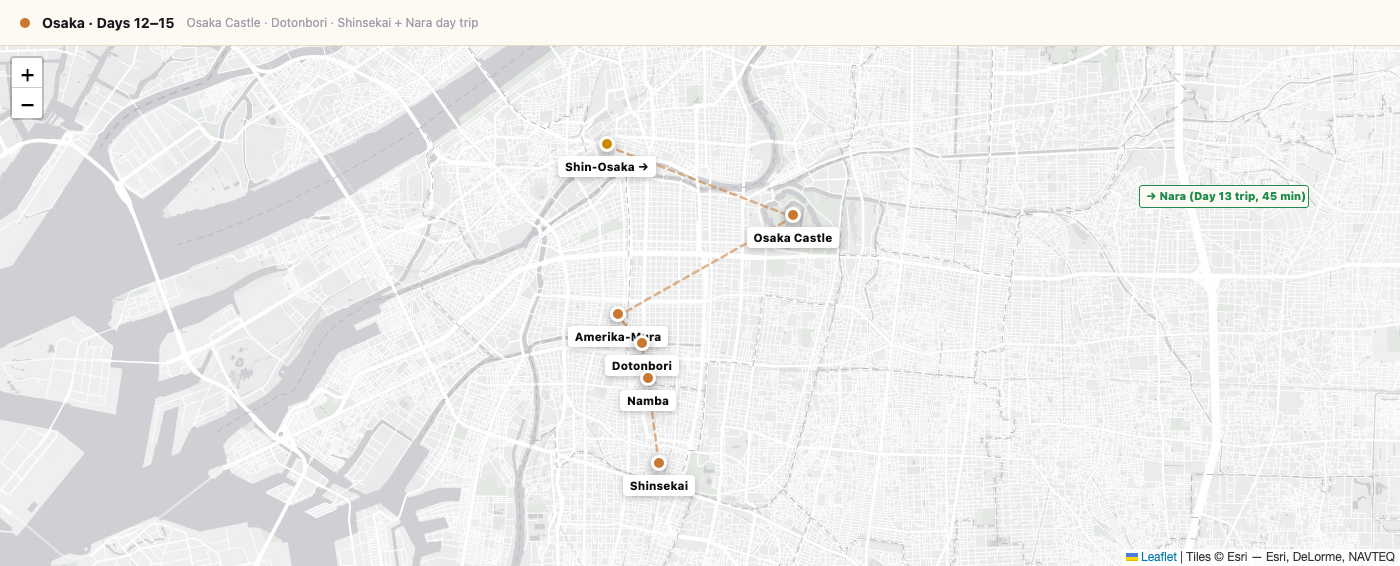
Osaka: Days 12-15
Two nights in Osaka close out this vegan Japan itinerary before the shinkansen back to Tokyo.
Day 12 Osaka: Castle Park, Dotonbori, Shinsekai
Check in and head out. Osaka Castle Park in the morning: the moat walk, the grounds, the broad stone ramparts. The park absorbs the crowds better than the castle interior does, and the views from the embankment are worth the walk there on their own.
Afternoon in Dotonbori. The canal strip is loud, neon-soaked, and completely unsubtle about it. Walk it slowly: the Glico sign, the covered Namba shotengai arcade stretching south, the smell of takoyaki from every second stall. Evening in Shinsekai, the 1920s retro district where the neon has been up long enough to feel genuine. The Osaka section of this vegan Japan itinerary is short by design. Dinner: Papachan, vegan ramen in the Dotonbori area.
Day 13 Nara: Deer, Temples, Calm
Deer roam freely through the park grounds, unbothered, approaching on their own terms. The park is large, genuinely peaceful despite the visitors.
Todai-ji at the north end of the park: the largest wooden structure in the world. The approach through the stone lantern path is worth it even if you don’t go inside. Nara is the final day trip on this vegan Japan itinerary. Vegan food here is limited. Konbini onigiri (umeboshi, kombu) works for lunch. Back in Osaka in the evening: Amerika-Mura for vintage shops, then dinner at Palnuts, a vegan café in Osaka.
Day 14 Osaka Morning, Shinkansen to Tokyo
A slow morning. Before leaving: OKO Takoyaki does vegan takoyaki, which is genuinely not something you can say about most places. Shinkansen Nozomi from Shin-Osaka to Tokyo: about 2.5 hours. Arrive in the afternoon. One last Tokyo evening, no plans needed. The vegan Japan itinerary is almost done.
Day 15 Departure
Narita (NRT) is about an hour from Shinjuku on the Narita Express. Haneda (HND) is 30 minutes from Hamamatsucho on the Tokyo Monorail. For afternoon flights there is usually time for a slow last walk through Asakusa or a quiet breakfast somewhere near the hotel. Then done. That is the full fifteen-day vegan Japan itinerary.
Vegan Japan Itinerary: What Actually Needs Planning
Japan is not a vegan-hostile country. Most guides skip the specifics that matter on a vegan Japan itinerary, particularly what to look for. The main thing to watch for is dashi, a fish-based stock that appears in many broths, sauces, and vegetable dishes that otherwise look vegan. The how to eat vegan in Japan post is the more detailed vegan Japan guide on this blog: what to say, what to watch for on menus, and which kanji to recognise. The vegan konbini guide lists what is safe to eat at 7-Eleven, FamilyMart, and Lawson.
Two things are worth sorting before departure: Shinkansen tickets and one or two restaurant reservations. Everything else on a vegan Japan guide of this length can stay flexible. Sorting these out makes any vegan Japan travel easier to run on the ground. One phrase worth having on your phone: Watashi wa niku mo sakana mo tabemasen, which means I don’t eat meat or fish. Or carry a vegan restaurant card in Japanese. Both are effective.
For the Shinkansen legs of this vegan Japan itinerary: the Tokyo-Kyoto and return journeys together cost around 27,600 yen. A 14-day Japan Rail Pass covers these and the Nikko day trip. For this vegan Japan itinerary it usually breaks even or comes out slightly ahead..
Every restaurant in this vegan Japan itinerary I have visited personally or heard about from people who have. If a place listed here has closed or changed, HappyCow is the best resource for finding alternatives anywhere this vegan Japan itinerary takes you. The shape of the vegan Japan itinerary matters more than any single venue on it. Use this as a vegan Japan guide and a vegan Japan travel template: swap out a day trip, shorten a city block, the core holds. If a city block needs to shorten or a day trip swaps out, the core structure holds.