Most lists of things to do in Arashiyama show you an empty bamboo forest at sunrise and a romantic train gliding through red maple leaves. We have been to Arashiyama twice, once in spring and once for the autumn colours. Some spots were beautiful. At others we mostly saw people.
Arashiyama is on the western edge of Kyoto, about 25 minutes from the centre, where the city runs into the mountains along the river. It is also one of the busiest places in Kyoto, and that changes how you should plan your day.
Below are nine spots and what I think of each one, including how crowded it gets.
The Nine Spots at a Glance
| Spot | Crowds | My verdict |
|---|---|---|
| Arashiyama Bamboo Forest | Very busy | Go early or skip it |
| Chikurin at Adashino Nenbutsu-ji | Quiet | Absolutely |
| Togetsukyo Bridge and river | Busy at the bridge, calm by the water | Yes, walk upstream |
| Main street and alleys | Very busy | Nice, with patience |
| Kimono Forest | Moderate | Yes, after dark |
| Walk through Saga-Toriimoto | Quiet | My favourite part |
| Otagi Nenbutsu-ji | Quiet when I was there | Absolutely |
| Sagano Romantic Train | Packed | Pretty, but not worth the hype |
| Vegan food in Arashiyama | Book ahead | Worth planning around |
When to Go: Early or Late
Arashiyama is crowded, at least on the main streets, and in spring and autumn it is very crowded. If you want to see the place and not just the crowd, come early in the morning or in the evening. Between late morning and late afternoon you will mostly see the backs of other people’s heads.
Evenings come with a catch: fewer trains run back to the city, and the Randen tram in particular stops earlier than you might expect. Check the last connection before you start your walk, not after.
9 Things to Do in Arashiyama
1. Arashiyama Bamboo Forest
The Arashiyama Bamboo Forest is the picture everyone knows, and yes, the bamboo is tall and the light through the stalks is lovely. But the path is short and narrow, and these days it is simply too full. When we walked through, we mostly shuffled along behind other people.
If it is on your list, go right after sunrise. Otherwise, I would skip it and go straight to the next spot.
2. Chikurin at Adashino Nenbutsu-ji: The Quiet Bamboo Path
North of the main area, at the end of the old Saga-Toriimoto street, is Adashino Nenbutsu-ji. The temple is known for its field of around 8,000 small stone Buddhas and statues, collected from the area and set up in rows. It is a strange place, and I found it more moving than I expected.
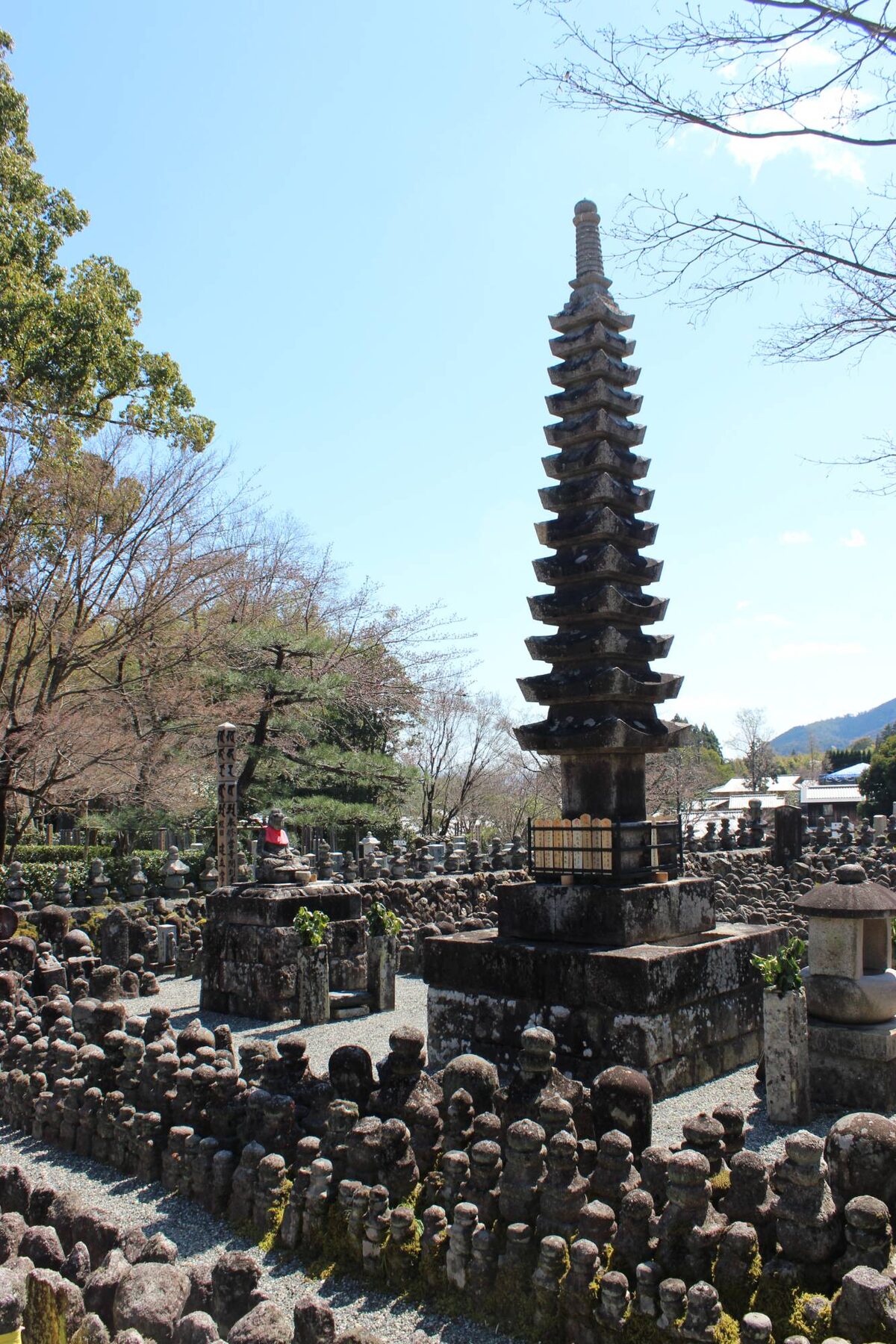
Behind the main grounds, a few steps lead up to a short path through bamboo, signed as Chikurin. It is very small compared to the famous one, and far quieter. This is the place to stand still for a moment and listen to the bamboo: the stalks knocking against each other, the leaves rustling high above. You hardly get to hear that in the big bamboo forest.
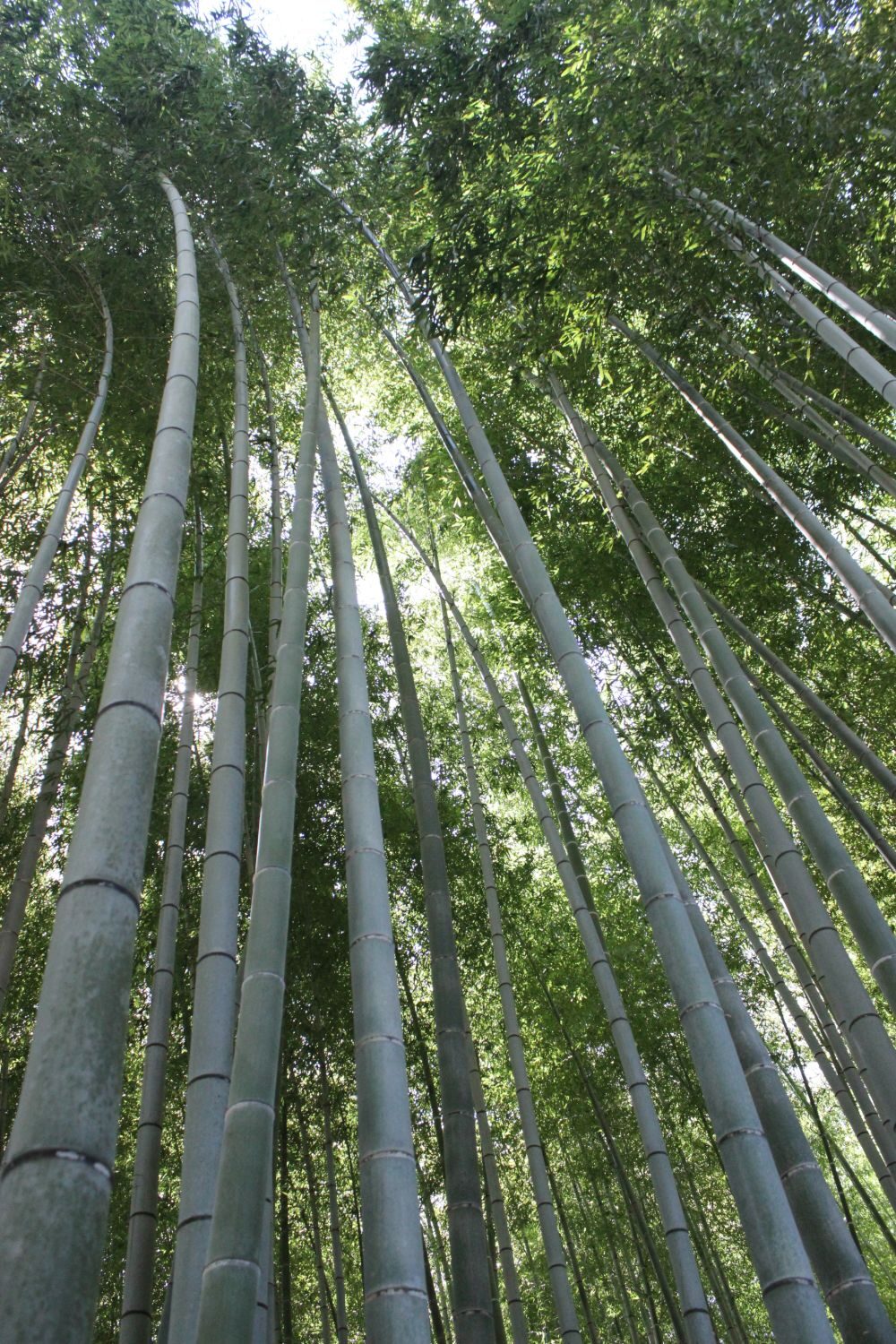
Good to know: the bamboo path is inside the paid area, entry is around 500 yen. If you are new to temple visits, my guide to temple etiquette in Japan covers the basics.
3. Togetsukyo Bridge and a Walk Along the River
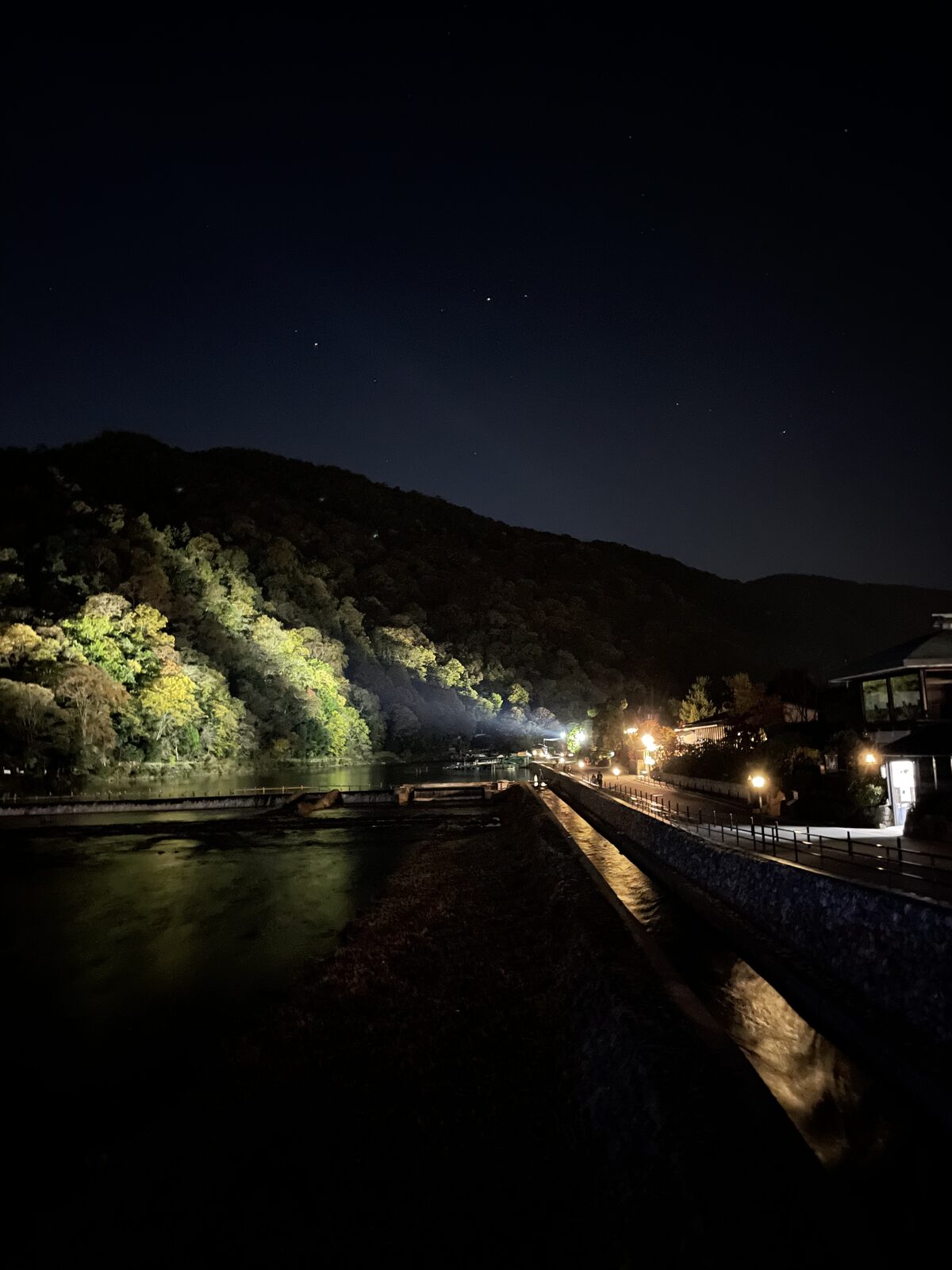
Togetsukyo, the “moon crossing bridge”, is the landmark of Arashiyama, with the forested mountain right behind it. The bridge itself is busy all day. But walk a few minutes upstream along the Katsura River and it gets calm very quickly. By the water was the easiest place to get away from the crowds.
4. The Main Street and Side Alleys
Strolling the main street and the little side alleys is part of a day in Arashiyama, with snack stalls and souvenir shops everywhere. It is also where the crowds are thickest. I enjoyed it most as a slow detour with no particular goal.
We snacked on mochi along the way. I cannot tell you anymore which shop or flavour it was. There are a lot of stalls, so just try whatever looks good. Plain mochi is usually vegan, while some fillings and coatings are not. I explain what to look for in is mochi vegan.
5. Kimono Forest at Randen Arashiyama Station
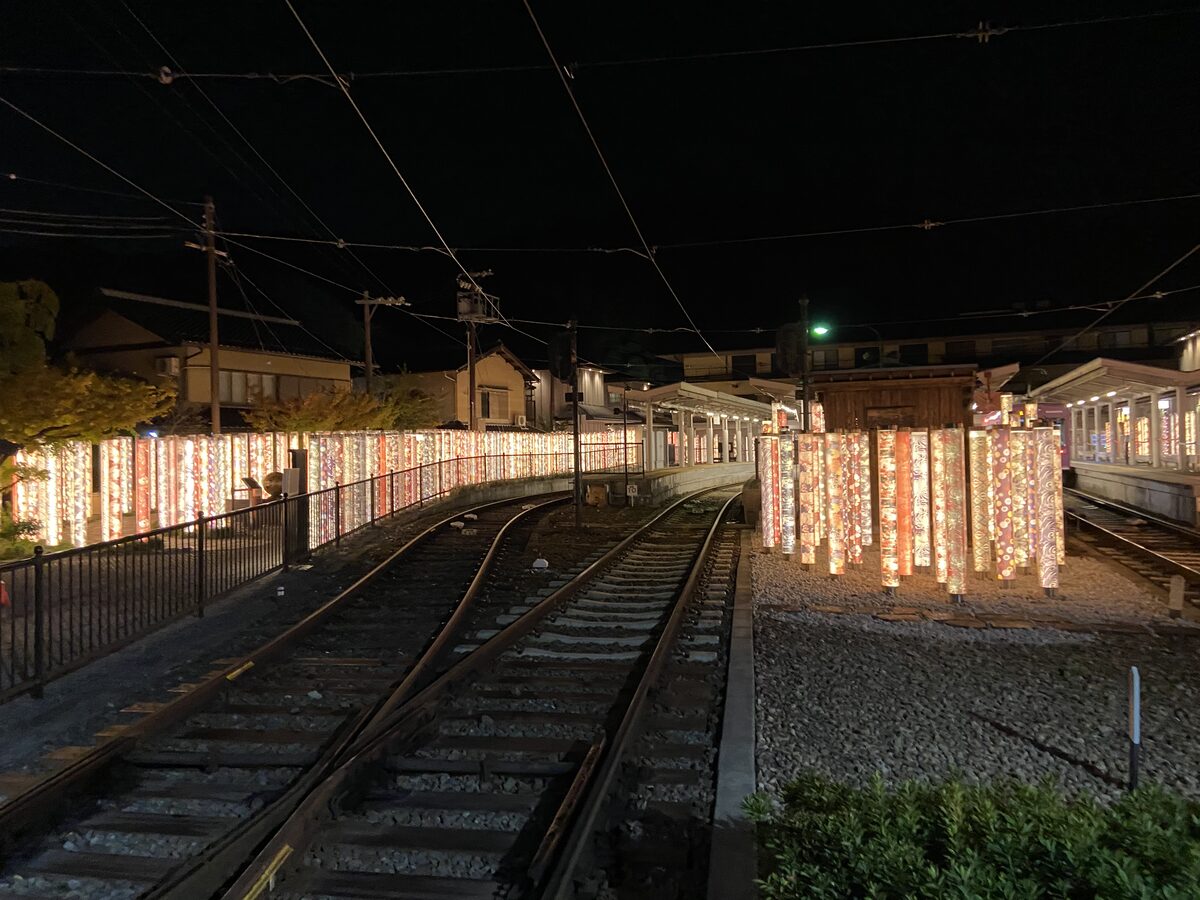
Near the Randen tram station there are rows of slim glowing pillars, around 600 of them, each wrapped in Kyo-yuzen kimono fabric. It is called the Kimono Forest. It is a small thing, ten minutes at most, but after dark when the pillars are lit, it is pretty.
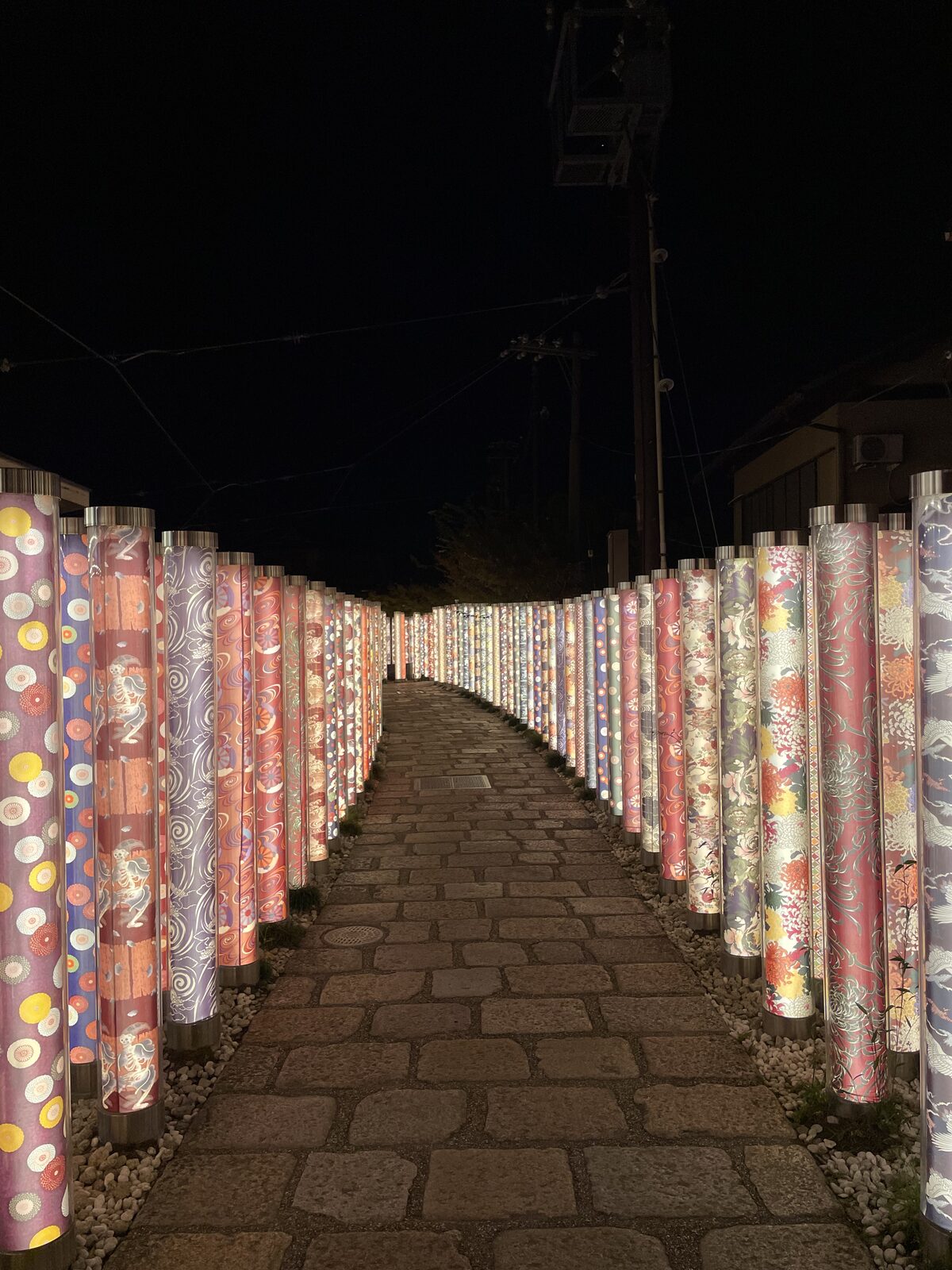
The pillars line a short path and continue along the tracks, so you walk through them on your way to the tram anyway. I liked it as the last stop of the day.
6. The Walk Through Saga-Toriimoto
This is my biggest tip for Arashiyama. If you are heading towards Otagi Nenbutsu-ji, walk instead of taking the bus. It takes a while, roughly 30 to 40 minutes from the bamboo forest, but the way leads through one of the loveliest parts of Kyoto.
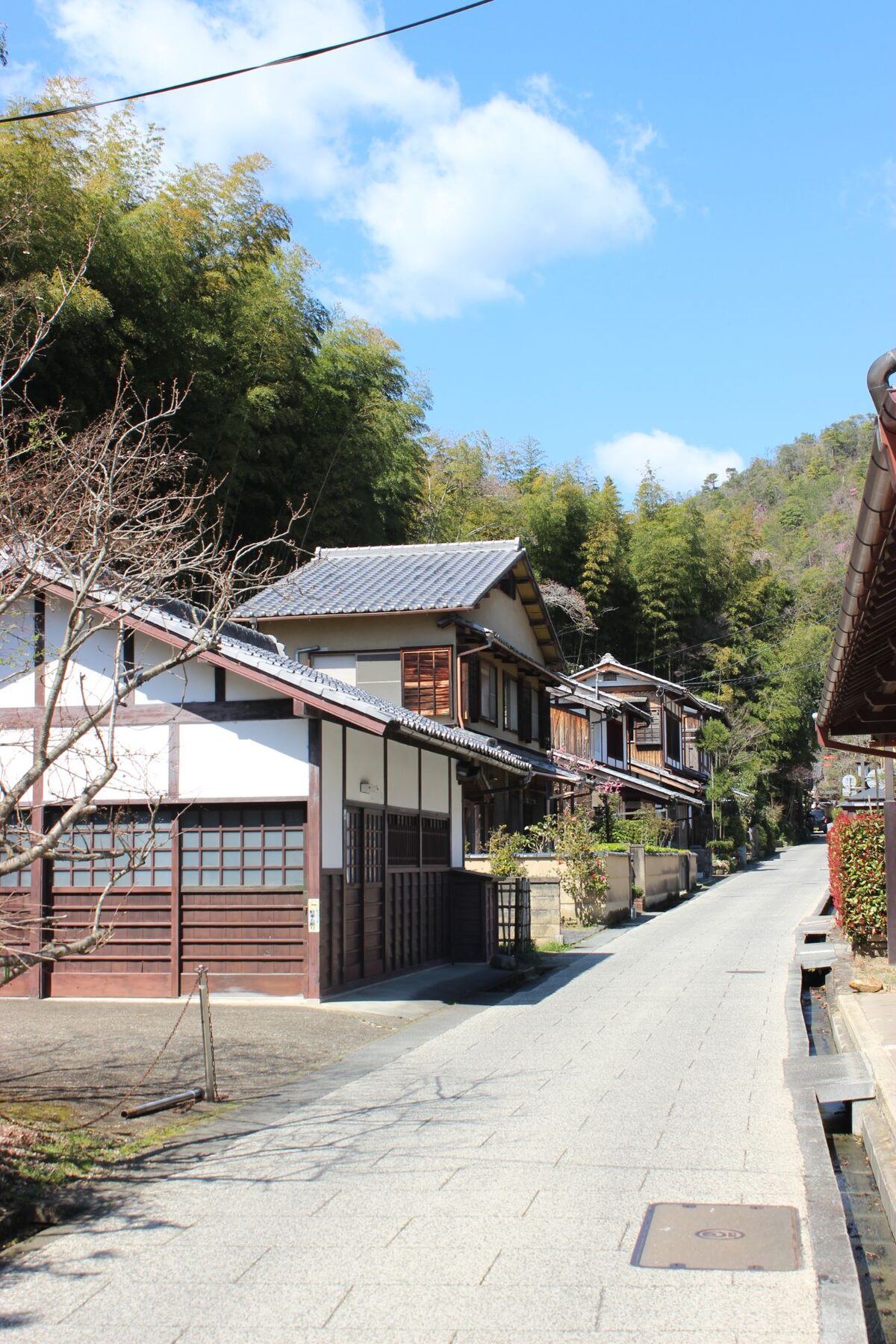
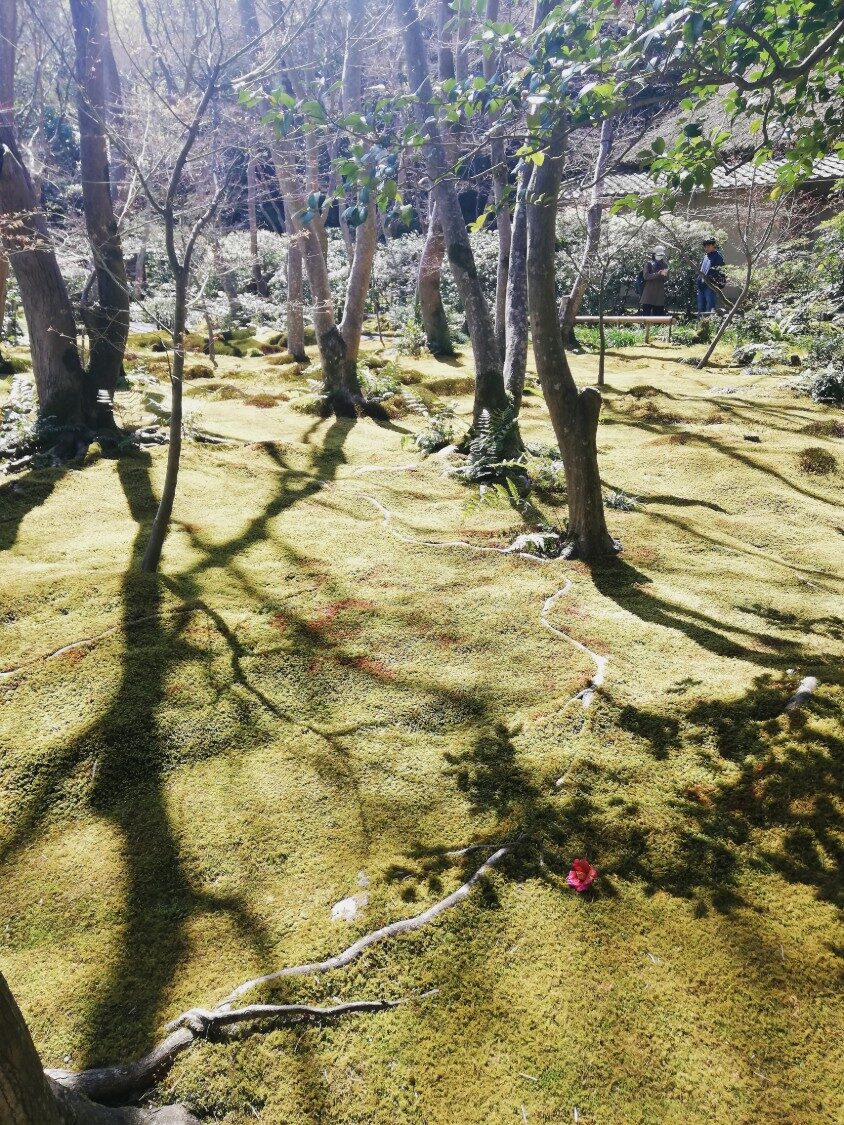
Saga-Toriimoto is a preserved old street with wooden townhouses, a few thatched roofs and a small water channel along the path. Along the way there are small temples worth a stop, like Gio-ji with its moss garden. The further you go, the quieter it gets.
7. Otagi Nenbutsu-ji
At the end of the walk is Otagi Nenbutsu-ji, and for me it was the highlight of Arashiyama. The temple grounds on the hillside are filled with 1,200 stone rakan statues, the disciples of the Buddha. They were carved by ordinary visitors in the 1980s, and no two look alike. Some laugh, some pray, some look half asleep, and many wear thick caps of moss.
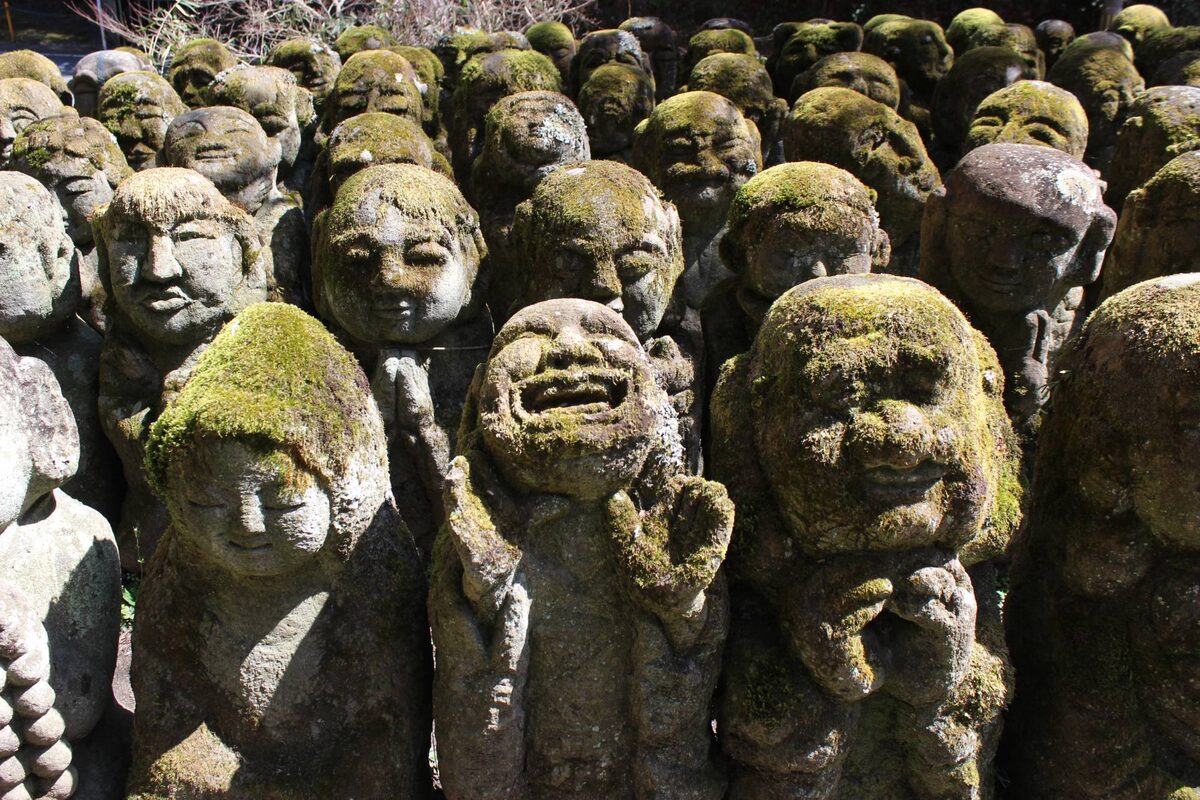
When I was there, it was quiet and relaxed, and I could take my time with the faces. I cannot promise it is still that calm, since the temple has become better known. It is a fair walk from the main area, though, and when I visited that seemed to keep most people away.
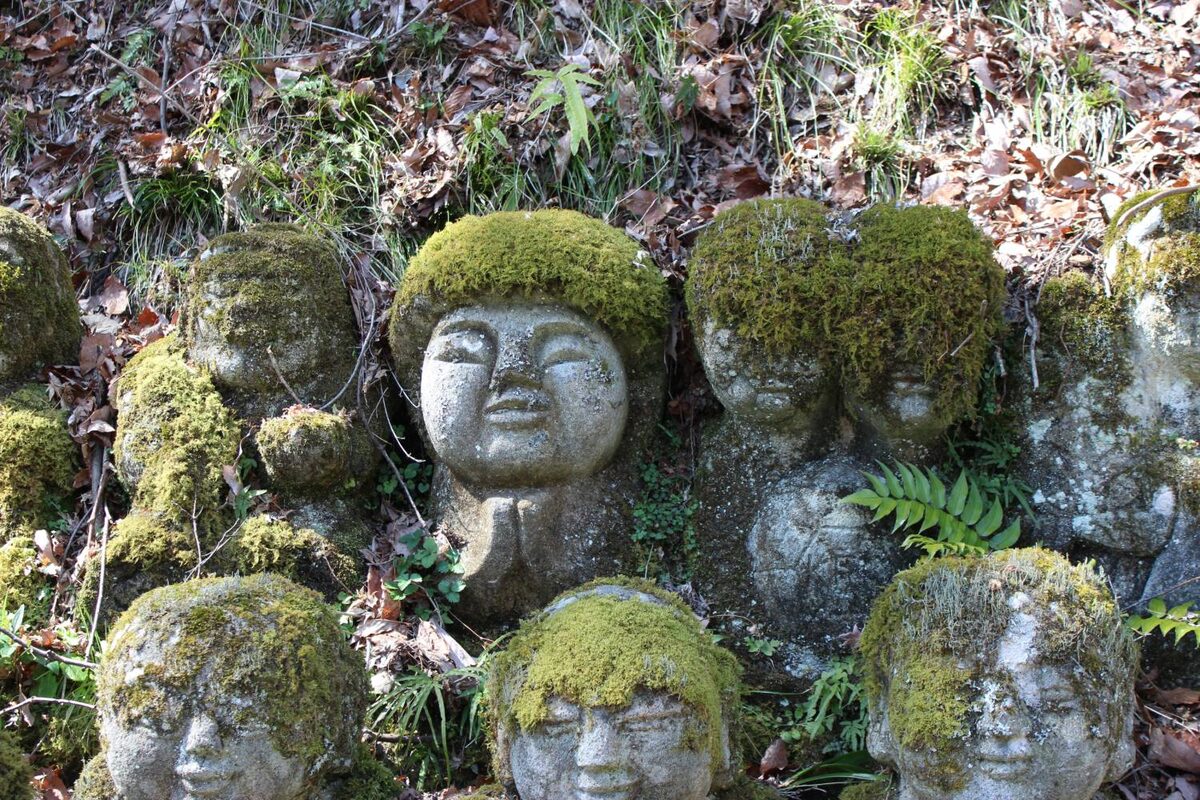
Good to know: since April 2026 entry is listed at 1,000 yen, open 9:00 to 16:15. Several sources currently list Wednesdays and Saturdays as closing days, so check before you go. If your legs are done after the visit, buses run back to Arashiyama.
8. Sagano Romantic Train
We took the Sagano Romantic Train in autumn, in the evening, when parts of the line are illuminated. The lit-up leaves were pretty and the ride itself was nice. For us it was not worth the hype, though. Too many passengers could not stay in their seats and kept getting up to farm photos, so a lot of the view was other people’s phones.
If you still want to ride it, and I understand why, plan these things before you go:
- Book in advance. Tickets go on sale online one month before the ride and sell out quickly in autumn. You can book on the official website or via Klook (affiliate link).
- Tickets are one-way only. Each ticket covers one direction, Saga to Kameoka or back. If you want to return by train too, you need a second ticket.
- It does not start at the normal station. The train leaves from Torokko Saga (next to JR Saga-Arashiyama) or Torokko Arashiyama (near the bamboo forest, about 60 steps up to the platform). You have to walk there first. Look at the map once or twice before, because it is easy to arrive late.
- You end up in the middle of nowhere. Torokko Kameoka is out in the countryside. From there it is a walk of about 10 minutes to JR Umahori station and the regular train back.
One alternative way back: from Kameoka you can float down to Arashiyama on the Hozugawa river boat (affiliate link), about two hours in a traditional wooden boat. I have not done it myself, but it would turn the awkward return trip into a second outing.
If you do not want to plan any of this, there is a half-day tour with train and boat (affiliate link) from Kyoto Station, including the bus and an English-speaking guide. It costs roughly twice as much as booking the train and the boat separately. It only makes sense if you do not want to organise anything yourself or cannot get train tickets anymore.
9. Vegan Food in Arashiyama
Thanks to the temple food around Tenryu-ji, Arashiyama has a few good vegan options. I have not eaten at the three places below myself, they are on my list for the next visit. All of them are fully plant-based or have clearly plant-based menus.
Shigetsu at Tenryu-ji: shojin ryori, Buddhist temple cuisine, served inside the temple grounds and made without any animal ingredients. Menus cost 3,800, 6,500 or 9,000 yen plus 500 yen garden entry, lunch only from 11:00 to 14:00, closed Thursdays. Reservations are required two to three days in advance. Shigetsu is listed in the Michelin Guide 2026 with a Bib Gourmand and a Green Star. Shigetsu website
Ermine’s Kitchen (formerly M’s Bento): a small, fully vegan restaurant run by two sisters in Saga-Arashiyama, on the 3rd floor of the Nagai Sangyo building. They serve one Japanese home-style vegan bento for 2,580 yen, with nori rolls, ganmodoki, artisan tofu and miso soup made with kombu and shiitake. Check the calendar on their website, they are usually closed on Mondays.
TOMONA: plant-based creative cuisine in Saga-Hirosawa, a little east of the centre and walkable from Arashiyama. A good option if you want dinner after the crowds have gone home. Opening hours and updates are on their Instagram.
For more places across the city, see my list of vegan restaurants in Kyoto.
Getting to Arashiyama
There are three easy ways from central Kyoto:
- JR Sagano Line from Kyoto Station to Saga-Arashiyama, the fastest option and right next to Torokko Saga station.
- Randen tram from Shijo-Omiya to Randen Arashiyama, about 24 minutes, flat fare of 250 yen. Slower, but it stops right at the Kimono Forest.
- Hankyu Line to Hankyu Arashiyama on the south side of the river, handy if you are coming from Osaka.
The JR Sagano Line is covered by the JR Pass, the Sagano Romantic Train is not, since it is run by a separate company. Whether the pass is worth it for your trip, and how to use it, is in my JR Pass guide.
If Arashiyama is part of a bigger trip, my 15-day vegan Japan itinerary shows how it fits into a week in Kyoto.
FAQ
Is Arashiyama worth visiting?
Yes, but not for the famous spots, which are crowded. For us it was the quiet parts that made it worth it: the walk through Saga-Toriimoto, Otagi Nenbutsu-ji and the Chikurin bamboo path.
How much time do you need in Arashiyama?
Plan a full day if you want to include the walk to Otagi Nenbutsu-ji. Half a day is enough for the river, the main street and the bamboo forest.
What is the best time to visit Arashiyama?
Early morning or evening, on any day. Spring and autumn are the most beautiful seasons and also the busiest.
Do I need to book the Sagano Romantic Train?
In spring and autumn, yes. Tickets go on sale one month before and are one-way only, so plan your return in advance.
Can you eat vegan in Arashiyama?
Yes. Shigetsu at Tenryu-ji serves fully plant-based temple cuisine, and Ermine’s Kitchen is fully vegan. Book Shigetsu in advance. For general tips, read how to eat vegan in Japan.