We drove up to Koyasan in Japan on a December day that started out almost warm. We’d spent the days before walking parts of the Kumano Kodo in Mie, and on the mountain road the temperature kept dropping until there was suddenly snow by the roadside. We were dressed far too lightly and got properly cold. It was worth it anyway.
Koyasan, or Mount Koya, is the centre of Shingon Buddhism: a temple town at around 800 metres in Wakayama with 117 temples, 52 of which take overnight guests. We only had one day between the Kumano Kodo and Nara. This guide covers what we actually saw (Okunoin cemetery, Kongobuji and Danjo Garan), where we got our goshuin, where you can eat vegan, and what we’d plan differently next time.
Koyasan Day Trip at a Glance
We did the day in this order: Okunoin first, then Kongobuji, then Danjo Garan. The three areas are spread along the main road of the town, so with a car you can drive between them or walk the last part.
| Stop | What it is | Our verdict |
|---|---|---|
| Okunoin | Japan’s largest cemetery, Kobo Daishi’s mausoleum | The reason to come. Open 24 hours, free |
| Kongobuji | Head temple of Koyasan Shingon Buddhism | Worth the entry fee, mainly for the rock garden |
| Danjo Garan | Temple complex with pagodas and a shrine | A good final walk, even in the cold |
| Goshuin | Temple stamp and calligraphy | We got ours at Kongobuji |
| Lunch | Shojin ryori at temples and restaurants | Book ahead, or you end up at the konbini like us |
| Vegan? | Temple food skips meat and fish | Ask about egg, dairy and dashi every time |
Okunoin Cemetery: Cedars, Moss and Silence
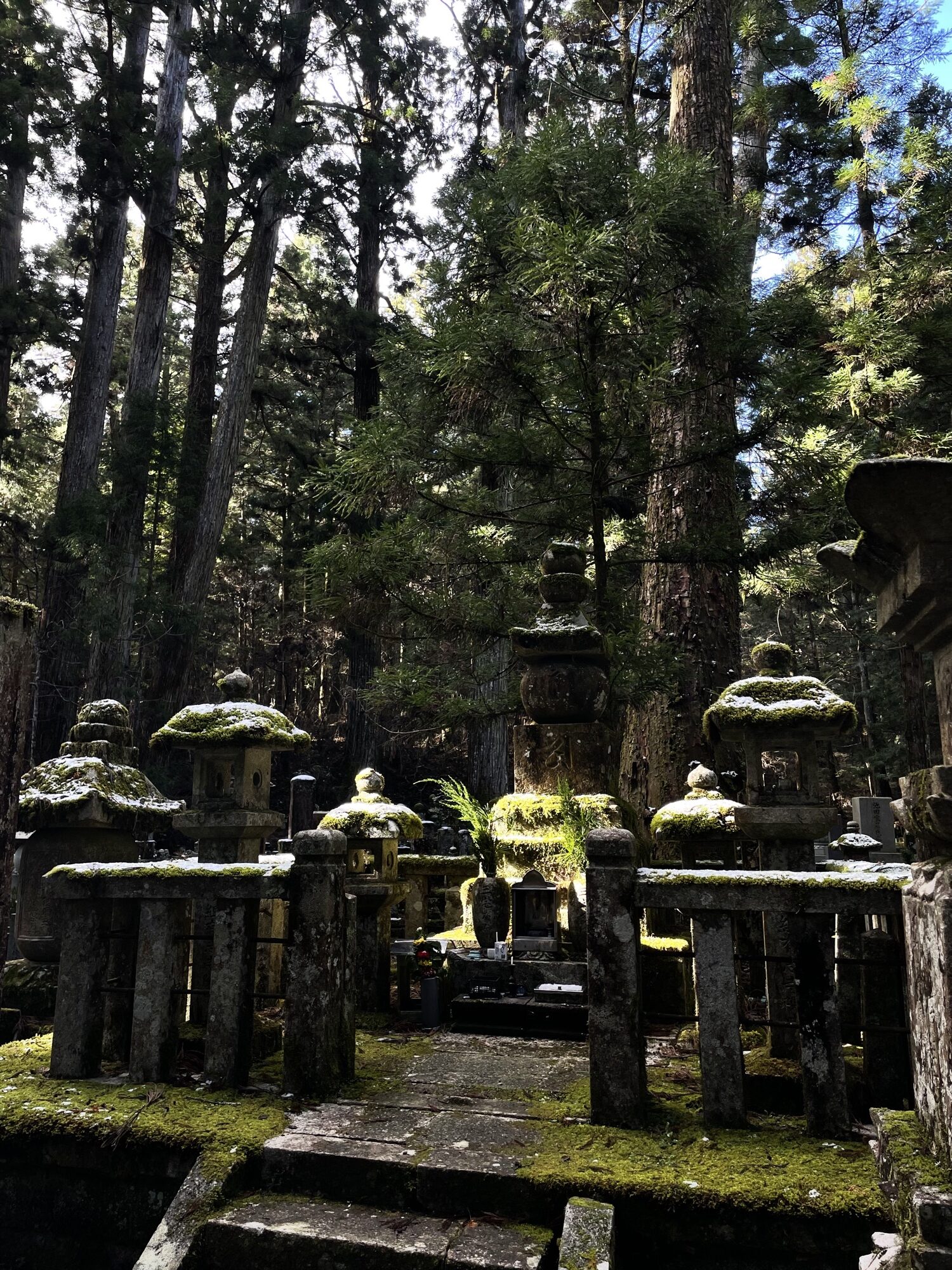
Okunoin cemetery is at the east end of Koyasan, and it’s where we started. The main path runs about two kilometres from Ichinohashi bridge to the mausoleum of Kobo Daishi, the monk who founded Koyasan. More than 200,000 graves and memorials line the way, some of them for samurai clans, others for temples, and some even for companies.
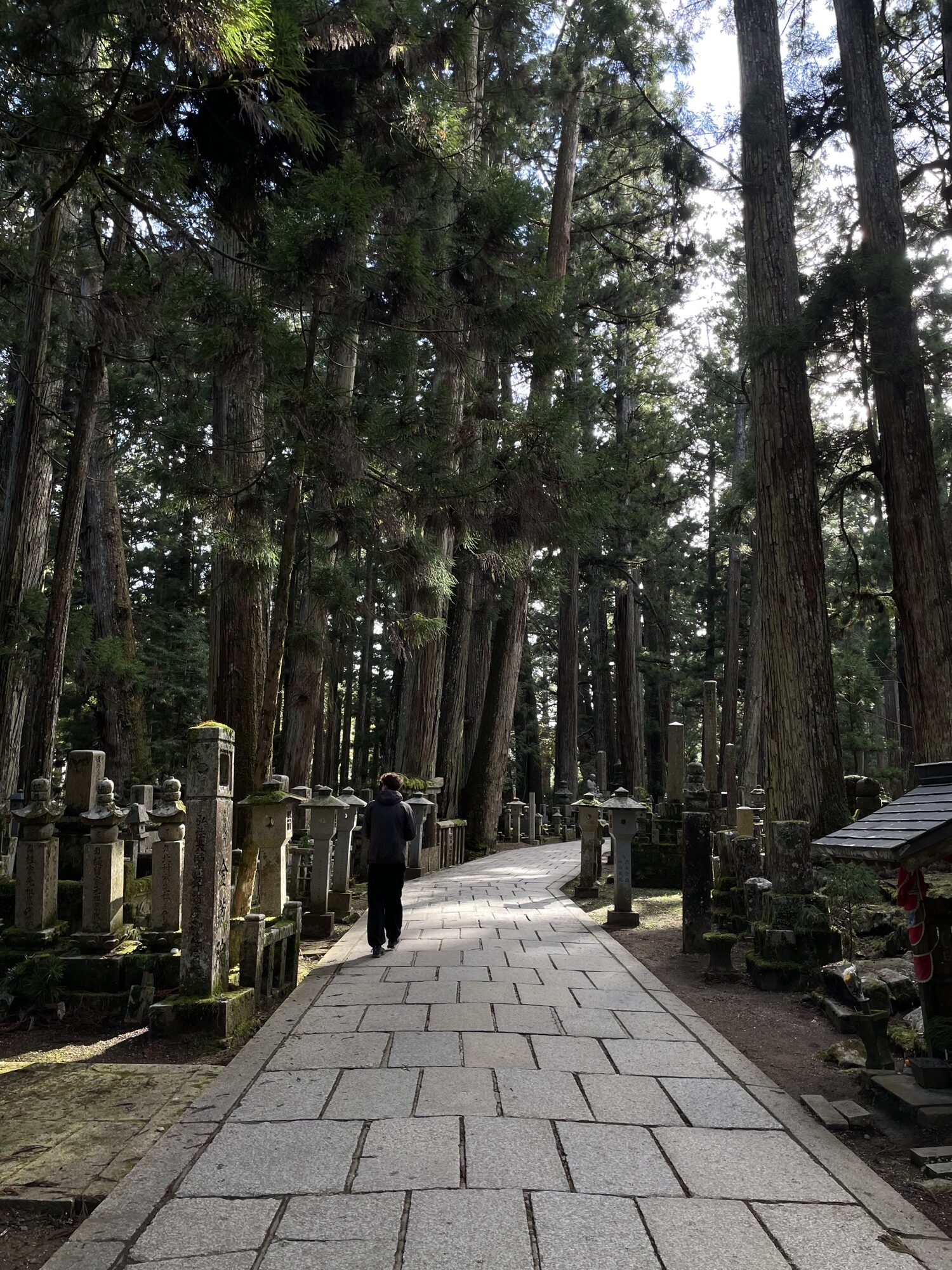
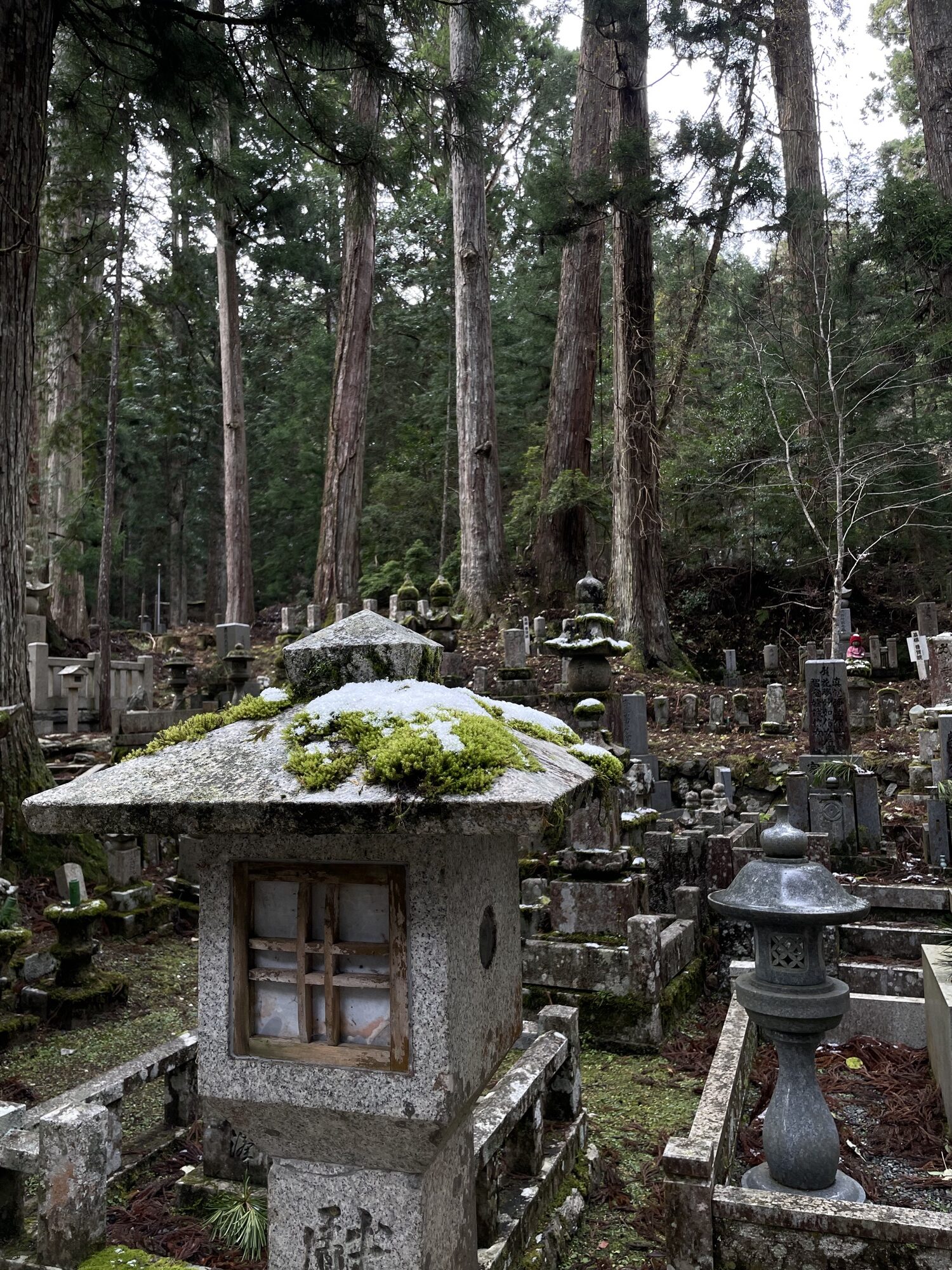
Honestly, I don’t remember whether we walked the whole path from the bridge. But we made it to the mausoleum, and what stayed with me is the atmosphere. Light fog came and went, sunbeams fell through the old cedars, and everything was covered in moss. It felt a bit like being in a film.
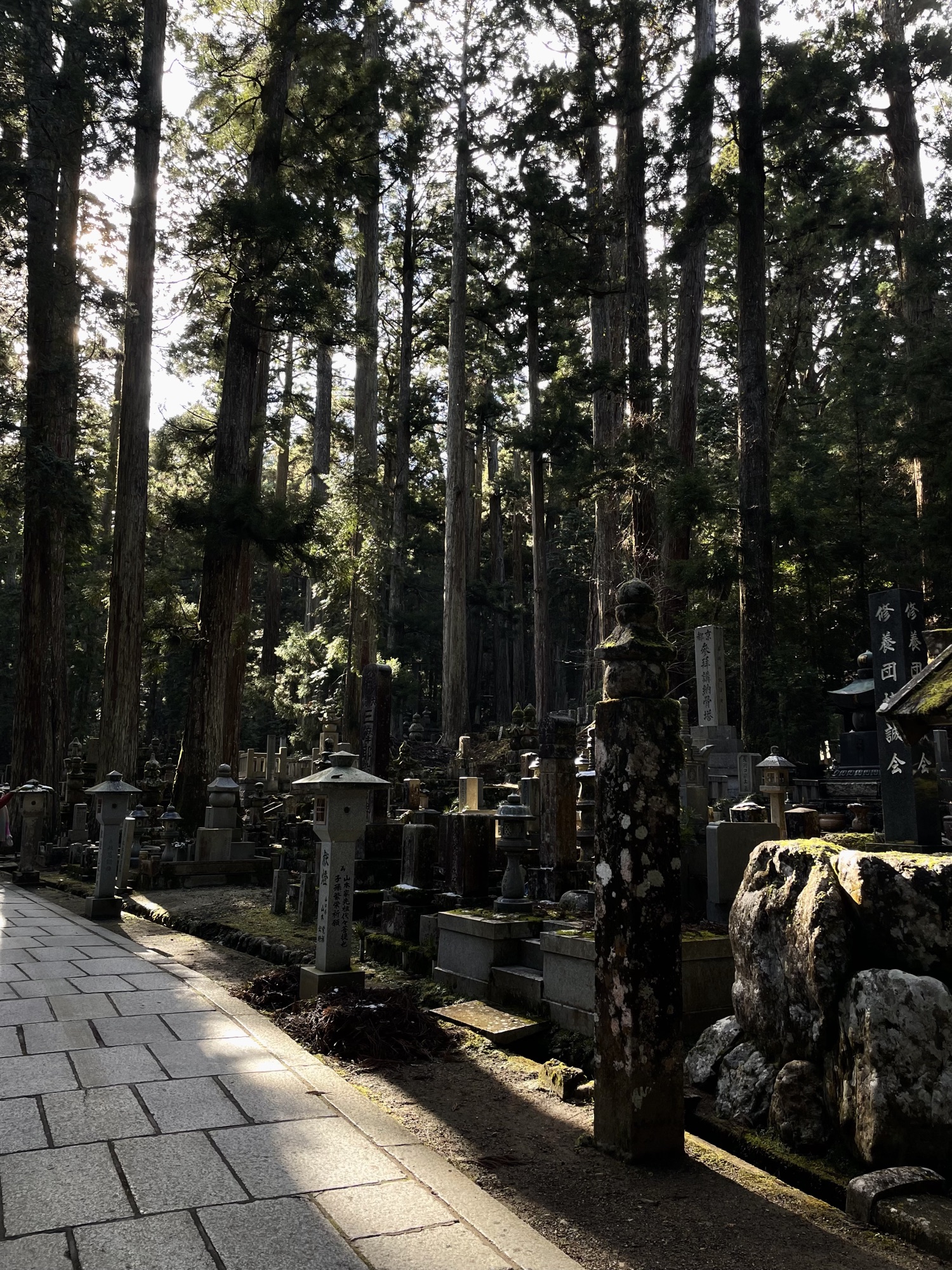
There were two of us, and still I was completely in my own head there. You walk, you look at moss-covered stone, and you think about things you normally don’t have time for.
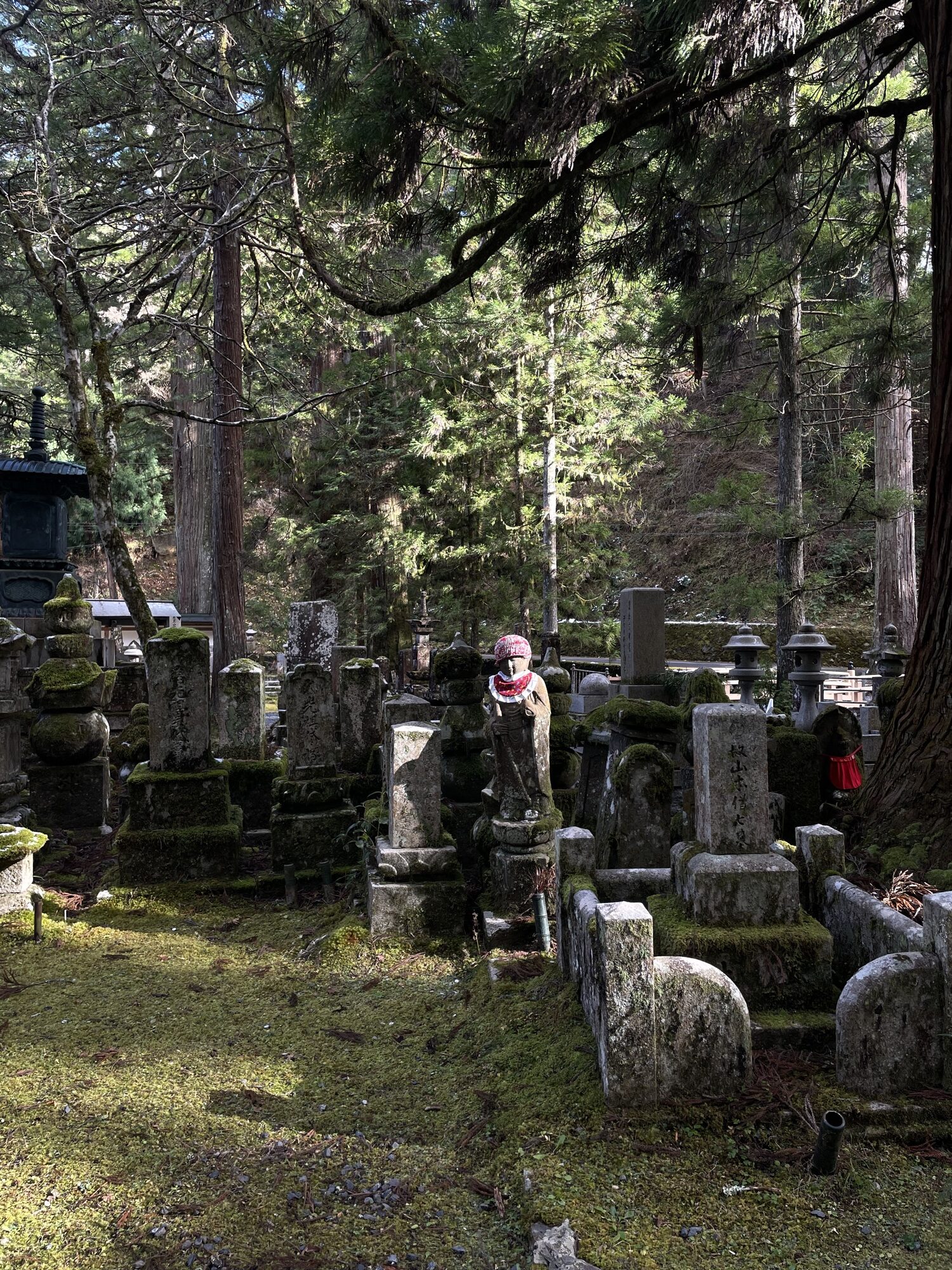
Between the graves you keep spotting small Jizo statues with red bibs and caps. Jizo is a bodhisattva who protects children and travellers, and people dress the statues as an offering.
Good to know: the last bridge before the mausoleum is called Gobyobashi. From there on, the area is considered especially sacred, and photos, food and drinks are not allowed. Many visitors bow before they cross. If you want a refresher on how to behave at temples in general, my guide to temple etiquette in Japan has the basics.
Kongobuji: Cold Floors and Japan’s Largest Rock Garden
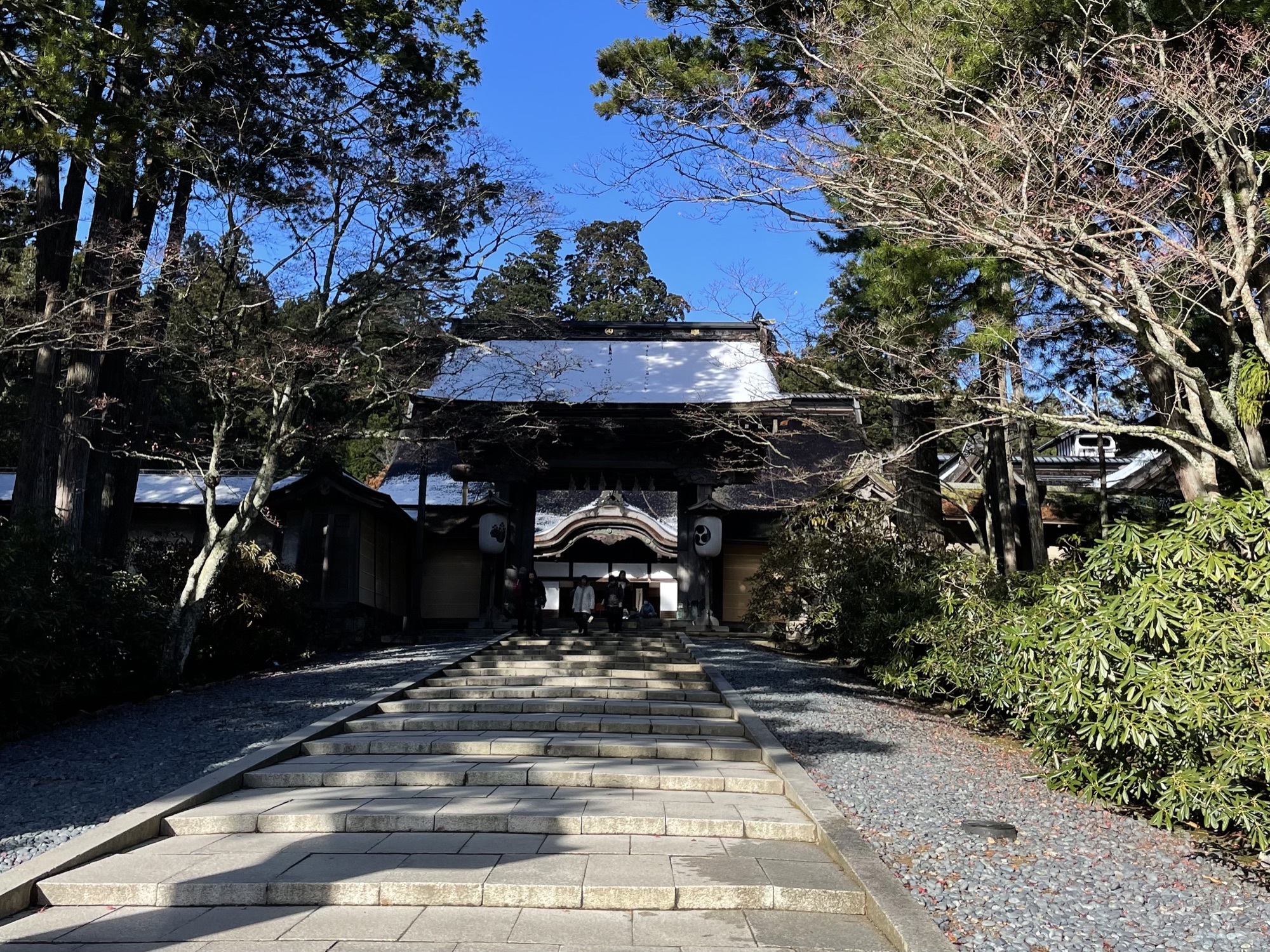
From Okunoin we went on to Kongobuji, the head temple of Koyasan Shingon Buddhism. The sky was clear blue, and there was snow on the roof of the main gate.
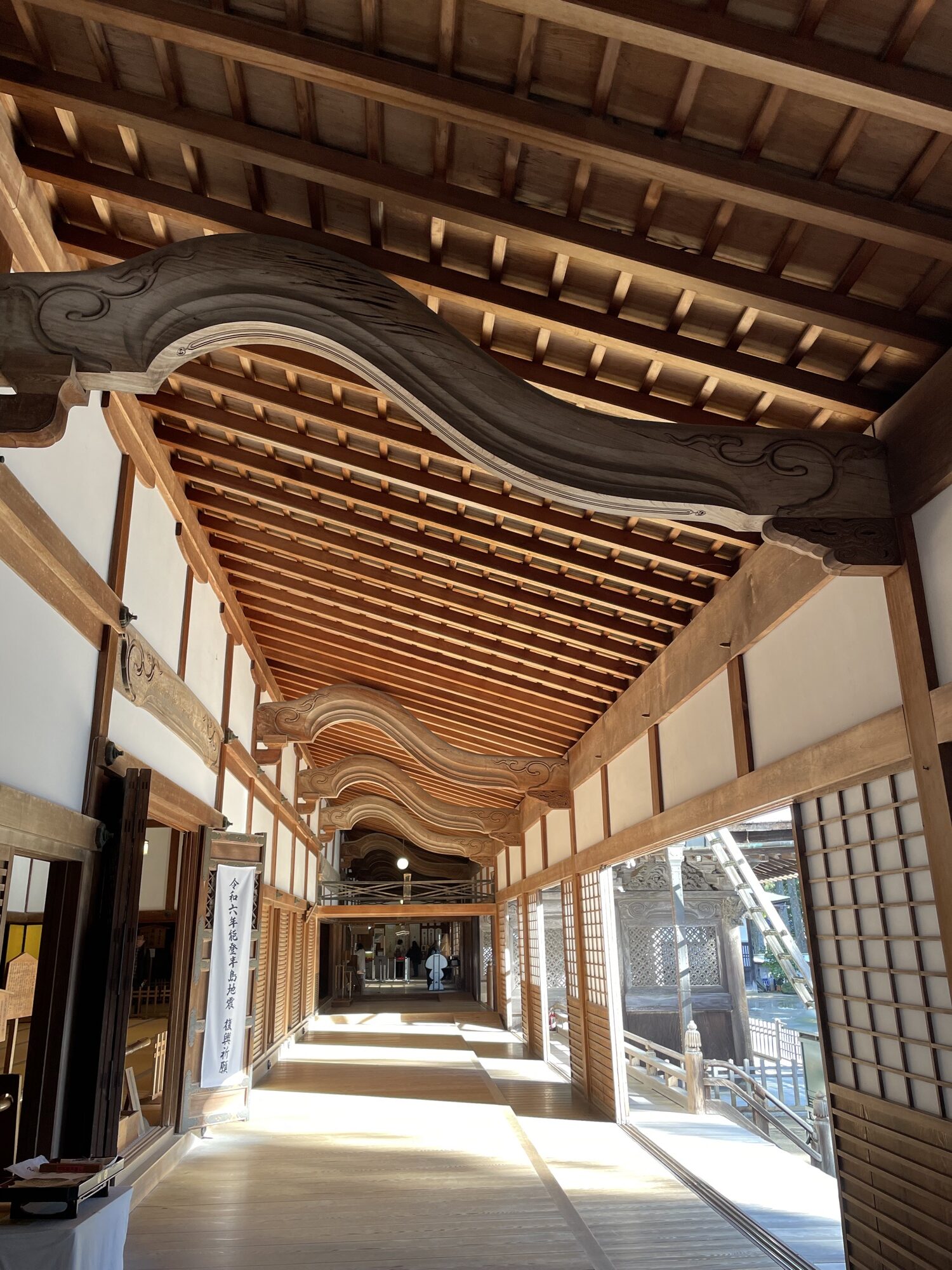
Inside, you swap your shoes for the slippers they give you. The wooden corridors are beautiful. In December they are also freezing, and the cold comes straight up through the thin soles.
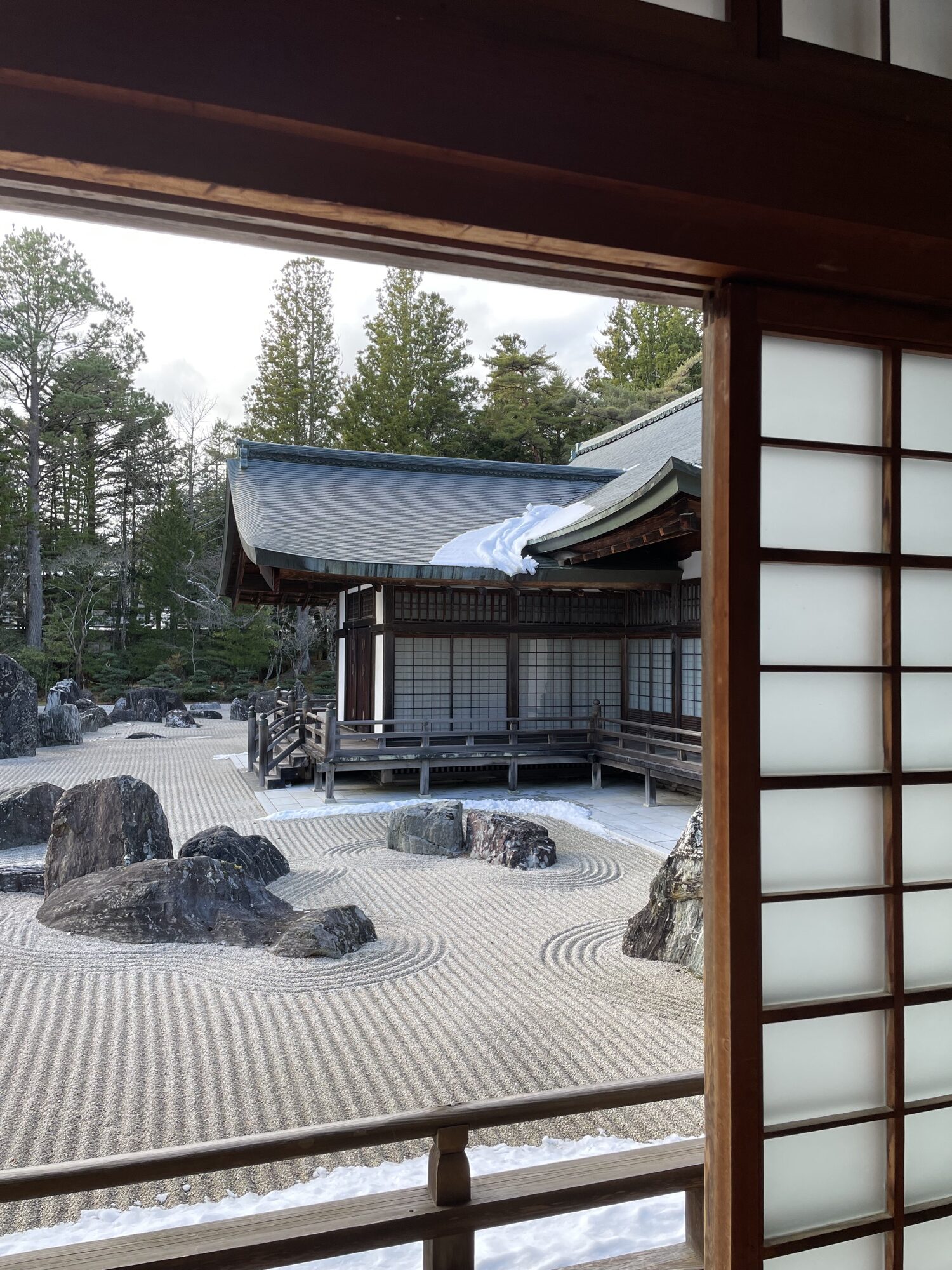
The highlight is Banryutei, often called the largest rock garden in Japan. With snow on the roofs and the raked gravel, it was one of the calmest views of the whole day. Entry to Kongobuji is around 1,000 yen and includes the garden. Check the current price before you go.
Danjo Garan: Pagodas and a Shrine
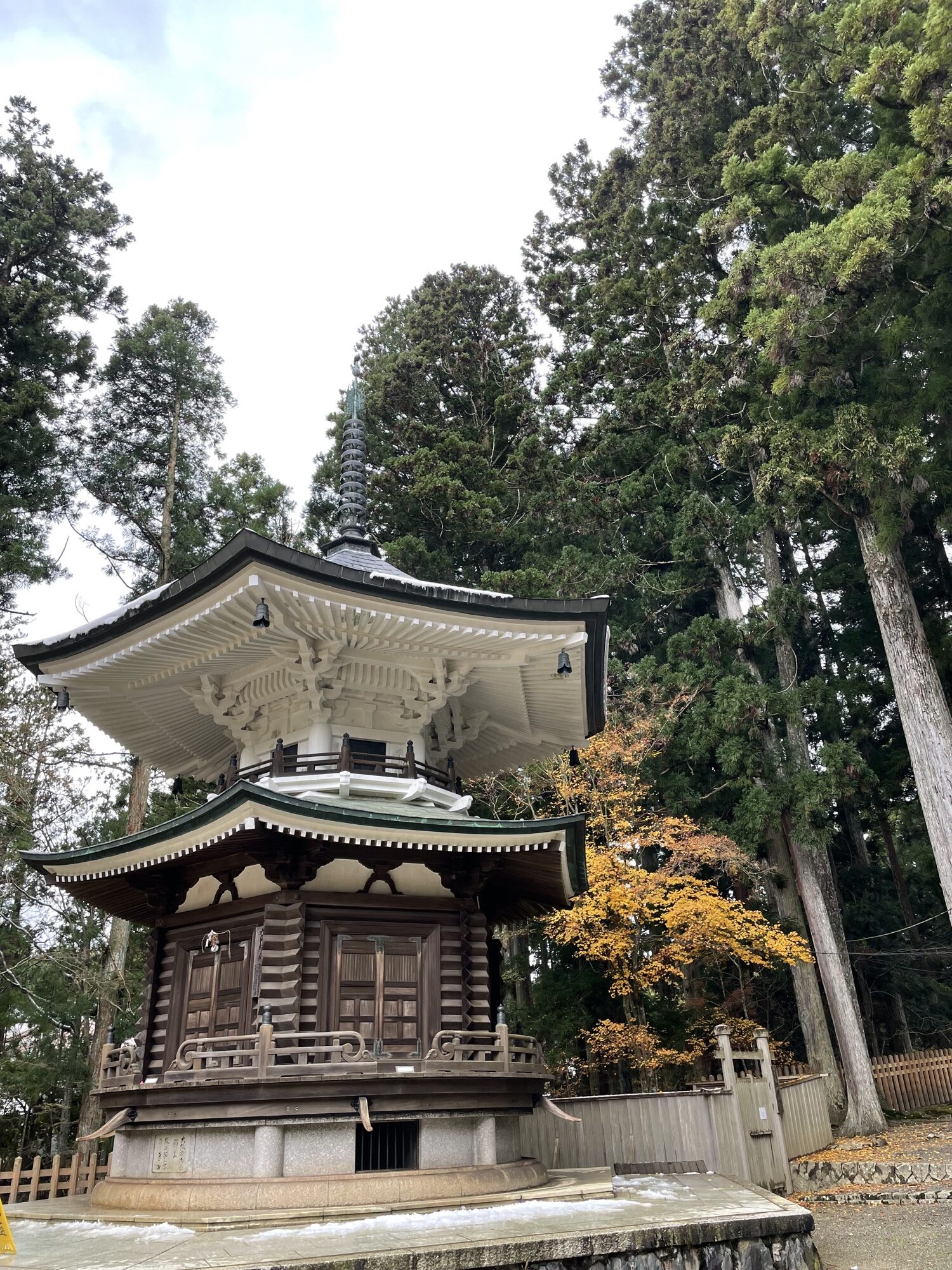
The last stop was Danjo Garan, a temple complex a few minutes’ walk from Kongobuji. This is where Kobo Daishi started building Koyasan. Besides the main hall, the Kondo, and the big red pagoda, there are several smaller halls and pagodas.
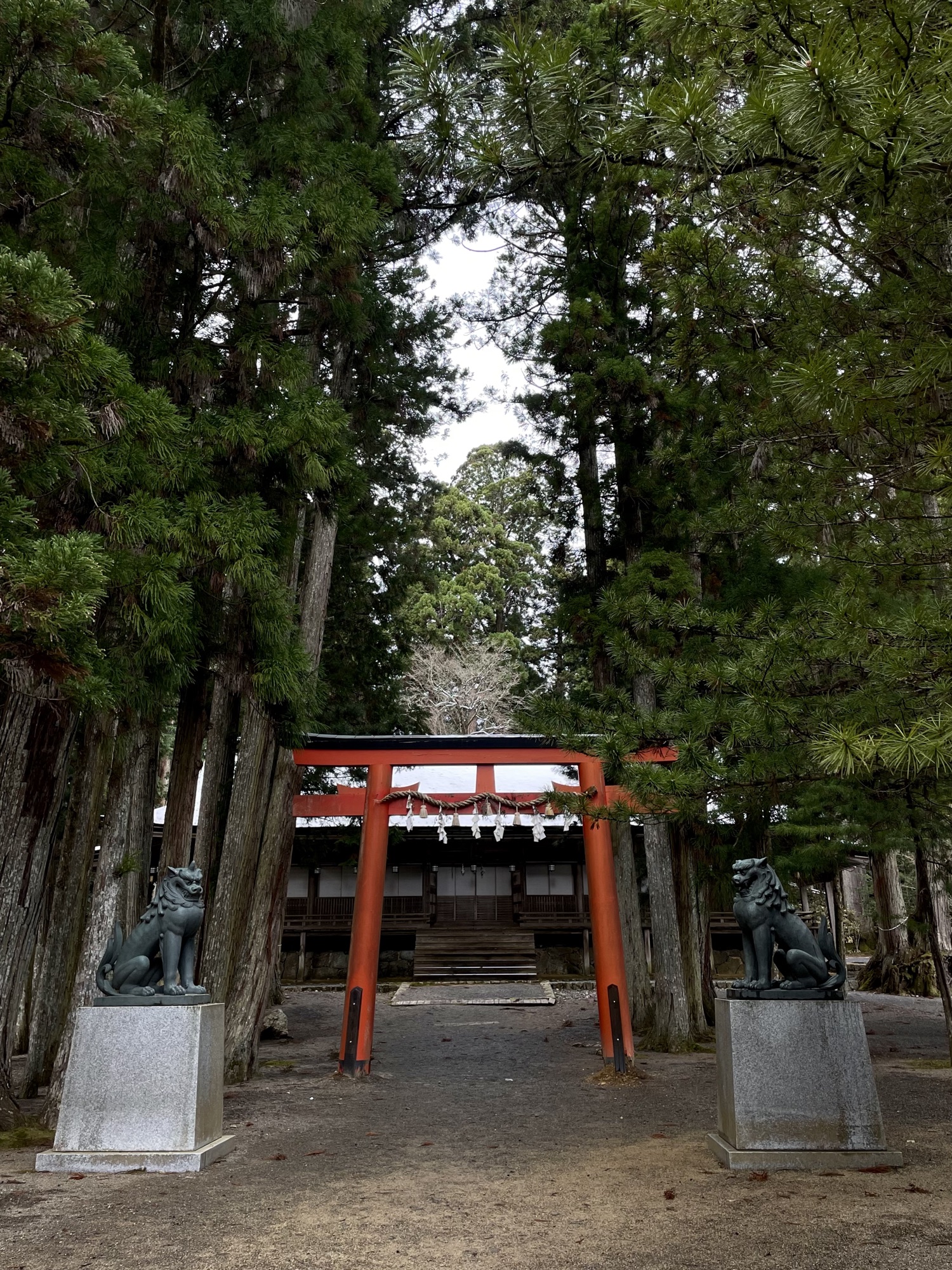
I didn’t expect a shrine on the grounds, but there is one, with a red torii and two guardian lions. It belongs to the mountain deities of Koyasan. Buddhism and Shinto have been mixed in Japan for centuries, and here they share the same grounds.
Collecting Goshuin at Koyasan
We collect goshuin, the stamps with handwritten calligraphy that you can get at temples and shrines. On Koyasan it mattered more to us than usual, because the place felt special. We got ours at Kongobuji.
You hand over your goshuin book at the counter, pay a small fee and wait a few minutes while a monk writes the page. If you don’t have a book yet, most bigger temples sell them. How to ask politely is also covered in my temple etiquette guide.
Shojin Ryori in Koyasan, and Why We Ate at FamilyMart
Koyasan is known for shojin ryori, the Buddhist temple cuisine. It is made without meat or fish, and many temples here cook it every day for their overnight guests. I wrote about the idea behind it in my post on shojin ryori and what I learned in a Kyoto kitchen.
We had picked out a place for lunch, but when we got there, it was closed. Most restaurants on Koyasan only serve lunch from around 11:00 to 14:00, and a plan B is not easy to find. Lunch was konbini food from the FamilyMart near Kongobuji, plus hot drinks from the warmer, which by then we needed more than the food.
If you end up there too, my vegan konbini guide shows what you can buy.
Next time we’d book ahead. Two options for day visitors:
- Ekoin: the temple serves shojin ryori lunch to day visitors from 11:00 to 13:00, with a reservation. According to Ekoin’s website, the reservable courses cost 5,800 or 7,800 yen, and a simpler 3,800 yen meal is only available without a booking.
- Hanabishi: a shojin ryori restaurant in the town centre that Vegewel lists with a vegan menu. We haven’t eaten there ourselves.
Is shojin ryori always vegan? Not automatically: meat and fish are out, but some temples use egg, dairy or even fish-based dashi for guests. Always say “vegan” when you book and ask about the dashi. My guide on how to eat vegan in Japan explains the dashi problem in more detail.
Koyasan Temple Stay: What We’d Do Next Time
We only came for the day, and that was enough to see the highlights. But a Koyasan temple stay, called shukubo, is the reason we want to come back. You sleep in a temple, eat shojin ryori for dinner and breakfast, and can join the morning prayers.
If we go again, we’d look at Ekoin first. It is one of the few temples that states clearly on its own website that breakfast and dinner are made without meat, fish, eggs, dairy, onion and garlic. It is also right by Ichinohashi bridge at the start of the Okunoin path and runs a guided night walk through the cemetery. You can book Ekoin on Klook (affiliate link).
Whichever temple you choose: mention that you’re vegan when you book and confirm it once more by email. Reports from other travellers show that not every shukubo is strict about it, with yogurt at breakfast or welcome sweets made with egg.
Getting to Koyasan by Car
Most guides describe the trip from Osaka by train and cable car. We came by rental car, from the Kumano Kodo, and drove on to Nara afterwards. For a road trip through the Kii Peninsula that works well, because Koyasan sits right between the two.
There are several car parks in town, including near Okunoin. Okunoin is at the east end of town, Kongobuji and Danjo Garan are in the centre, so with a car the stretch between them only takes a few minutes.
The roads up the mountain are narrow and winding, and from December there can be snow and ice. If you rent a car for a winter trip, ask about winter tyres when you book.
Without a car, the usual route is the Nankai Line from Osaka Namba to Gokurakubashi, then the cable car and a bus. It takes about two hours.
Is Koyasan in Japan Worth a Day Trip?
Yes. Cold feet and a closed lunch spot included, Koyasan was one of the most impressive places of the whole trip. One day is enough for the three big sights. If you want to experience shojin ryori and the morning prayers properly, plan a night.
FAQ
How much time do you need for Koyasan?
For Okunoin, Kongobuji and Danjo Garan, plan at least half a day on site, plus the drive or train ride up the mountain. If you also want a shojin ryori lunch, a full day is more relaxed.
Is Okunoin cemetery free?
Yes. Okunoin is free and open 24 hours. You only pay entry at temples like Kongobuji.
Can you eat vegan on Koyasan?
Yes, but plan ahead. Shojin ryori is made without meat and fish, but not always without egg, dairy or fish dashi. Book lunch in advance and ask for vegan. If that fails, the FamilyMart near Kongobuji is your backup.
How cold is Koyasan in winter?
Much colder than Osaka. In December we went from mild temperatures at the foot of the mountain to snow at the top. Bring warm clothes and thick socks for the temple floors.
Can you get goshuin on Koyasan?
Yes. We got ours at Kongobuji. Many other temples on Koyasan offer goshuin too.