The best vegan ramen broth I have ever tasted started with two shriveled, unimpressive things in a bowl of water: dried shiitake mushrooms and dried tomatoes. That was the first thing Nahoko showed us when my wife and I arrived at her home in Kunitachi, in the quiet west of Tokyo, for a ramen cooking class. The class was a wedding gift, and one of the most useful ones we got.
Over three and a half hours we made everything from scratch: the broth, the toppings and the noodles. The noodles involved a plastic bag and our feet. I will get to that. Below is what we cooked, why a vegan ramen broth without bones or fish can taste this deep, and whether the class is worth the money.
A ramen cooking class in a Tokyo home
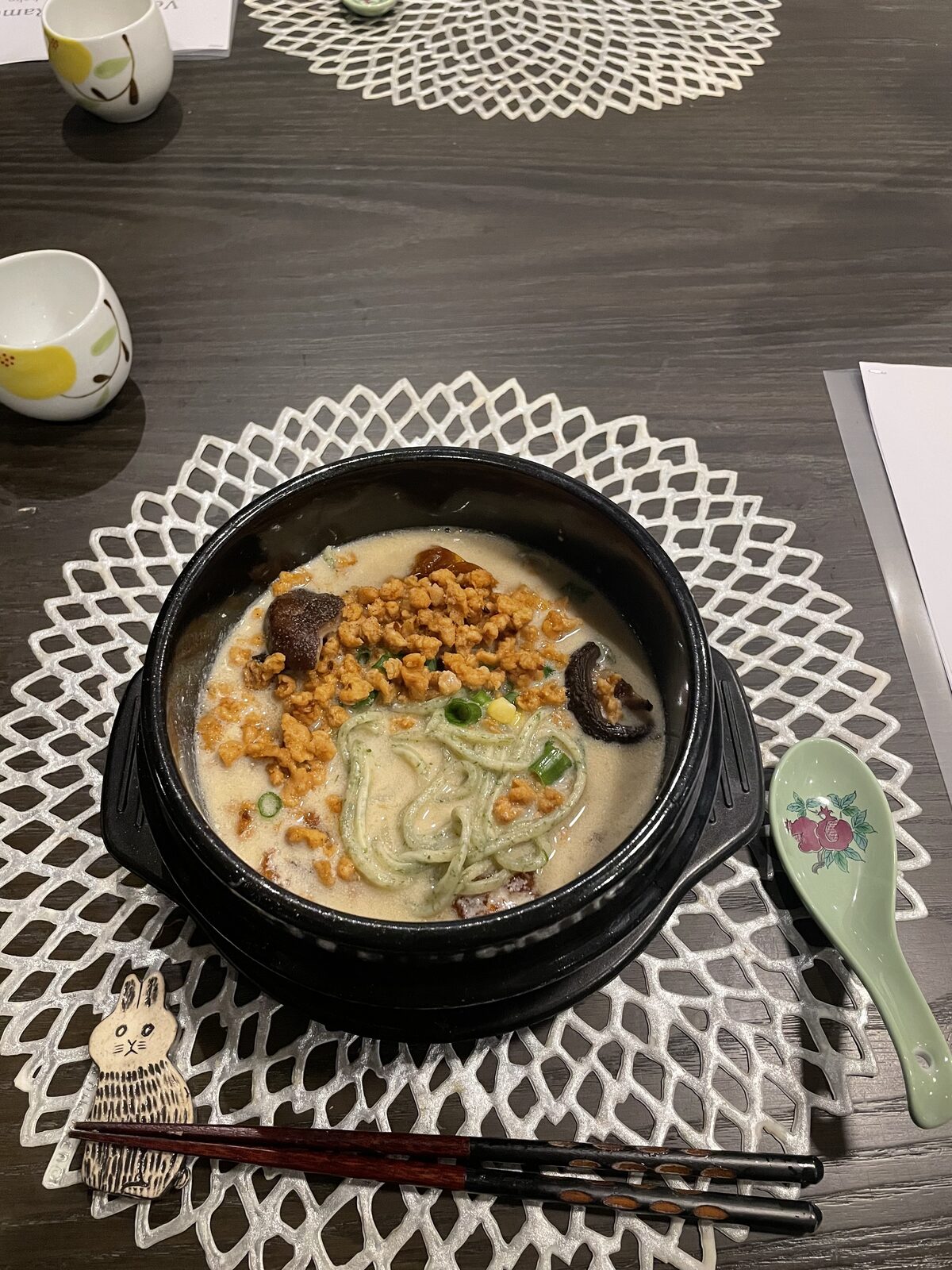
It was April 2023. A metal sign shaped like a ramen bowl hung on the brick wall outside, and someone had written “Let’s enjoy Ramenclass” and the date on it in chalk, with two little cherry blossoms. I liked the place before we had even rung the bell.
There were four of us at the table: my wife, me and two guests from Malaysia. I had worried a little about cooking with strangers, and that worry lasted about ten minutes. We swapped travel stories and compared what we had eaten in Tokyo so far. Talking is easy when your hands are busy, and some of the best conversations of the afternoon happened over a cutting board.
Nahoko was a wonderful host. She has been teaching Japanese home cooking in her own kitchen for years, explained every step in English and never once made us feel slow. Her class comes in vegan, vegetarian, gluten-free and halal versions, so she is used to adapting ramen to whoever is standing in her kitchen.
Why a vegan ramen broth needs two kinds of umami
Before we touched a pot, Nahoko held up a hand-drawn sheet. In my memory there had been five umami categories. Looking at my photo now, the sheet had three:
| Umami type | Sources on Nahoko’s sheet |
|---|---|
| Glutamic acid | Sea kelp, garlic, cheese, tomato, soy sauce, miso, asparagus, onion, broccoli, shiitake |
| Inosinic acid | Dried anchovy, bonito flakes, pork, chicken, beef |
| Guanylic acid | Dried shiitake, dried porcini |
The rule she taught us: a good ramen broth always combines at least two of these. Glutamate on its own tastes pleasant. Paired with one of the other two, the effect becomes much stronger than either alone. This is known as umami synergy, and it is the reason Japanese stocks so often pair kombu with something else.
Now look at the middle row. On that sheet, inosinic acid comes only from animals, which is why classic ramen broths are built on bones and fish.
For a vegan ramen broth, that whole row is gone, so there is not much choice left. Glutamate plus guanylate it is, and that is where the dried tomatoes and dried shiitake come in.
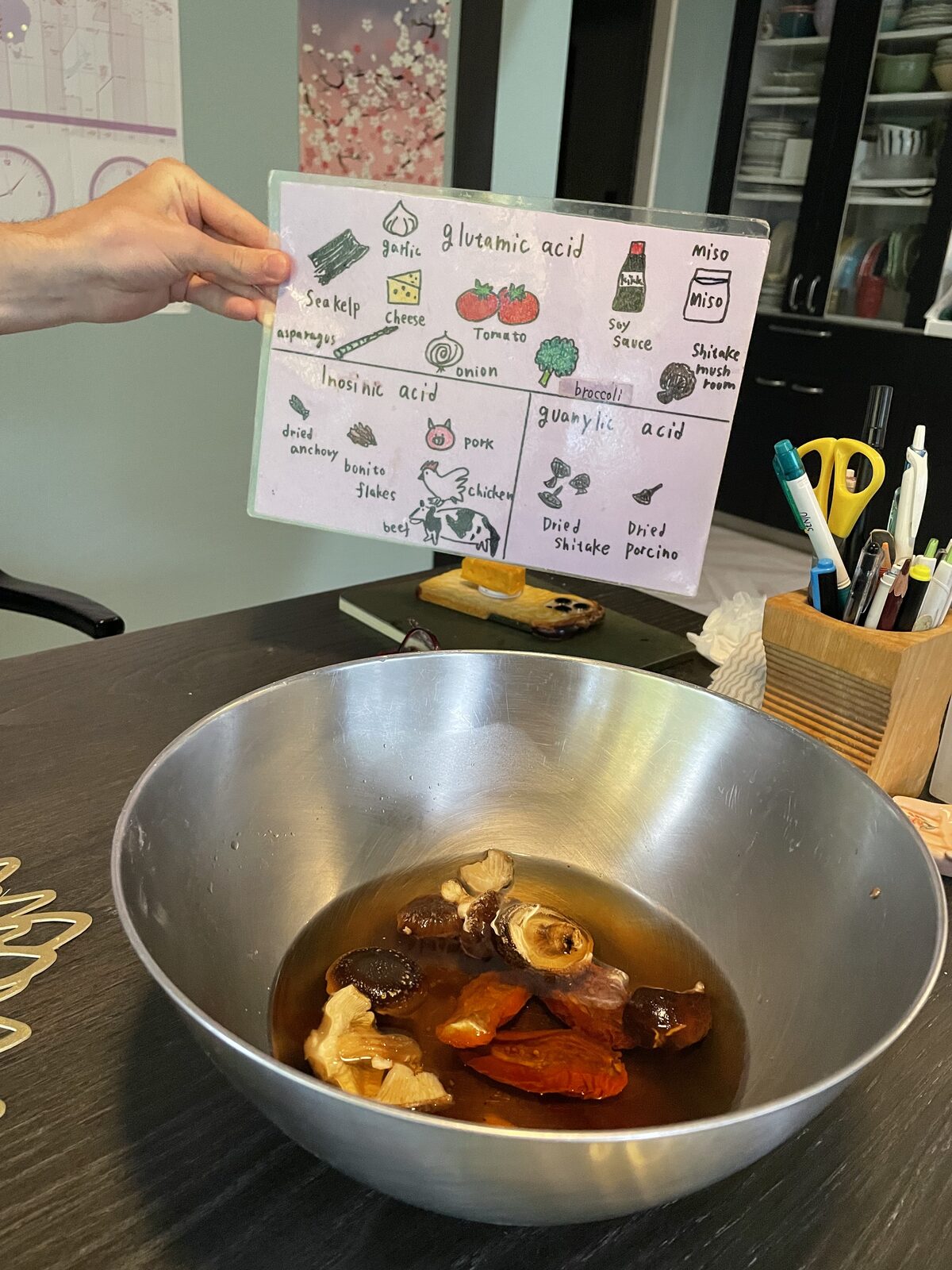
Tomatoes are rich in glutamate, and drying concentrates it. Dried shiitake are one of the few plant sources of guanylate. Soak both in water and you get a light brown liquid that already tastes like far more than mushroom water.
Ours became the base for a miso ramen, with the miso adding another layer of glutamate on top. It worked really well.
How to make vegan ramen broth at home
I won’t publish Nahoko’s exact recipe here, because that is her class material. But the principle behind her vegan ramen broth is simple enough to try in your own kitchen:
- Put dried shiitake and dried tomatoes in cold water and give them time. Several hours is a good start.
- Then warm the soaking liquid together with the shiitake and tomatoes and let it simmer quietly.
- Strain the broth, but don’t throw the mushrooms away. Sliced, they make a great topping.
- Stir in the miso at the very end, off the boil, so it keeps its aroma.
The toppings and the noodles all sit on top of that base. If you want the exact amounts, the class hands you the full recipes at the end.
Homemade ramen noodles: the plastic bag trick
Then came the noodles. We mixed the dough, and Nahoko put it into a plastic bag, laid it on the floor and told us to walk on it.
We looked at each other, then at the two guests from Malaysia, who looked just as unsure. Was this a joke for tourists? Nobody moved at first.
She was completely serious. Treading on the dough works the gluten, the same job kneading does, just with your whole body weight. That is what gives ramen noodles their chew.
So we took turns shuffling around her floor on a bag of dough, somewhere between careful and giggling. Of everything we did that day, this is the moment we still bring up most.
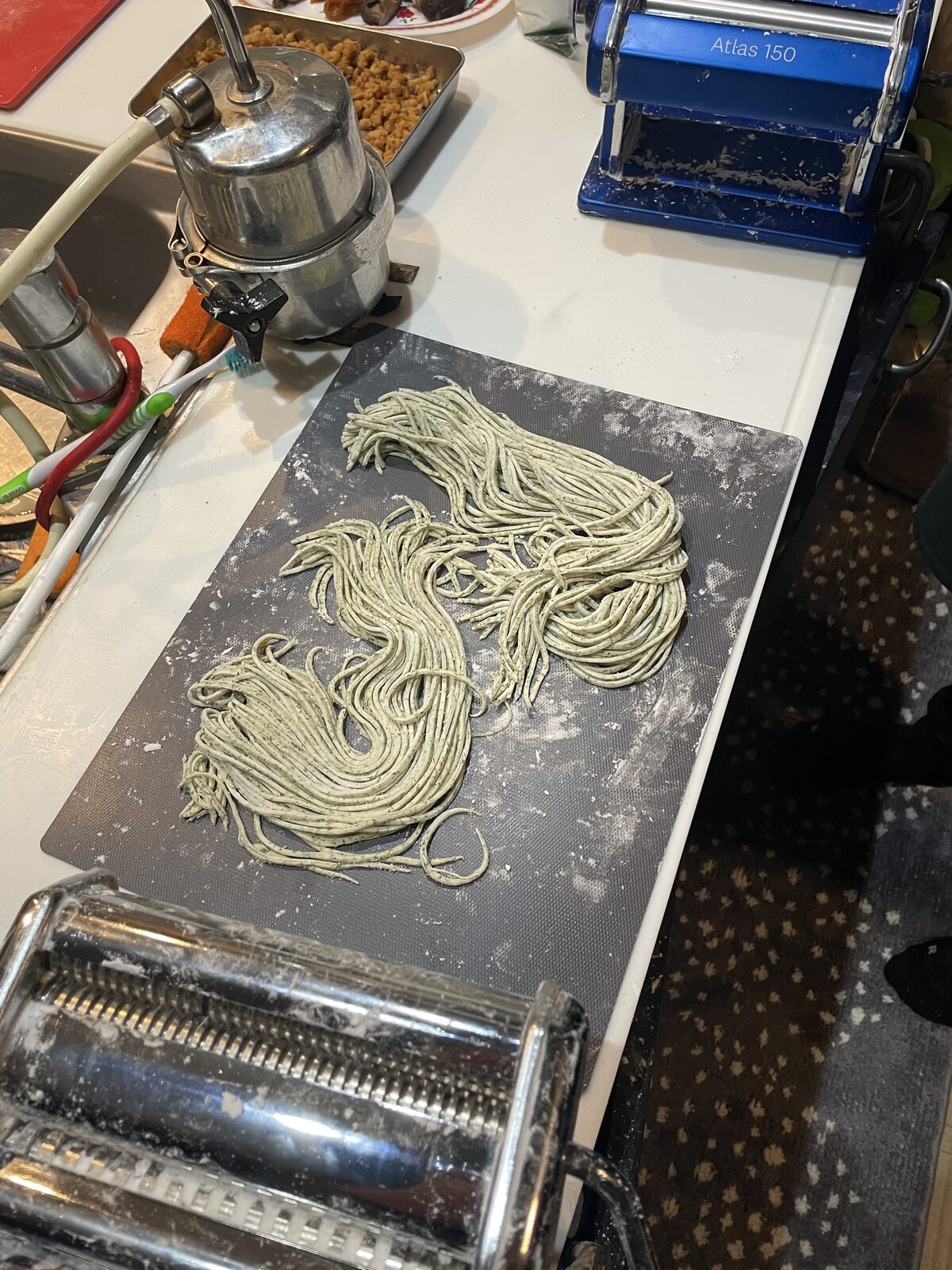
After a rest, the dough went through a pasta machine to be rolled and cut. Our noodles came out pale green with dark flecks. I honestly cannot remember what gave them the color. I should have written it down.
Toppings and the first taste of vegan miso ramen
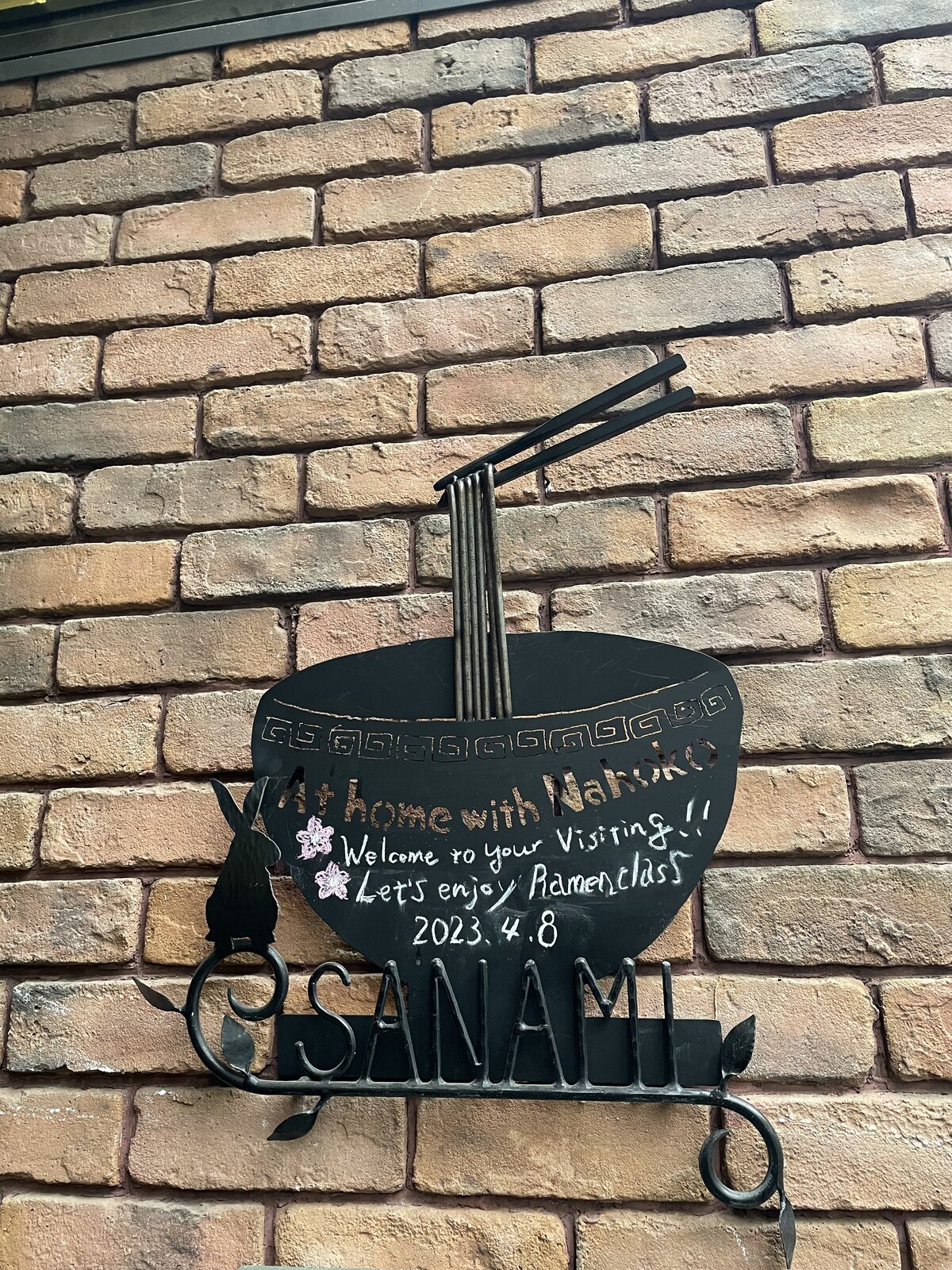
While the broth finished, we prepared the toppings: bean sprouts, corn, green onions and soy mince, fried until crumbly and golden. A few of the soaked shiitake from the broth went on top as well.
Then the four of us sat down to eat. Nahoko didn’t join us and stayed the host until the very end.
The broth was creamy and deep, the noodles had real bite, and the soy mince gave every spoonful some texture. It was genuinely delicious, and there is a special satisfaction in eating noodles you stood on an hour earlier.
Before we left, Nahoko gave us the recipes to take home. We have cooked this ramen at home several times since.
Booking this ramen cooking class in Tokyo
| Ramen class with Nahoko | |
|---|---|
| Where | Kunitachi, western Tokyo, about 25 minutes from Shinjuku |
| Duration | About 3.5 hours |
| Price | ¥22,000 per person (at the time of writing) |
| Group size | Up to 6 guests |
| Diet options | Vegan and vegetarian, gluten-free, halal |
| Language | English |
| Booking | Via AirKitchen, confirmation within 24 hours |
Werbung · Book this class
The class we took is listed here on AirKitchen: authentic ramen from scratch in Nahoko’s home in Tokyo, with a fully plant-based broth, handmade noodles and recipes to take home.
Affiliate link: if you book through this link, we earn a small commission at no extra cost to you.
For us the class was worth it. It is not cheap, but you leave with more than a meal: a recipe you will actually cook again and a real understanding of why vegan ramen can taste this full.
If you just want to eat vegan ramen in Tokyo, a restaurant is quicker. Our favorite spot for vegan ramen in Tokyo is Jangara in Harajuku. But if you want to know what is in the bowl, cook it yourself once.
One more class: shojin ryori in Kyoto
This wasn’t our only cooking class in Japan. In Kyoto we spent an evening learning shojin ryori, the plant-based cuisine of Buddhist monks, in another home kitchen. The dashi there was also built on dried shiitake, which made a lot more sense to me after Nahoko’s umami sheet. I wrote about that evening in What I Learned in a Kyoto Kitchen.
Werbung · Book this class
Our shojin ryori class is listed here on AirKitchen: traditional Buddhist plant-based cooking in Kyoto, taught in English with a recipe booklet. Private, small group, fully hands-on.
Affiliate link: if you book through this link, we earn a small commission at no extra cost to you.
And if you are still planning your trip, my guide on how to eat vegan in Japan covers dashi, kanji and everything else that makes eating out a little tricky.