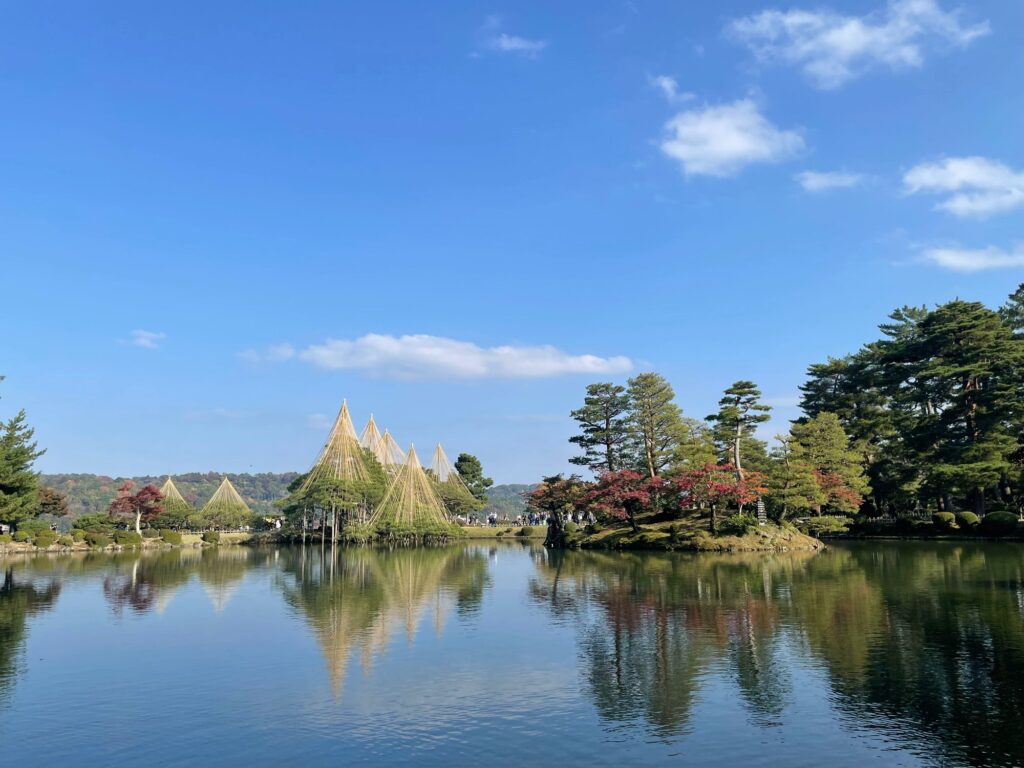
We spent a few days in Kanazawa in autumn, while the maples were turning. This guide covers the things to do in Kanazawa that we actually did: staying in the old samurai district, the castle, Kenrokuen garden, a small izakaya with a good vegan menu, a contemporary art museum and a castle garden lit up at night with music.
Not all of it worked for us. The geisha district was too crowded and too expensive, and below I explain what I would do differently.
In this guide
- 1. Nagamachi Samurai District: Where We Stayed
- 2. Kanazawa Castle and Its Gates
- 3. Kenrokuen Garden and the Yukitsuri Ropes
- 4. Gyokusen-inmaru Garden at Night
- 5. 21st Century Museum of Contemporary Art
- 6. Vegan Food in Kanazawa: Slow Luck
- 7. Higashi Chaya District: My Honest Verdict
- Practical Tips for Kanazawa
1. Nagamachi Samurai District: Where We Stayed
We stayed in Nagamachi, the old samurai quarter, and the neighbourhood was one of the best parts of the trip. Narrow lanes, earthen walls, small canals along the streets. I would book there again.
It is also practical. Kenrokuen and the castle are about 20 minutes away on foot, and the restaurants around Korinbo and Oyama Shrine are closer than that.
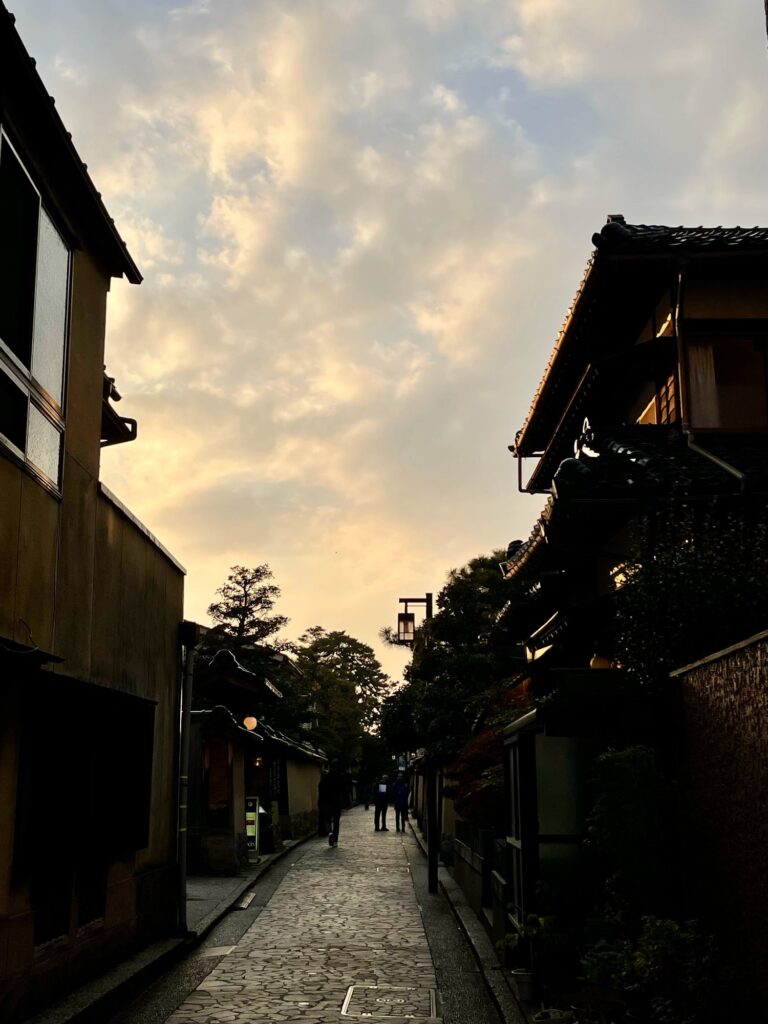
To see a samurai house from the inside, the Nomura family house is the best-known one (550 yen) and has a small garden. The Ashigaru Museum shows two simple houses of foot soldiers, the lower end of the samurai hierarchy, and is free.
2. Kanazawa Castle and Its Gates
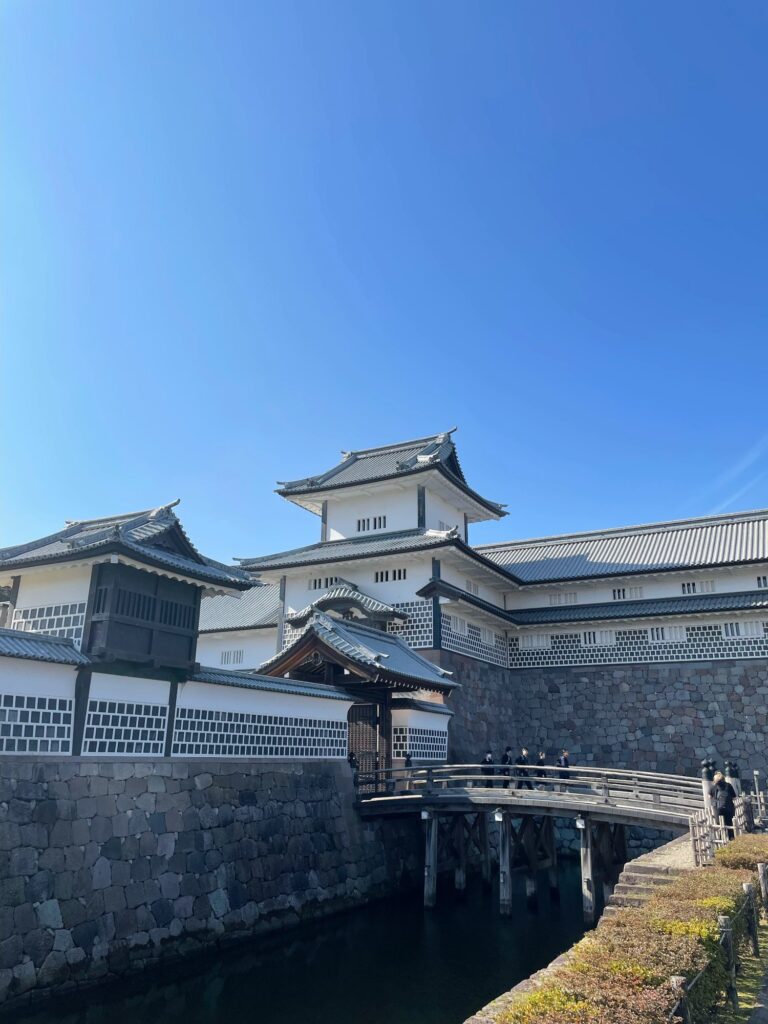
Kanazawa Castle was the seat of the Maeda clan, one of the richest families of the Edo period. There is no main keep like in Himeji: it burned down in 1602 and was never rebuilt. What you walk through today is a large park with stone walls, gates and long white storehouses.
Most of it is reconstructed. A fire in 1881 left only the Ishikawa-mon gate (1788) and two storehouses standing.
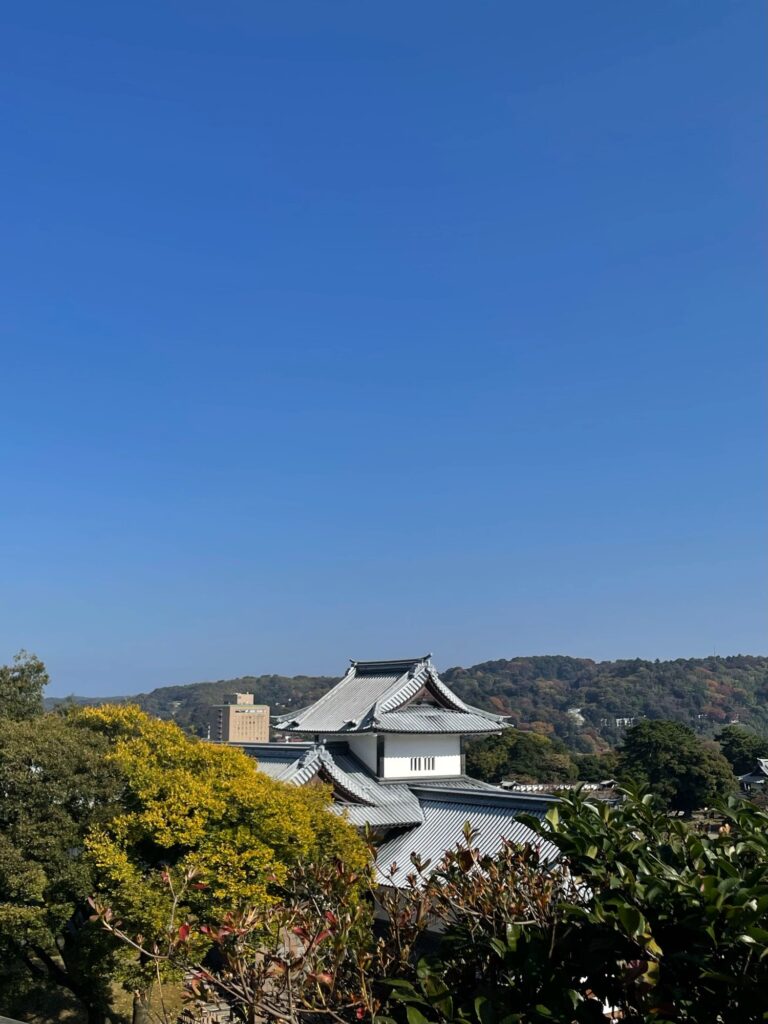
The Hishi turret and the Gojukken Nagaya storehouse were rebuilt in 2001 with traditional wooden techniques, and you can go inside for 320 yen. The park itself is free.
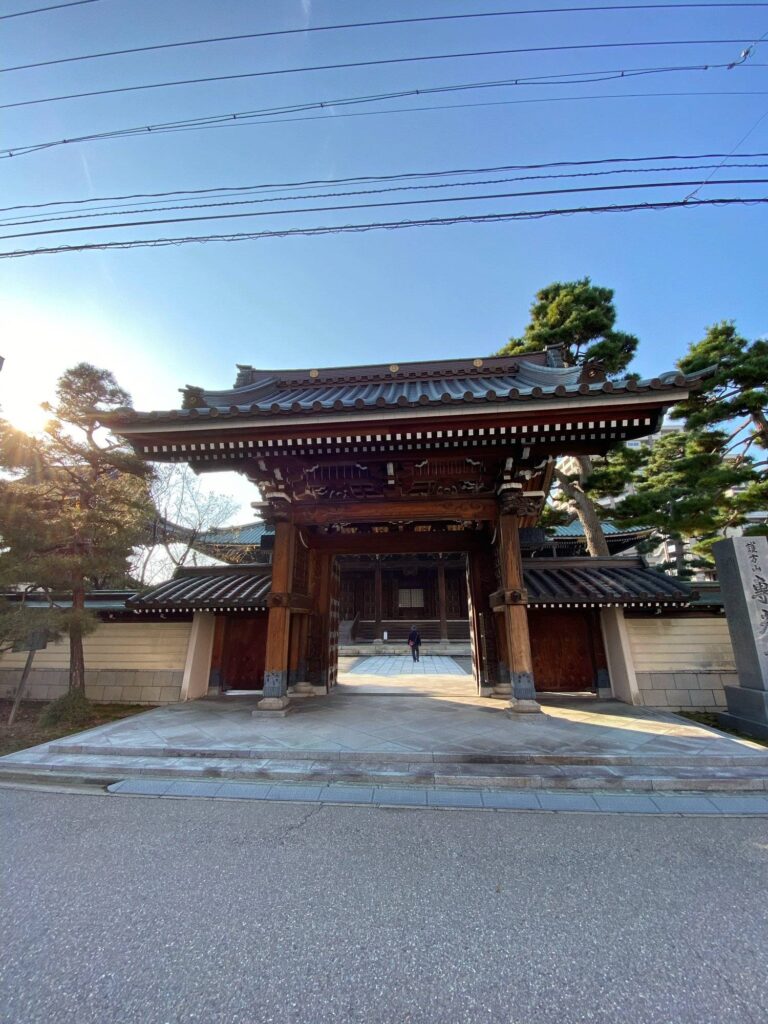
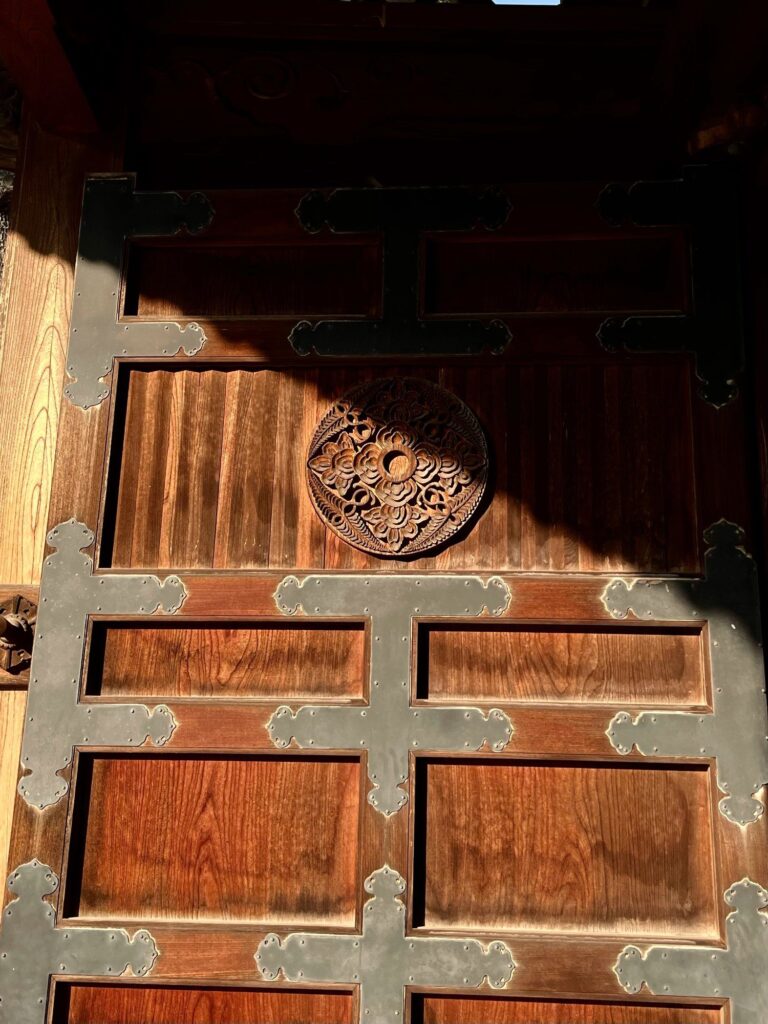
Walking between the sights, we also passed temples that are on no list. This one stood on an ordinary street under the power lines, and its gate and doors were worth stopping for.
3. Kenrokuen Garden and the Yukitsuri Ropes
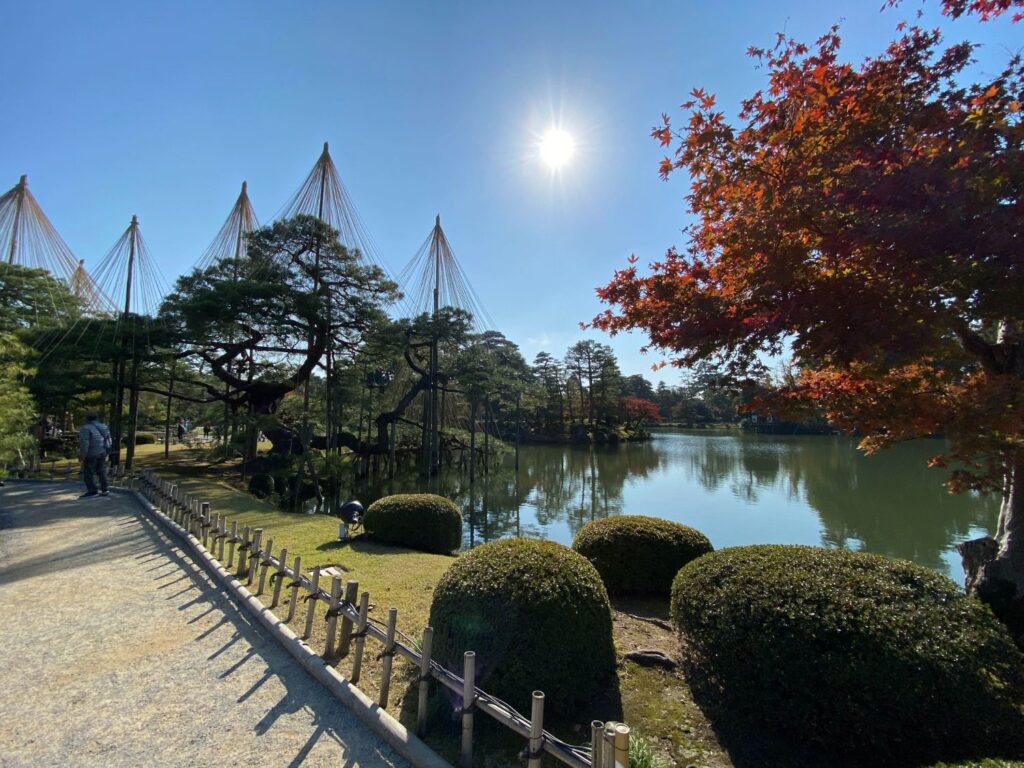
Kenrokuen is on every list of things to do in Kanazawa, and it counts as one of the three great gardens of Japan. The name means roughly “garden of the six attributes”: spaciousness, seclusion, artistry, age, water and wide views. We went during the autumn colours.
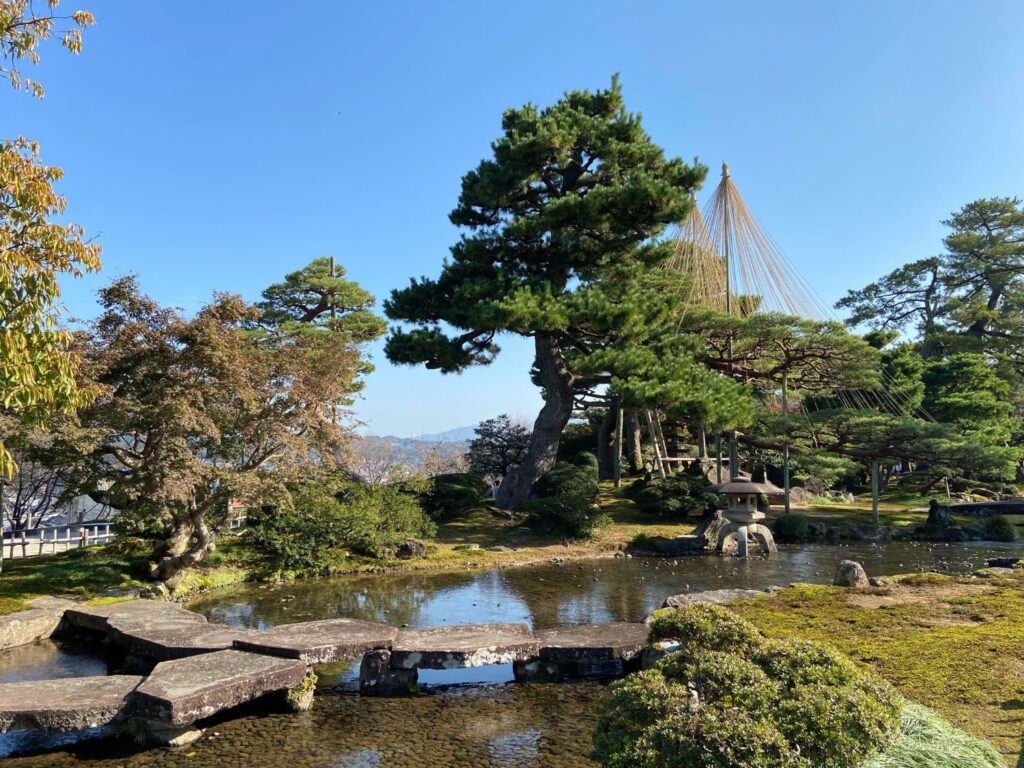
The best-known sight is the Kotoji lantern at Kasumigaike Pond, the one standing on two legs.
What Are the Yukitsuri Ropes?
What stayed with me most was something I had never seen before. Over many of the pines, the gardeners build a kind of tent out of ropes. A tall pole stands in the middle of the tree, and from its tip dozens of straw ropes run down to the branches like the spokes of an umbrella. This is called yukitsuri, roughly “snow hanging”.
Kanazawa gets heavy, wet snow, and without support the long branches of the old pines would break under the weight. The ropes take the load.
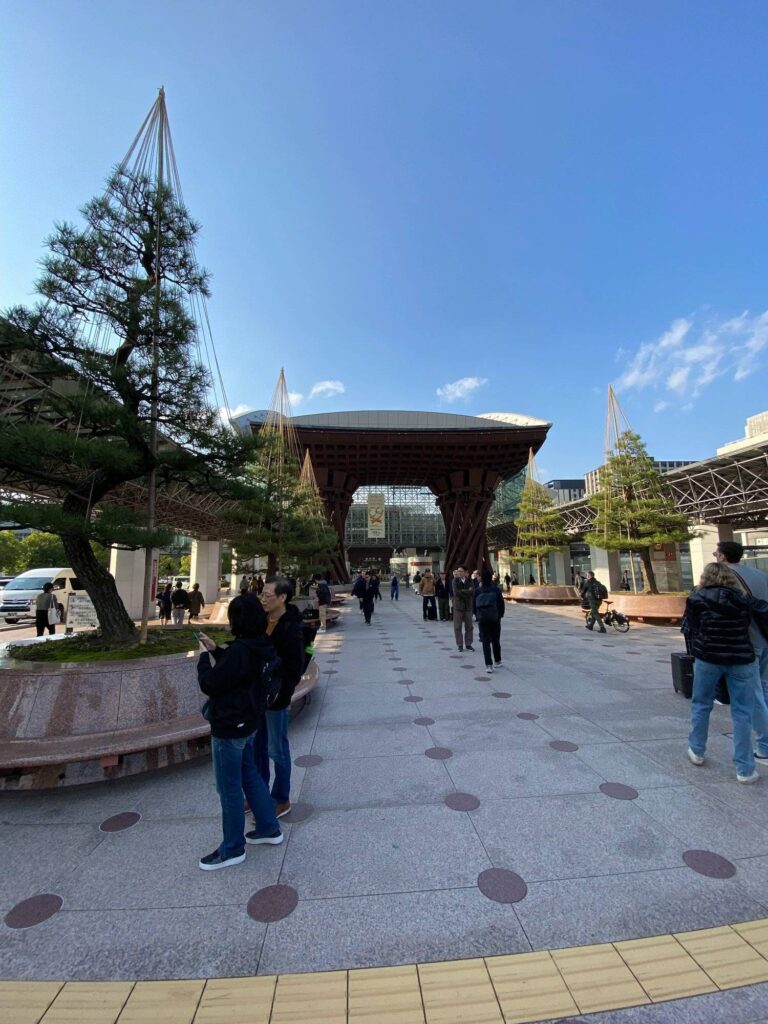
The work starts every year on November 1, often with the famous Karasaki pine, and the ropes stay up until March. We saw them all over Kenrokuen, and even the pines in front of Kanazawa Station had them. If you visit Kanazawa in winter, you see them doing their actual job, with snow on top.
Kenrokuen at a glance
- Admission: 320 yen. Combined ticket with the castle buildings: 500 yen.
- Hours: 7:00 to 18:00 (March 1 to October 15), 8:00 to 17:00 (October 16 to February)
- Free early entry: before regular opening, from 6:00 between November and February. The quietest time of day.
- Official site: Kenrokuen (Ishikawa Prefecture)
If you like garden walks in autumn, the Philosopher’s Path in Kyoto is a good match: the same season, as a long walk instead of one garden.
4. Gyokusen-inmaru Garden at Night
One evening we went back to the castle park for the light-up at Gyokusen-inmaru Garden. The garden sits right at the castle walls, was reconstructed in 2015 and is free to enter.
On light-up evenings it is lit in warm tones meant to imitate the setting sun, and traditional music plays, shakuhachi flute and koto. After a full day on foot, that was a good way to end it, and it cost nothing.
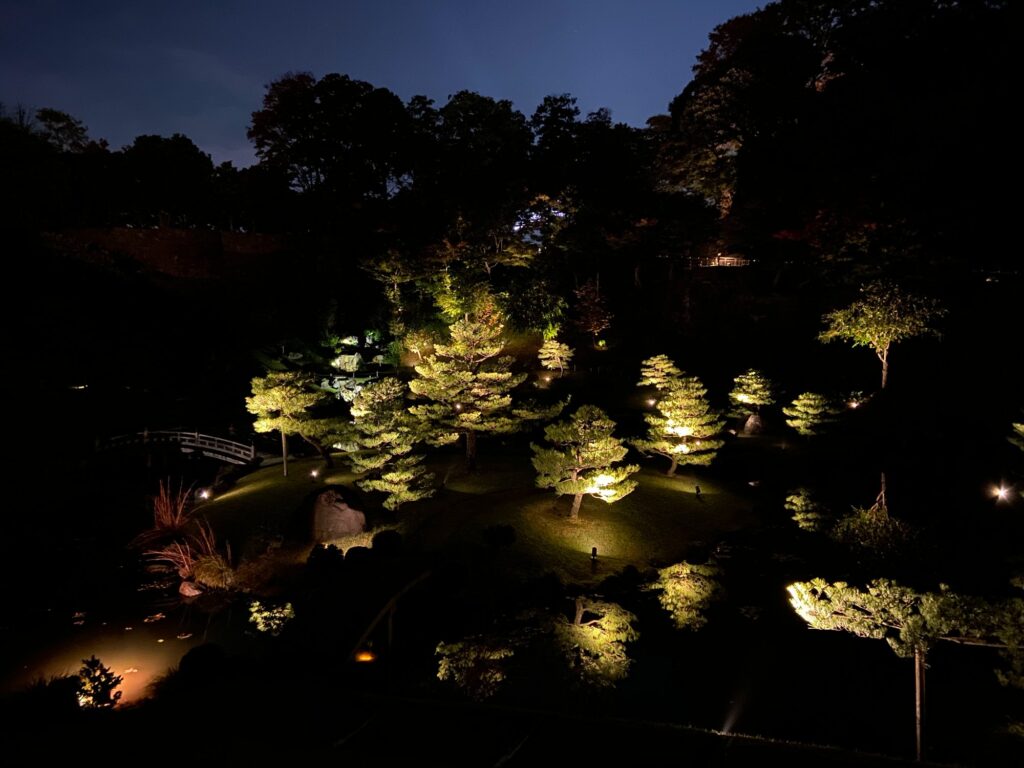
The light-up runs from sunset until 21:00, but not every evening: on selected weekend evenings and in the peak seasons (cherry blossoms, autumn). Check the calendar on the official Kanazawa Castle site before you plan an evening around it.
5. 21st Century Museum of Contemporary Art
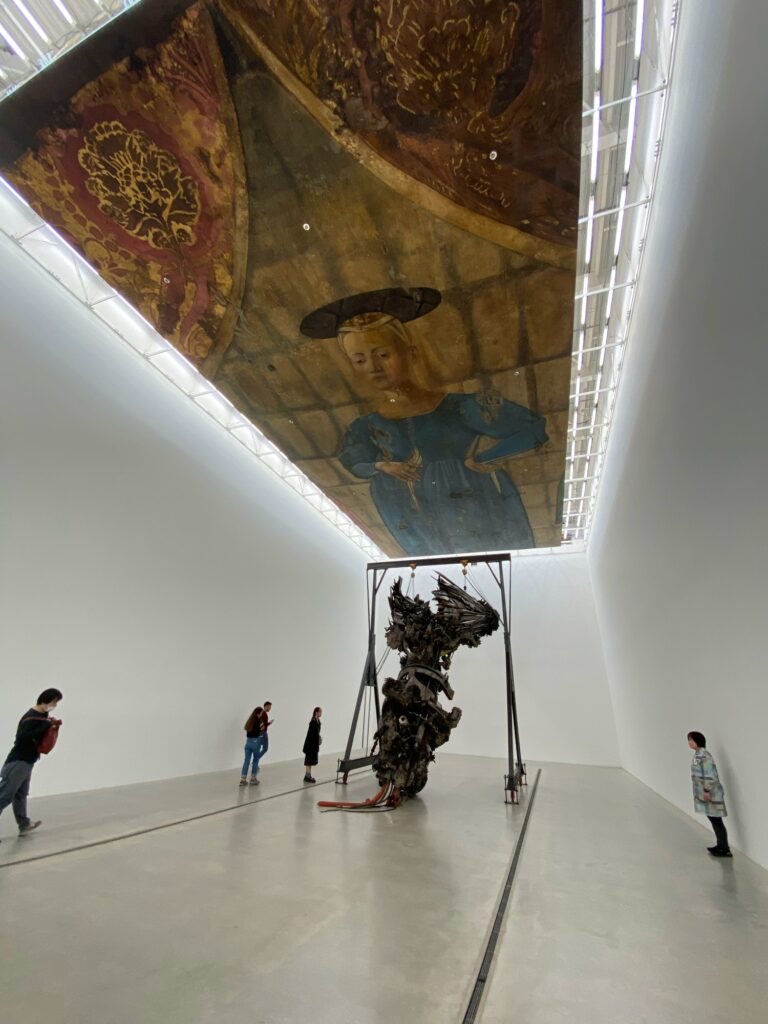
The 21st Century Museum of Contemporary Art is a round, low glass building by the architects SANAA, a few minutes on foot from Kenrokuen. We liked it a lot. The building is beautiful, and much of the art we saw was openly critical of society.
The best-known piece is The Swimming Pool by Leandro Erlich. From above it looks like people standing fully clothed under water. They are actually in a room below a thin layer of water.
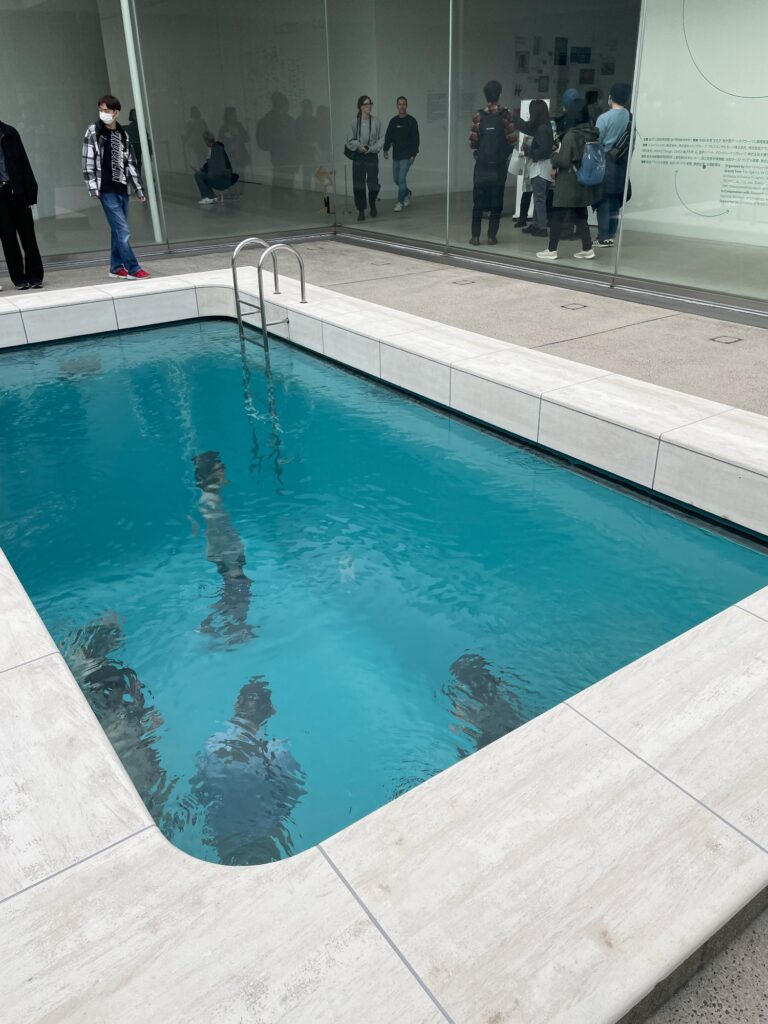
To go down into it you need an exhibition ticket and a same-day waiting number, which you get at the museum or online. Parts of the building are free to walk through.
One thing to know before planning: the museum closes for renovation from May 6, 2027 until March 2028.
6. Vegan Food in Kanazawa: Slow Luck
Kanazawa is known for seafood, so vegan options are not the first thing the city advertises. Slow Luck -vegetable bal-, a small izakaya near Oyama Shrine, convinced us completely.
It is not a fully vegan restaurant. The menu is built around vegetables, and the vegan dishes are marked “VG”, so you do not have to ask about dashi and fish sauce for every plate. It is small, with only a few tables. We had the tofu takoyaki and, at the end, a dessert.
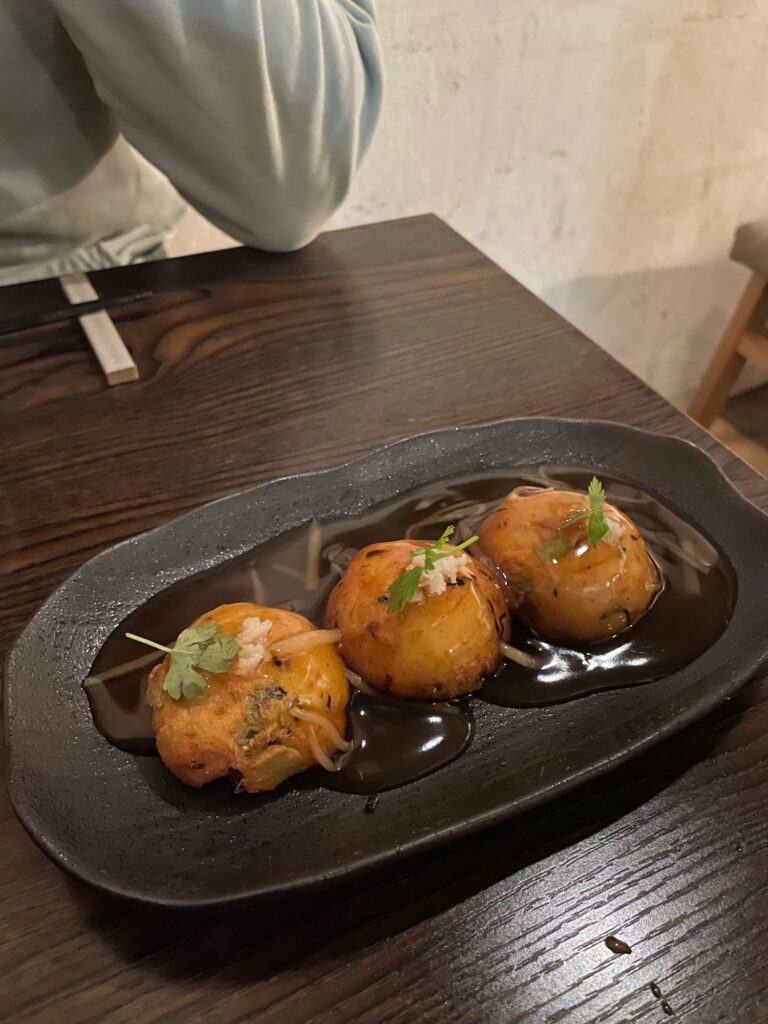
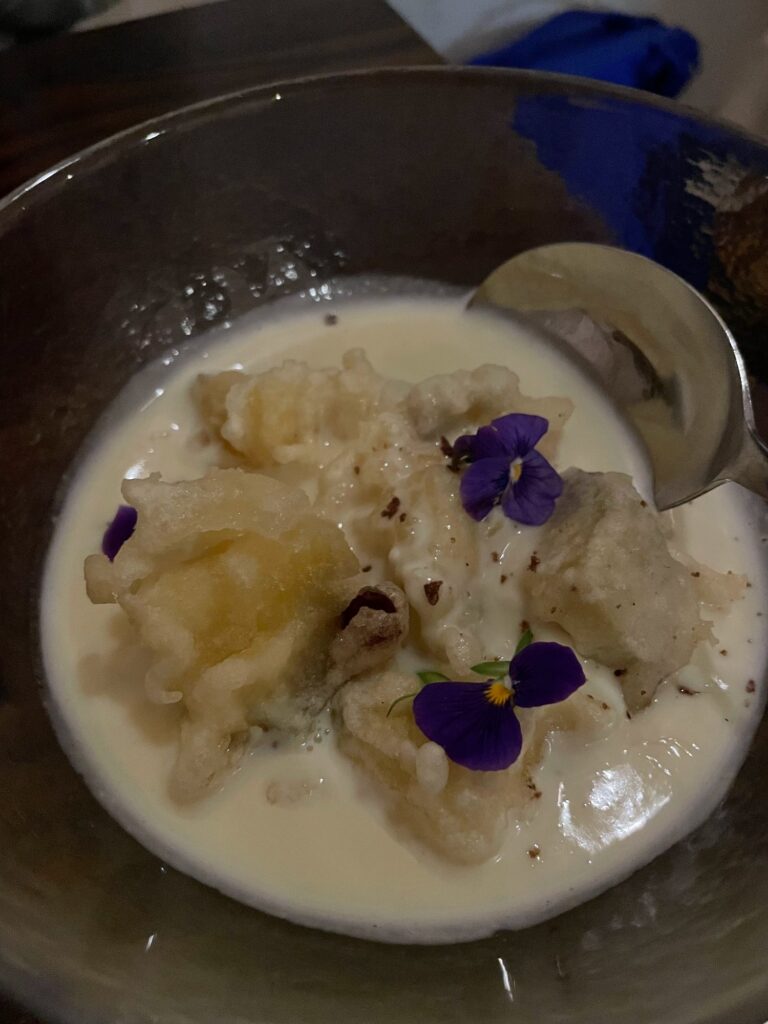
- Where: Oyama-cho, near Oyama Shrine, a few minutes on foot from Nagamachi
- Hours: Tuesday to Sunday from 18:00, closed Mondays
- Tip: reserve ahead. Everyone orders at least one drink.
- Reviews and current hours: Slow Luck on HappyCow
Oyama Shrine is right around the corner, and we walked up to its gate in the evening. The gate is said to have been designed by a Dutch architect.
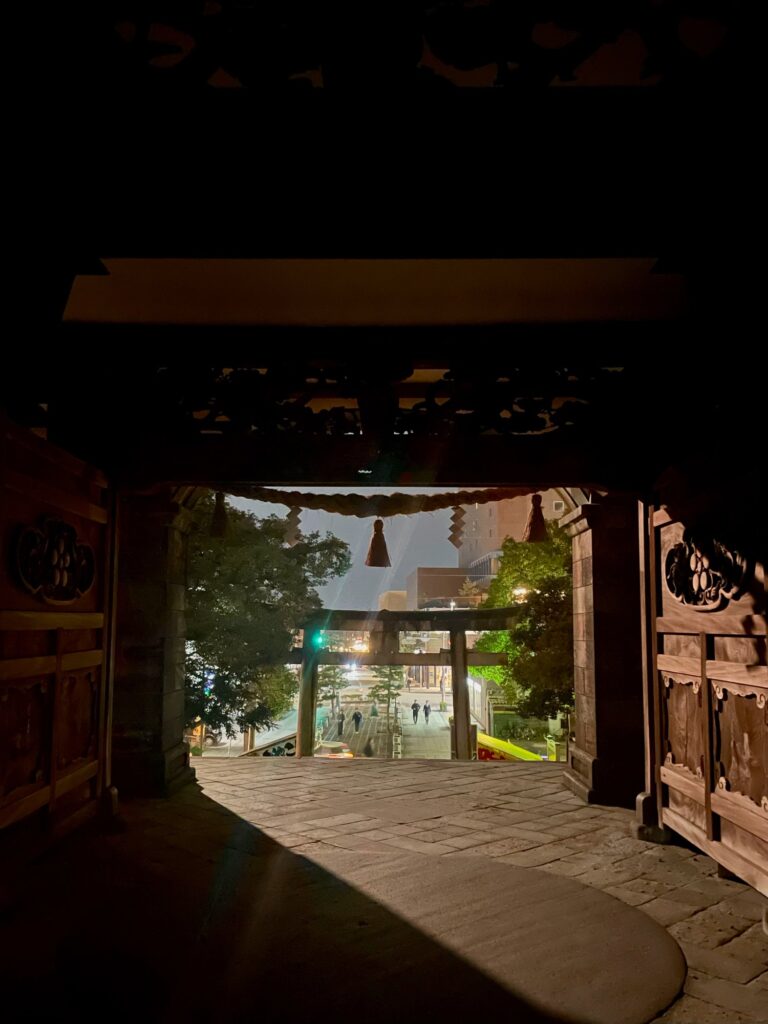
For a fully vegan izakaya, read about Masaka in Tokyo and Kyoto. And if you are new to eating vegan in Japan, my guide on how to eat vegan in Japan explains dashi, kanji and what to say.
7. Higashi Chaya District: My Honest Verdict
Higashi Chaya is Kanazawa’s old geisha district: two-storey wooden teahouses with fine lattice fronts, narrow lanes, and gold leaf on a surprising number of things.
For us it was too crowded, and the shops and cafes were priced for exactly that crowd. It was the one stop in Kanazawa we would plan differently.
The buildings are still worth seeing. If you go, go early, before the teahouses and shops open around 9:30. The Shima teahouse is open as a museum (500 yen) if you want to see one from the inside.
Two smaller chaya districts are said to be quieter: Kazuemachi, right across the river, and Nishi Chaya in the south. We did not get to either.
Practical Tips for Kanazawa
- Getting there: the Hokuriku Shinkansen from Tokyo takes about two and a half to three hours.
- Getting around: the centre is walkable. From the station, the Kanazawa Loop Bus (220 yen) goes to the main sights.
- How many days: two full days cover everything in this guide. With three you can slow down or add a day trip, for example to the thatched farmhouses of Shirakawa-go. We did not go ourselves. One option without a car is a day bus tour from Kanazawa Station (affiliate link) (4.8 out of 5 from about 540 reviews on Klook when I checked in November 2026). Lunch is included, so ask before booking whether they can make it vegan.
- Best season: autumn for the colours and the first yukitsuri, winter for snow on the ropes, spring for cherry blossoms in the castle park.
- Onsen nearby: Kaga Onsen is about 30 minutes away by train. We did not go this time. If you do, my guide to onsen in Japan has the rules.
A few days were not enough for all the things to do in Kanazawa on our list. With more time, I would add Kazuemachi, a samurai house from the inside and a day at Kaga Onsen.