Many first-time visitors buy a JR Pass Japan almost automatically, right after booking the flights. This JR Pass Japan guide explains when it is worth it, how to use it, and what to know before you travel. Getting the JR Pass Japan decision right can save significant money. That used to make sense. After several price increases in recent years, it no longer does for everyone. Depending on your route, individual tickets or even a rental car can be the smarter and cheaper choice. This guide covers how the train system works, how to get from the airport to the city, how tickets and IC cards function, and when the JR Pass actually pays off.
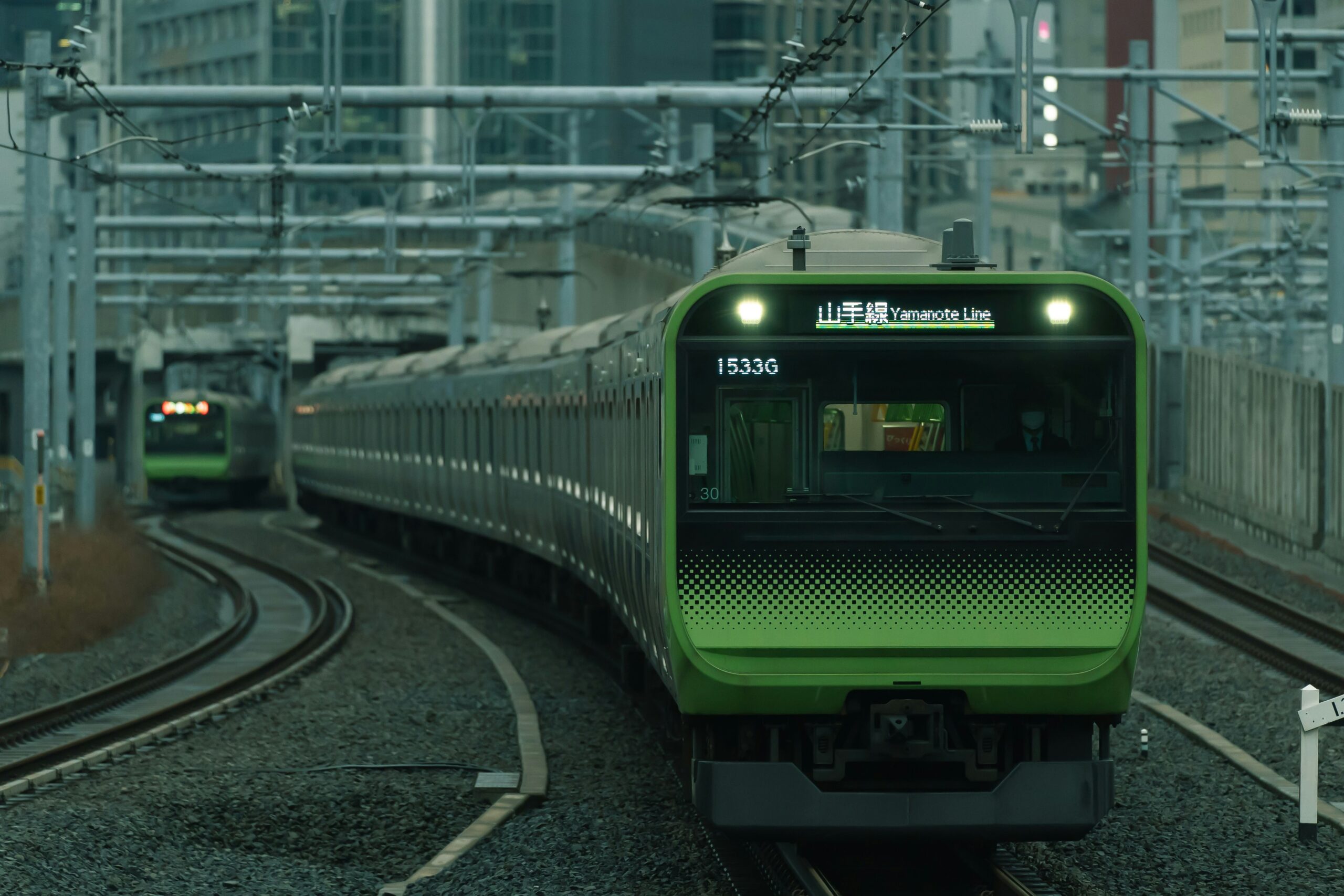
Train types: local, rapid, express and Shinkansen
Japanese trains follow a clear hierarchy. The same route can have several service types running on the same track, and picking the wrong one from an airport can mean stopping at every single station for over an hour when a 40-minute journey was possible.
Local (各駅停車): stops at every station. Slowest option, no extra charge. Useful for short distances or when your destination is a small station faster trains skip.
Rapid (快速): skips smaller stations, runs on the same track, usually costs the same. Good for medium distances in and around cities.
Express (急行) and Limited Express (特急): faster, fewer stops, sometimes a supplement ticket on top of the base fare, occasionally a seat reservation too. The machine shows the difference when you select your destination.
Shinkansen (新幹線): the bullet train. Connects major cities at up to 320 km/h on its own separate tracks and platforms. Requires separate tickets. The JR Pass covers most Shinkansen lines, with one important exception: the Nozomi and Mizuho services on the Tokaido and Sanyo lines are not included.
The train type shows up on the platform board and on the train itself. Google Maps and the Japan Official Travel App both display the type before you board.
Getting from the airport to the city
Tokyo: Narita Airport
Narita is about 60 to 80 kilometres from the city. The connection takes more thought than most airports, and it’s worth deciding before you land.
The Narita Express (N’EX) is the most direct option: runs to Tokyo Station, Shibuya, Shinjuku and Yokohama. Around 3,000 yen for a single ticket. JR Pass holders ride free but still need a reservation from the station counter.
The Keisei Skyliner is private rail, so the JR Pass doesn’t apply. It reaches Ueno in 41 minutes for around 2,500 yen. Worth it if you’re staying near Ueno or Asakusa.
Budget option: the Keisei Limited Express. About 75 minutes, around 1,300 yen, no reservation needed. The catch is that it’s a local service on parts of the route, stopping at many stations. The price is right; the speed is not.
One thing to be aware of at Narita: if you board the first train without checking the type on the display, you can find yourself stopping at every station between the airport and the city. It happens. Check before you step on.
Tokyo: Haneda Airport
Haneda is much closer to the city, which makes it the easier airport to handle.
The Tokyo Monorail connects to Hamamatsucho in about 20 minutes for around 500 yen. The Keikyu Line reaches Shinagawa in about 13 minutes for a similar fare. From both endpoints the metro network is easy to reach.
JR Pass note: the Tokyo Monorail is covered. The Keikyu Line is private and is not.
Osaka: Kansai International Airport
The two main options from Kansai Airport are the Haruka Express and the Nankai Rapid.
The Haruka is JR, runs to Shin-Osaka and on to Kyoto (about 75 minutes). Free with the JR Pass, seat reservation recommended. If you’re heading straight to Kyoto without stopping in Osaka, this is the most direct route.
The Nankai Rapid reaches Namba in about 45 minutes for around 1,200 yen. Private rail, not covered by the JR Pass, but it drops you in the middle of southern Osaka.
Fukuoka Airport
Fukuoka has arguably the best airport connection in Japan. The Fukuoka City Subway runs directly to Hakata Station in 5 minutes and to Tenjin in about 11 minutes. Between 260 and 310 yen, payable by Suica or ticket. No real decisions to make.
How to buy a ticket at the machine
Ticket machines look overwhelming at first but follow one simple principle: you pay for distance. More stations means a higher fare. That applies to trains and buses.
Above or next to every machine there is a fare map showing all stations on the line and the price to each one. You find your destination, note the amount, and select that on the machine. The machine does not ask where you’re going. It asks how much you want to pay.
- Press the English button, usually top right on the screen.
- Find your destination on the fare map above. Note the yen amount.
- Tap that amount on the touchscreen.
- Insert cash. Many machines now also accept credit cards and IC cards, though at smaller stations cash is still the safest option.
- Collect your ticket.
If you’re unsure of the exact fare, buy the minimum and use the fare adjustment machine (精算機, seisanki) at your destination exit. It reads your ticket, calculates the difference, and you pay only the gap. These are always next to the exit gates.
Suica, Pasmo and other IC cards
The Suica is a rechargeable IC card from JR East and by far the most practical way to get around Japan day to day. It works on virtually all trains, subways and buses across the country, including private lines the JR Pass doesn’t cover. You tap in at the gate, travel, tap out, and the correct fare comes off automatically. No fare map, no calculating in advance.
There are other IC cards in Japan: Pasmo (Tokyo area, private railway focus), Icoca (Kansai region), and a few others. In practice they all work the same and are accepted on the same networks. Which one you get usually depends on where you start your trip, but any of them will serve you across Japan. If you have one, you don’t need another.
Top up at any station machine or at a convenience store. Minimum is usually 1,000 yen.
What if the balance runs out at the exit gate? Red light, gate doesn’t open. Walk to the fare adjustment machine next to the gate and top up the difference there. If you have Suica on your iPhone, you can top it up directly from the Wallet app right on the spot without moving to a separate machine. Then try the gate again. Station staff are always nearby.
Can you pay by credit card at the machine? At many machines, yes, particularly at larger stations. Cash is still the safest fallback at smaller or older ones.
Suica on iPhone
If you have an iPhone with Face ID or Touch ID, you can add a Suica directly to Apple Wallet. Open the Wallet app, tap the plus sign, search for Suica, and fund it via Apple Pay. The card is tied to your device and works even when the battery is nearly empty, as the iPhone reserves a small charge for NFC payments.
No queuing at the machine on arrival, no 500 yen deposit (the physical card requires one, refunded at a JR East station on departure), one less thing to carry. The Suica on your iPhone also pays at vending machines and at most convenience stores. If you want to know what to actually buy in a Japanese konbini, the Vegan Konbini Japan guide covers that.
The JR Pass Japan: when it makes sense and where to exchange it
The JR Pass is a flat-rate rail pass sold exclusively outside Japan for tourists. You buy it before your trip, receive a voucher, and exchange that voucher for the physical pass at a JR counter in Japan.
Is it worth it? That depends entirely on your route. After several price increases in recent years, the pass is no longer an automatic yes. For trips concentrated in one or two cities, individual tickets and a Suica card tend to be cheaper. A rough break-even is a Tokyo to Kyoto to Hiroshima round trip plus several JR local rides. There are good calculators online to check this against your actual itinerary before you commit.
When to exchange: If your route justifies the pass, exchange it at the airport as soon as you arrive. JR counters are at Narita, Haneda, Kansai and Fukuoka airports. Waiting until you reach a city station risks a queue of several hours, especially at Tokyo or Shinjuku during busy periods.
What it covers: All JR trains including most Shinkansen, the Narita Express, the Haruka to Kyoto, some JR buses and the JR ferry to Miyajima Island. In Tokyo, the pass covers the Yamanote Line, the green loop train that connects Shinjuku, Shibuya, Harajuku, Akihabara, Tokyo Station and most of the major hubs tourists move between. That makes it genuinely useful within the city. Step off that loop onto the subway or a private line and the pass no longer covers you. Not covered anywhere: the Keikyu and Nankai lines, most city subways, or the Nozomi and Mizuho Shinkansen.
Seat reservations with the pass: The pass does not reserve a seat. Make a separate reservation at any Midori no Madoguchi ticket office (みどりの窓口) or at designated self-service machines. This is free with the pass. On popular routes and during Golden Week or autumn in Kyoto, do it as early as possible.
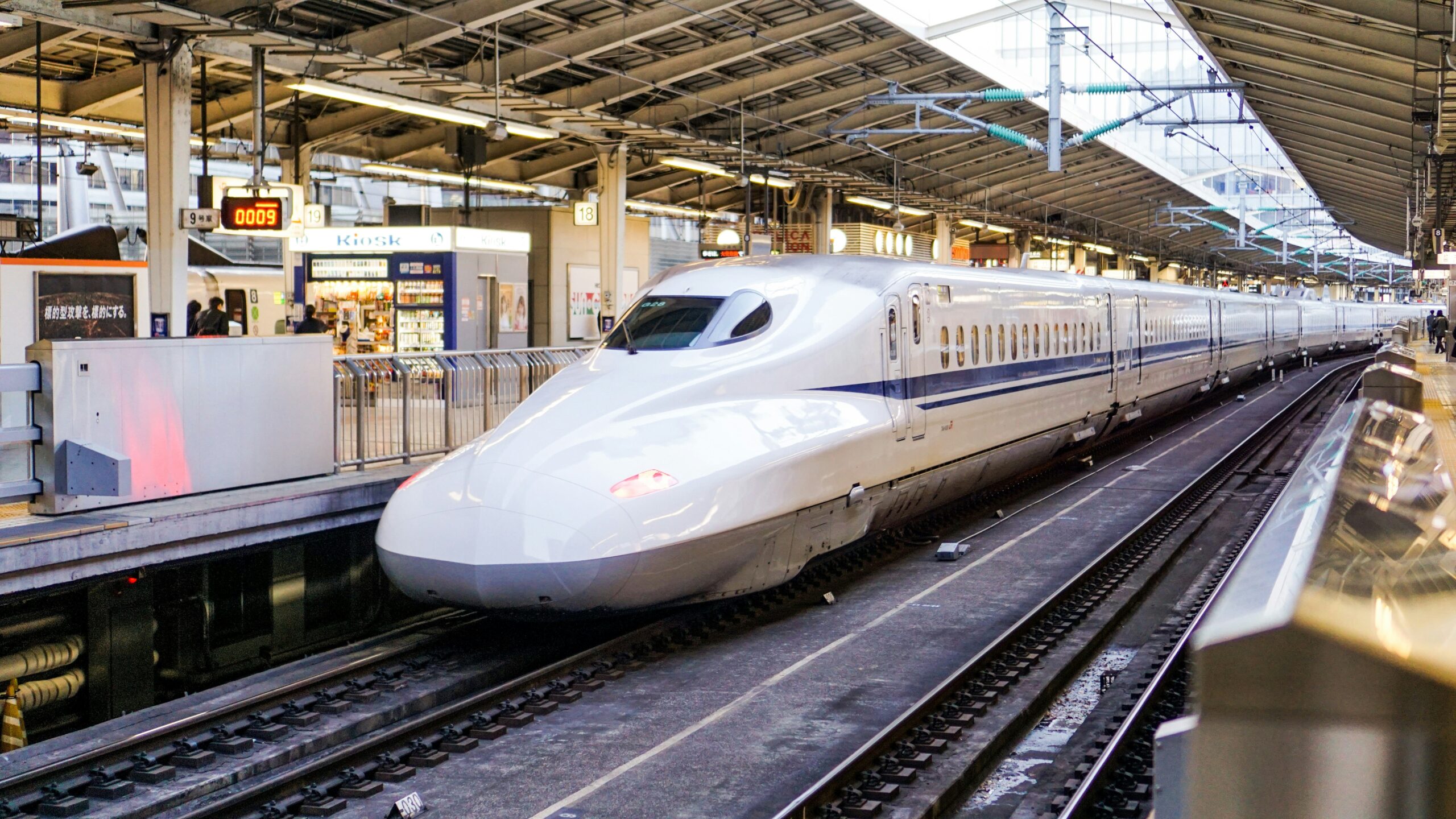
JR Pass Japan: Seat Reservations on the Shinkansen
Shinkansen trains have both reserved and unreserved cars. In an unreserved car you sit wherever a seat is free. If the train is full, you stand. On busy routes during peak season, that’s a real possibility.
Reservations can be made up to one month before departure.
Smart-EX (smart-ex.jp): the official system for Tokaido, Sanyo and Kyushu Shinkansen. One-time registration with a credit card, then book via the app or website. Board with a QR code, IC card, or ticket from the machine.
Eki-Net (jreast.co.jp): JR East’s platform for the Tohoku, Joetsu and Hokuriku Shinkansen. The English interface has improved significantly in recent years.
JR Pass holders book in person at any Midori no Madoguchi or at pass reservation machines at the station. Always free. When booking online, you can select a seat with an oversized baggage area in the same step.
JR Pass Japan: Oversized Luggage on the Shinkansen
Since 2020, JR enforces a size rule on the Tokaido, Sanyo and Kyushu Shinkansen:
| Combined size (L + W + H) | Rule |
|---|---|
| Up to 160 cm | No action needed |
| 160 to 250 cm | Must reserve a seat with oversized baggage area (free, but compulsory) |
| Over 250 cm | Not allowed on board |
Traveling without a reservation when your bag exceeds 160 cm results in a 1,000 yen fine on board. As of July 2025, the overhead compartment at the end of certain Tokaido and Sanyo Shinkansen cars is now open to bags under 160 cm without advance reservation. The rule for oversized bags stays.
If you’re moving between cities with a large suitcase, luggage forwarding (宅配便, takuhaibin) is worth considering. Services like Yamato Transport pick up from your hotel and deliver to your next destination the following day for roughly 1,500 to 2,500 yen. Very common on the Tokyo to Kyoto leg.
Train Etiquette in Japan for JR Pass Japan Holders
Trains in Japan run as well as they do partly because everyone follows the same unspoken rules. As a visitor, respecting them matters more than you might expect.
Phone calls: not in the seating area. This applies to local trains and the Shinkansen alike. Signs on board remind you. If a call is urgent, step to the vestibule between cars.
Volume: conversations stay low. A 2024 survey by the Japan Private Railway Association found that coughing and sneezing without regard for others ranked first among complaints that year. If you’re sick, wear a mask. That’s normal in Japan regardless of season.
Nose blowing: this surprises most first-time visitors. Loudly blowing your nose in public is considered rude in Japan, especially on a quiet train. Wiping discreetly is fine. Loud blowing is not. Use the station bathroom if you need to.
Bags: take your backpack off your shoulders. Hold it in front of you or put it on the overhead rack. A 2025 survey on tourist behavior found that 41.9 percent of Japanese respondents were bothered by the way tourists carry bags on trains. Loud conversation ranked first at 69.1 percent.
Priority seats: marked near the doors in a distinct color. Give them up for elderly passengers, pregnant people and those with young children. You can sit there when the train is empty, but be ready to move.
Boarding: stand in line at the platform markings. Let people exit first, then board. This happens with remarkable order even at the busiest Tokyo stations during rush hour.
Eating: fine on the Shinkansen, where tray tables and ekiben are part of the culture. On local and subway trains, not ideal when the car is busy.
Makeup: applying it on commuter trains is considered inappropriate. On a long Shinkansen ride it draws less attention but still isn’t the norm.
Strong smells: go easy on perfume. Hot food from a convenience store is better eaten on a station bench than in a full train.
Smoking: not allowed on any regular train or in stations.
Useful Japanese Phrases for JR Pass Japan Travelers
| Situation | Japanese | Pronunciation |
|---|---|---|
| Where is the ticket machine? | きっぷうりばはどこですか? | Kippu uriba wa doko desu ka? |
| How much to [station]? | [駅]まで いくらですか? | [Eki] made ikura desu ka? |
| Does this train go to [station]? | このでんしゃは[駅]にいきますか? | Kono densha wa [eki] ni ikimasu ka? |
| Is this seat taken? | このせきはあいていますか? | Kono seki wa aite imasu ka? |
| I have oversized luggage. | おおきなにもつがあります。 | Okina nimotsu ga arimasu. |
| Where do I exchange my JR Pass? | JRパスをこうかんするばしょはどこですか? | JR pasu wo koukan suru basho wa doko desu ka? |
| Can I top up my Suica here? | ここでSuicaにチャージできますか? | Koko de Suica ni chaaji dekimasu ka? |
Mochi’s honest experience: I used maybe two of these in practice. Google Translate with the camera function handles most situations at the machine. But having the boarding and ticket phrases ready takes the pressure off a platform moment where the doors close in 90 seconds. For more practical phrases including what to say at a Japanese convenience store, see the Japanese Konbini Phrases guide.
FAQ
The difference between JR Pass and Suica comes up in almost every Japan trip planning conversation. The short answer: the JR Pass covers long-distance JR trains at a flat rate; Suica is a rechargeable card for day-to-day travel on any network.
What is the JR Pass Japan?
The JR Pass Japan is an unlimited rail pass for tourists visiting Japan. It covers most JR (Japan Railways) trains, including the Shinkansen. The JR Pass Japan must be purchased before arriving in Japan and exchanged for the physical pass at a JR office on arrival.
Is the JR Pass Japan worth it in 2026?
It depends on your route. The JR Pass Japan makes financial sense for long-distance itineraries: Tokyo to Kyoto to Hiroshima is the classic example. For shorter trips, individual tickets plus a Suica IC card often beat the JR Pass Japan on price. Use an online JR Pass Japan calculator before you decide.
Where do I buy a JR Pass Japan?
The JR Pass Japan must be ordered before entering Japan. Purchase it through the official JR Pass Japan website or authorized resellers. You receive an exchange voucher — convert this to the actual JR Pass Japan at a JR ticket office in Japan, usually at the airport.
Does the JR Pass Japan include the Shinkansen?
Most Shinkansen services are included with the JR Pass Japan. The Nozomi and Mizuho are exceptions — JR Pass Japan holders use the Hikari or Sakura, which are marginally slower. Seat reservations on Shinkansen services are free with the JR Pass Japan.
Can I use Suica alongside the JR Pass Japan?
Yes, and most travelers do. The JR Pass Japan covers long-distance JR trains; a Suica IC card covers subways, buses, and small purchases. Many visitors to Japan combine the JR Pass Japan with a loaded Suica for maximum flexibility throughout the trip.
How long is the JR Pass Japan valid?
The JR Pass Japan comes in three options: 7, 14, or 21 consecutive days. Validity starts from the date you choose at the JR exchange office. Most first-time visitors who need the JR Pass Japan at all choose the 14-day option for a two-week trip across Japan.
Is the JR Pass worth it in 2026?
Not automatically. After several price increases it depends on your itinerary. A Tokyo to Kyoto to Hiroshima round trip plus a few JR local rides usually breaks even. For a trip focused on one or two cities, individual tickets with a Suica card tend to be cheaper. Use one of the online JR Pass calculators to check before buying.
What is the difference between Suica and Pasmo?
Almost nothing that matters in practice. Both IC cards work on the same networks across Japan. Suica comes from JR East, Pasmo from private rail operators in the Tokyo area. If you have one, you don’t need the other.
What if my Suica balance runs out at the exit gate?
Red light, gate stays shut. Walk to the fare adjustment machine next to the gate and top up the difference. If you have Suica on your iPhone, do it directly from Wallet without moving anywhere. Then try again. Staff are always nearby.
Do I need a seat reservation on the Shinkansen?
Not strictly. Unreserved cars exist on most trains. But on busy routes in peak season, unreserved means standing. A reservation is free with the JR Pass and takes a few minutes at any ticket office.
Can I pay by credit card at ticket machines?
At many machines, yes, particularly at larger stations. Cash is still the most reliable option at smaller or older machines.
What is the luggage size limit on the Shinkansen?
Combined dimensions (length plus width plus height) up to 160 cm: no action needed. From 160 to 250 cm: reserve a seat with an oversized baggage area when booking, which is free but compulsory. Above 250 cm: not allowed on board. The JR Pass Japan decision is the first big logistics choice for most Japan trips — get it right and the rest of the travel planning gets easier.